

The Legislative Yuan’s Economics Committee today failed to reach a consensus in cross-party negotiations on 14 versions of a draft uncrewed vehicle act, sending the bill to a plenary session for further deliberation.
Under the Executive Yuan’s draft version of the act, a special budget capped at NT$210 billion (US$6.58 billion) would be allocated from this year through 2031 to procure coastal surveillance drones, coastal attack drones and small kamikaze uncrewed surface vessels.
The Chinese Nationalist Party (KMT) and Taiwan People’s Party (TPP) have proposed alternative versions of the act that would promote industry development through the annual budget rather than a special budget.
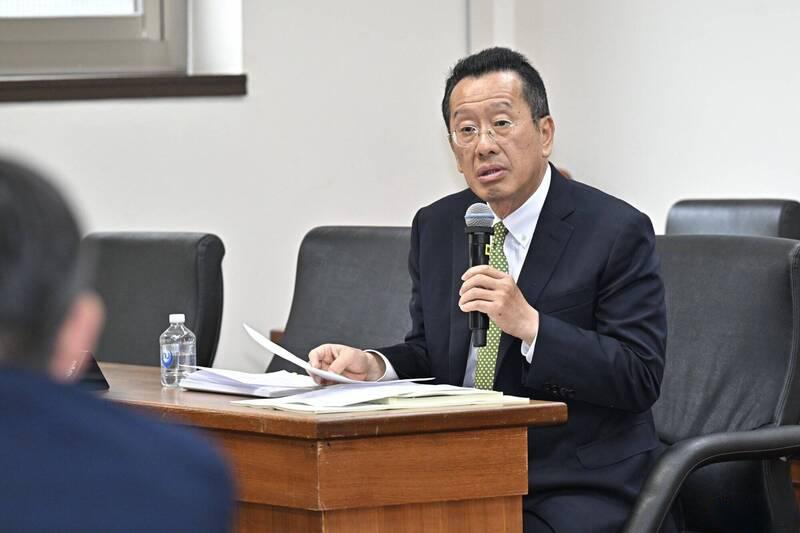
Photo: Tu Chien-jung, Taipei Times
During today’s negotiations, Minister of National Defense Wellington Koo (顧立雄) said that the KMT’s proposal broadened the definition of uncrewed vehicles to include aerial, surface, underwater and ground systems used for surveillance, attacks, logistics, communications relays, electronic warfare, decoy operations, and mine-laying or mine-clearing.
However, Article 16 of the KMT’s proposal would cap funding at NT$40 billion per year for six consecutive years through the regular budget process, for a total of NT$240 billion, Koo said.
Next fiscal year’s spending on uncrewed capabilities, excluding the three categories covered by the special act, already totals NT$31.1 billion for military purchases, commissioned production and commercial procurement, he said, citing next year’s budget plans.
If the special act is passed, the ministry plans to allocate NT$13.8 billion this year and NT$42.1 billion next year, for a combined NT$55.9 billion, far exceeding the KMT’s proposed annual cap of NT$40 billion, Koo said.
A budget of NT$40 billion would not allow the ministry to effectively build up uncrewed combat capabilities, he said, urging the KMT to reconsider Articles 15 and 16 of their proposal in light of the military’s substantial demand for uncrewed systems.
KMT caucus secretary-general Lin Pei-hsiang (林沛祥) said that while his party supports defense self-reliance, drone technology is advancing rapidly, so procurement should be conducted in phases, with regular adjustments to maintain operational effectiveness.
The act should focus on industrial development and technological capacity-building, KMT Legislator Lai Shyh-bao (賴士葆) said, adding that any procurement provisions should be placed in a separate defense procurement chapter.
TPP Legislator Wang An-hsiang (王安祥) said his party fully supports defense self-reliance, but concerns remain over funding sources and fiscal discipline.
Democratic Progressive Party (DPP) caucus chief executive Chuang Jui-hsiung (莊瑞雄) criticized the proposals put forward by the KMT and TPP, saying that while they emphasize defense self-reliance, they designate the Ministry of Economic Affairs as the competent authority and exclude the Ministry of National Defense.
While Taiwan remains embroiled in disputes over budget mechanisms, international drone manufacturers are increasingly turning to partners such as Japan, where funding is more stable and policy direction is clearer, DPP Legislator Fan Yun (范雲) said, citing research conducted by the Research Institute for Democracy, Society and Emerging Technology.
The purpose of the legislation is to enable large-scale, multi-year procurement through a special budget, DPP Legislator Chung Chia-pin (鍾佳濱) said.
“If the KMT version is not a special act and cannot use a special budget, then why legislate at all?” he asked.
TPP Legislator Hung Yu-hsiang (洪毓祥), chair of the Economics Committee, announced that the bill would be reserved for further discussion and sent to the legislative floor, along with one amendment proposed during committee review and another introduced during negotiations by the KMT caucus.
The KMT and TPP caucuses called for Legislative Speaker Han Kuo-yu (韓國瑜) to chair future negotiations.
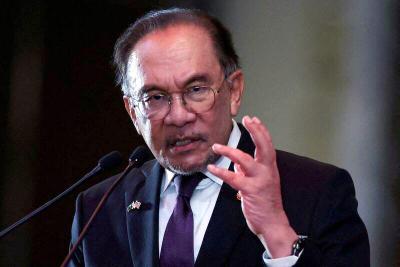
Malaysian Prime Minister Anwar Ibrahim’s remarks that Taiwan is a Chinese province seeking independence threaten regional peace and stability and could undermine Taiwanese businesses’ confidence in investing in Malaysia, the Ministry of Foreign Affairs (MOFA) said today. Anwar recently made remarks implying that Taiwan is a province seeking to separate from China, effectively legitimizing Beijing’s position on using force to take Taiwan, the ministry said in a statement. The Republic of China, Taiwan, is a sovereign, independent country and is not subordinate to the People’s Republic of China, MOFA said, adding that that fact would not be changed no matter
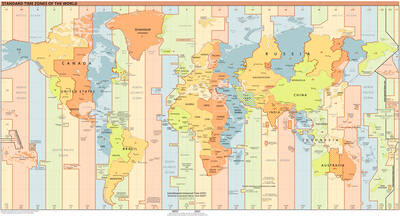
UNNECESSARY?: While some said that the switch would mean more sunlight exposure for workers, others said the government should promote flexible working hours instead An online debate has resurfaced on whether Taiwan should switch to the same time zone as Japan, with supporters citing its geographic location and saying that China would have no right to object. The debate erupted on Threads when users suggested that Taiwan should stop using the same time zone as China, Malaysia and Singapore, GMT+8, and instead switch one hour ahead to the same time zone as Japan and South Korea, GMT+9, which it is geographically closer to. Under GMT+9 the sun would set later year-round, meaning that people would see sunlight after getting off work even in the winter and
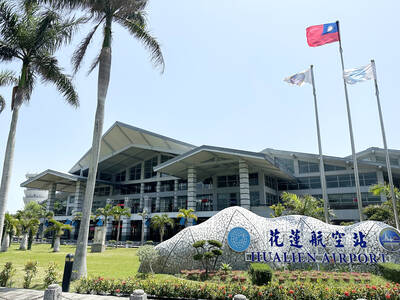
The Civil Aviation Administration (CAA) yesterday confirmed that Uni Air has submitted an application to suspend its Taipei-Hualien flights due to persistently low passenger rates. The airline, which is the only operator of the Taipei-Hualien route, proposed to suspend the service after Mandarin Airlines, another domestic flight carrier, applied to suspend flights to Hualien departing from Kaohsiung and Taichung earlier this year. The average load factor of the Taipei-Hualien flights during the first six months was 24.2 percent, CAA data showed. The average seat occupancy rate dropped even further to 17 percent last month, even though it was the beginning
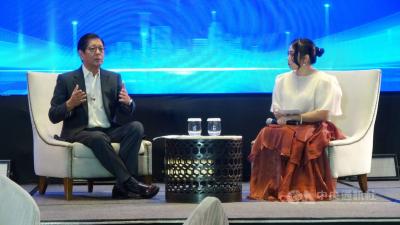
Philippine President Ferdinand Marcos Jr today said that the Philippines would not allow any attacks from its territory in the event of a conflict in the Taiwan Strait, as it “has no desire to be a belligerent nation in the region.” Marcos later said that his country would continue to follow the “one China” policy while maintaining its existing ties with Taiwan within that framework. The Philippine president made the comments while attending the Foreign Correspondents Association of the Philippines Presidential Luncheon in Manila. He was asked whether he would allow the US military to launch an attack from Philippine bases in the


 RSS