

Minister of Foreign Affairs Lin Chia-lung (林佳龍) today said the government "respects" different views in Japan regarding senior officials' visits to a controversial Tokyo shrine that honors Japan's war dead, including World War II war criminals, but also hopes Tokyo would reflect on its wartime aggression.
"We recognize and respect the diversity of views within Japanese society regarding these issues. We look forward to [Japan's] continuous reflection - ensuring that the crime of waging war is never repeated - while also anticipating joint efforts [between Taipei and Tokyo] to uphold regional peace and stability," he said at the legislature in Taipei.
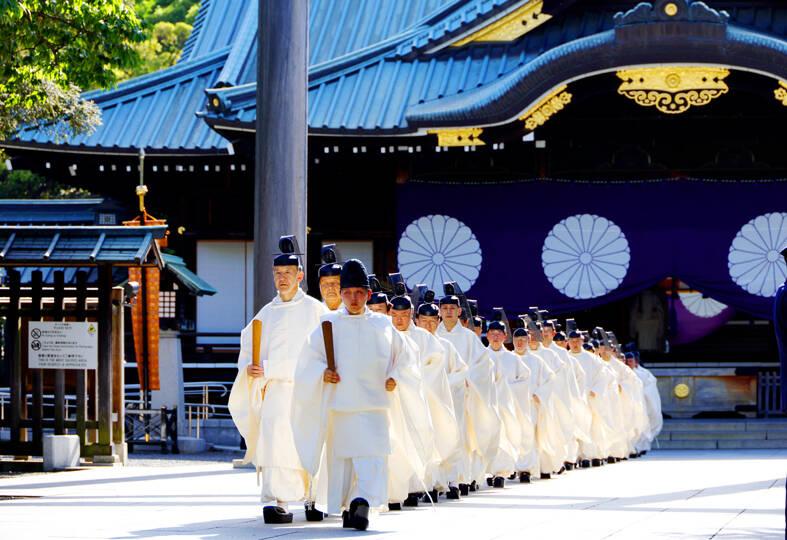
Photo: EPA
"We hope that current Taiwan-Japan relations will contribute to peace in the region," he added.
Lin was responding to questions from Chinese Nationalist Party (KMT) Legislator Lai Shyh-bao (賴士葆) about what he described as the Ministry of Foreign Affairs' "soft" remarks on visits by several senior members of Japanese Prime Minister Sanae Takaichi's Cabinet to the Yasukuni Shrine in Tokyo last week.
Japanese Defense Minister Shinjiro Koizumi visited the shrine, as did several other Cabinet members, on Saturday to mark the 81st anniversary of Japan's surrender in World War II.
The visits drew immediate diplomatic protests and strong condemnation from China and South Korea.
However, the ministry only expressed respect for different views in Japan regarding the visits by Takaichi's Cabinet members, drawing criticism from the KMT and the Taiwan People's Party, which described the response as too soft.
Asked to comment, Lin today said his ministry's statement said it respected "different views in Japan concerning their Cabinet officials' visits to the shrine," rather than the visits themselves.
Asked whether Japan was the invader during World War II, Lin responded: "Of course it was the invader."
Tokyo's Yasukuni Shrine honors about 2.5 million people who died fighting for Japan, among them about 28,000 Taiwanese soldiers and civilian workers who died while serving in the Japanese military during World War II, when Taiwan was a Japanese colony.
The site is controversial, as 14 men charged with Class-A war crimes by an Allied tribunal were enshrined there in 1978, making visits by Japanese politicians a frequent diplomatic flashpoint with neighboring countries.

McDonald’s Taiwan today said it has halted sales of its limited edition Sea Flavor Fried Shrimp Burger and its double-patty version, after the importer notified the company last night that the shrimp patties contained nitrofurans — a group of synthetic antibiotics — and their metabolites. Sales of the shrimp burgers were suspended nationwide at 10:30am today and customers who purchased them yesterday or in the early hours of this morning would be eligible for refunds, the company said, adding that more details would be announced within a week. McDonald’s Taiwan said it was notified last night that subsequent batch testing had found
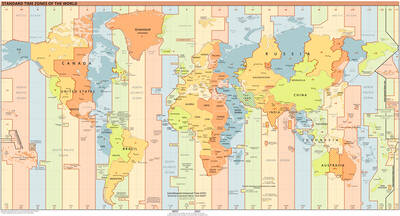
UNNECESSARY?: While some said that the switch would mean more sunlight exposure for workers, others said the government should promote flexible working hours instead An online debate has resurfaced on whether Taiwan should switch to the same time zone as Japan, with supporters citing its geographic location and saying that China would have no right to object. The debate erupted on Threads when users suggested that Taiwan should stop using the same time zone as China, Malaysia and Singapore, GMT+8, and instead switch one hour ahead to the same time zone as Japan and South Korea, GMT+9, which it is geographically closer to. Under GMT+9 the sun would set later year-round, meaning that people would see sunlight after getting off work even in the winter and
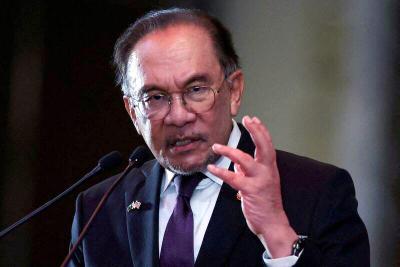
Malaysian Prime Minister Anwar Ibrahim’s remarks that Taiwan is a Chinese province seeking independence threaten regional peace and stability and could undermine Taiwanese businesses’ confidence in investing in Malaysia, the Ministry of Foreign Affairs (MOFA) said today. Anwar recently made remarks implying that Taiwan is a province seeking to separate from China, effectively legitimizing Beijing’s position on using force to take Taiwan, the ministry said in a statement. The Republic of China, Taiwan, is a sovereign, independent country and is not subordinate to the People’s Republic of China, MOFA said, adding that that fact would not be changed no matter
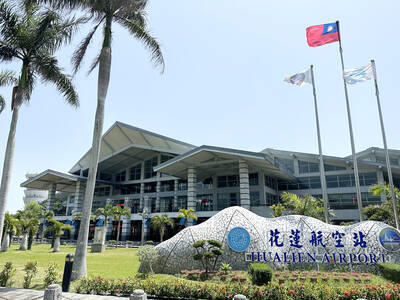
The Civil Aviation Administration (CAA) yesterday confirmed that Uni Air has submitted an application to suspend its Taipei-Hualien flights due to persistently low passenger rates. The airline, which is the only operator of the Taipei-Hualien route, proposed to suspend the service after Mandarin Airlines, another domestic flight carrier, applied to suspend flights to Hualien departing from Kaohsiung and Taichung earlier this year. The average load factor of the Taipei-Hualien flights during the first six months was 24.2 percent, CAA data showed. The average seat occupancy rate dropped even further to 17 percent last month, even though it was the beginning


 RSS
RSS