


Taiwanese academics and civic groups have raised concerns that extraterritorial provisions in China's new "ethnic unity" law, set to take effect on Wednesday next week, could expose Taiwanese to legal and political risks.
Adopted by the Chinese National People’s Congress on March 12, the Ethnic Unity and Progress Promotion Law aims to "forge a strong sense of community for the Chinese nation.”
Article 63 of the law also states that organizations and individuals outside China who engage in acts against China that "undermine ethnic unity and progress or promote ethnic separatism shall be held legally liable in accordance with the law."
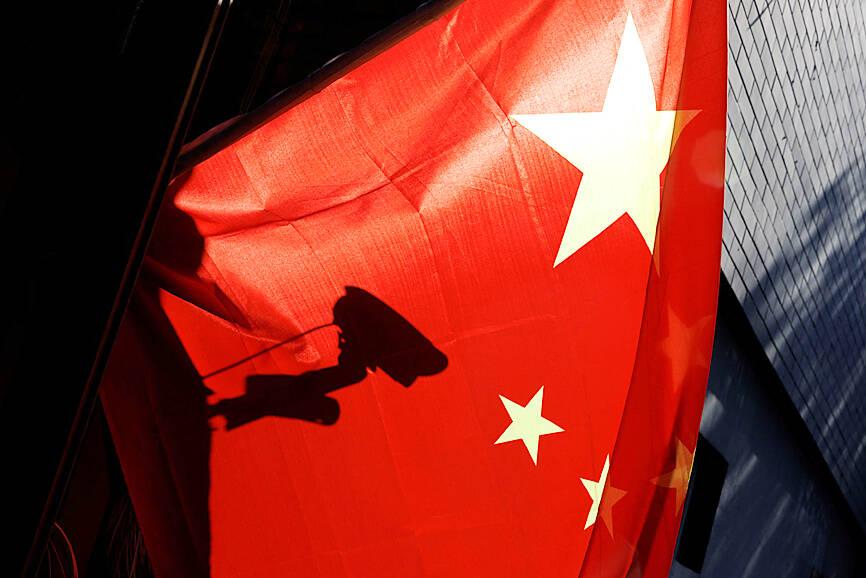
Photo: Reuters
Hung Pu-chao (洪浦釗), deputy head of Tunghai University's Center for Mainland China and Regional Development Research, yesterday said that the law could lead to entry bans, sanctions, public naming and shaming, and business pressure on Taiwanese.
Those who frequently travel across the Taiwan Strait, or who have jobs, investments or family ties in China, could be among the first affected, he said, adding that academics, journalists, civic groups and public commentators could also face greater political risks.
Mainland Affairs Council Deputy Minister Shen Yu-chung (沈有忠) said in March after the law was adopted that while the legislation appeared to target ethnic minorities in China, its extraterritorial provisions and references to promoting ethnic unity and national unification could allow it to spill over into cross-strait affairs.
In China's political context, issues involving Taiwan's sovereignty and human rights in Xinjiang and Tibet could all be deemed acts that "undermine ethnic unity,” a national security official said yesterday, speaking on condition of anonymity.
Taiwanese academics arguing that Taiwan is not part of China, foreign media reporting on human rights in Xinjiang or foreign politicians publicly supporting Taiwan's participation in international organizations could all be unilaterally deemed illegal by Beijing, the official said.
Taiwan Alliance, a coalition of pro-Taiwan civic groups expressed "strong condemnation and deep concern" over the law, saying it is "a tool for transnational repression."

EXCUSES: Beijing is using government and research vessels as a pretext to harass the nation and enter its EEZ, and engage in ‘hegemonic expansion,’ the coast guard said The Coast Guard Administration yesterday said it drove away Chinese oceanographic research vessel Xiang Yang Hong 22 (向陽紅33) from restricted waters after warning it that it was in Taiwan’s exclusive economic zone (EEZ). The Chinese vessel entered restricted waters off the coast of Yilan County’s Suao (蘇澳) at 11:35pm on Thursday, the coast guard said, adding that it dispatched the Lanyu patrol vessel and the boat PP-10077 to shadow the Chinese ship and issue radio warnings ordering it to leave. China has no sovereignty over waters off Taiwan’s east coast, Lanyu’s crew told Xiang Yang Hong 22 over the radio, and demanded
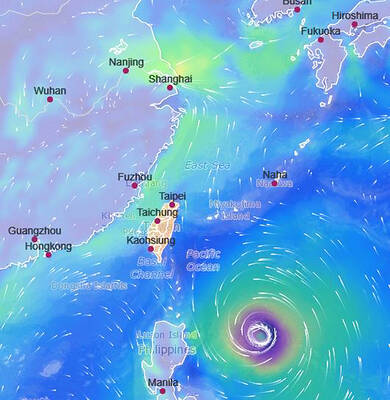
Typhoon Mekkhala is likely to come closest to Taiwan on Thursday, according to the Central Weather Administration (CWA), which forecast localized rain or thundershowers in western and northeastern parts of the country for that day. As of 2pm yesterday, the eye of the storm was 770km southeast of Oluanpi (鵝鑾鼻), the southernmost point of Taiwan, as it continued to move toward waters east of the Philippines, the agency said. Mekkhala was expected to become a severe typhoon last night, CWA forecaster Lai Hsin-kuo (賴欣國) said. A severe typhoon has maximum wind speeds of more than 184kph, compared with 118kph to 183kph for a
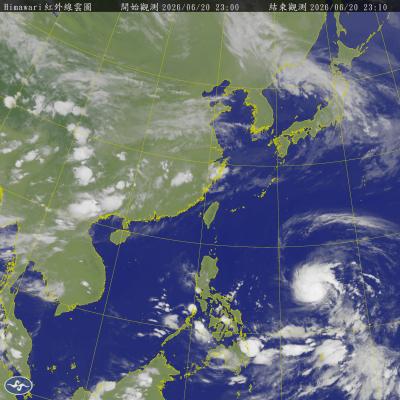
Tropical Storm Mekkhala is forecast to strengthen into a typhoon tomorrow and could come close enough to Taiwan later in the week to prompt a sea warning, the Central Weather Administration (CWA) said yesterday. As of 2 pm, the storm was located 1,870 kilometers southeast of Taiwan's southern tip and moving west- northwest at 23 km per hour. CWA forecaster Cheng Chieh-jen (鄭傑仁) said Mekkhala is expected to continue moving west-northwest through Tuesday under the influence of the Pacific high- pressure system before gradually turning north toward waters east of Taiwan or south of the Ryukyu Islands. The timing and angle of the

RISING POPULARITY: Enhanced flight connectivity and a visa waiver trial program are among the motivations that have boosted travel to Taiwan by Filipinos, the agency said The Tourism Administration said yesterday that it is stepping up efforts to attract tourists from the Philippines following strong growth during the first quarter. The agency’s data showed the nation welcomed 210,000 Filipino visitors from January to March, marking a 43 percent increase compared with the same period last year. The Philippines is Taiwan’s top source of inbound tourists among the Southeast Asian nations, data showed. With a population of 116 million and national median age of 26, the Philippines boasts a young demographic with strong travel potential, the Tourism Administration said. Outbound travel demand in the Philippines continues to rise amid robust


 RSS
RSS