


An espionage case involving a TV reporter allegedly included leaked classified documents regarding the 333rd, 66th and 99th brigades — among the military’s most combat-capable units, a military source said yesterday.
CTi News reporter Lin Chen-yu (林宸佑) was indicted last month on charges of contravening the Anti-Infiltration Act (反滲透法) and national security laws, as well as corruption.
Lin allegedly received cryptocurrency from overseas actors, produced videos critical of the mass recall campaign targeting opposition lawmakers, and recruited six current and former military personnel to record pro-China videos and gather military intelligence, prosecutors said.
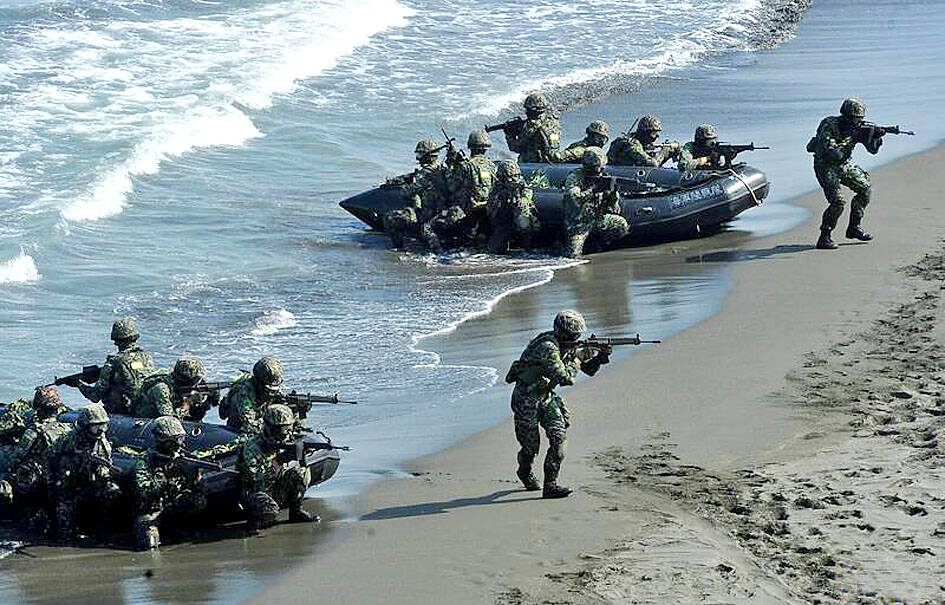
Photo: Taipei Times
Those implicated include a noncommissioned officer responsible for managing army documents, a soldier from a helicopter unit, personnel from a multiple-launch rocket system unit, a noncommissioned marine corps officer from the 66th Brigade and an officer from the army’s 333rd Mechanized Infantry Brigade, they said.
The source, a field-grade officer familiar with the case, said many of the military personnel allegedly recruited by overseas actors had sought financial assistance online and were targeted because they had debt, most of which was gambling-related.
Fearing that their financial problems would be exposed and damage to their military careers, some allegedly agreed to provide classified information in exchange for money, the source said.
The alleged leaked materials suggest intelligence-gathering efforts were focused on units with strong combat capabilities, including the 66th and 99th brigades (the marine corps formations), and the army’s 333rd Mechanized Infantry Brigade. The latter, once referred to as the military’s “premier division,” has conducted training and exercises with US forces for years and remains a capable combat unit despite organizational restructuring.
Legal experts said Taiwan should consider tougher penalties to deter similar cases and protect national security, with some calling for expanded use of severe punishments under the Armed Forces Penal Code (陸海空軍刑法).
Foreign forces have long used political, business and religious exchanges as a cover to gather intelligence and have increasingly sought to infiltrate the military, a prosecutor said.
No active-duty service member has been sentenced to death or life imprisonment for selling military secrets since the end of martial law, raising questions over whether existing penalties are sufficient to deter such offenses.
The National Security Act (國家安全法), Anti-Infiltration Act and Classified National Security Information Protection Act (國家機密保護法) form the main legal framework for such cases, Minglun Law Firm managing attorney Fang Yen-hui (房彥輝) said.
The most severe penalties under the National Security Act apply to those who act under the direction of, or develop organizations for, hostile foreign forces, he said, adding that the minimum prison term is at least seven years.
The Armed Forces Penal Code allows for life imprisonment or the death penalty for active-duty personnel who engage in espionage, assist spies, provide military advantage to an enemy or disclose military secrets, Fang said.
However, these provisions generally apply only to active-duty personnel or civilians during wartime, he added.
Lawmakers should consider tougher penalties for breaking national security laws or broadening the scope of the Armed Forces Penal Code to better deter leaks of military secrets, such as operational plans, weapons deployments and identities of intelligence personnel.
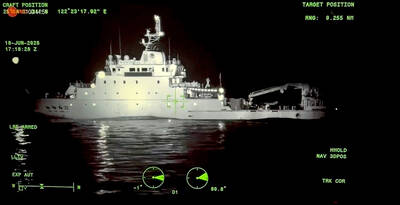
EXCUSES: Beijing is using government and research vessels as a pretext to harass the nation and enter its EEZ, and engage in ‘hegemonic expansion,’ the coast guard said The Coast Guard Administration yesterday said it drove away Chinese oceanographic research vessel Xiang Yang Hong 22 (向陽紅33) from restricted waters after warning it that it was in Taiwan’s exclusive economic zone (EEZ). The Chinese vessel entered restricted waters off the coast of Yilan County’s Suao (蘇澳) at 11:35pm on Thursday, the coast guard said, adding that it dispatched the Lanyu patrol vessel and the boat PP-10077 to shadow the Chinese ship and issue radio warnings ordering it to leave. China has no sovereignty over waters off Taiwan’s east coast, Lanyu’s crew told Xiang Yang Hong 22 over the radio, and demanded

BAIT AND SWITCH: Allowing KMT-run counties to sell to China while the threat of abrupt cancelations hangs overhead is another form of coercion, officials said Beijing is using agricultural purchase offers announced during the Straits Forum to deepen Taiwan’s dependence on the Chinese market, a Taiwanese official said yesterday as they criticized the Taitung County commissioner’s participation in the initiative. During the Straits Forum held in Xiamen on Saturday, Chinese officials announced a sales and purchase agreement for agricultural products from some counties led by the Chinese Nationalist Party (KMT). Taitung County Commissioner Yao Ching-ling (饒慶鈴), who was barred from attending the event in person by the Mainland Affairs Council, participated via video. Under the agreement, China would purchase atemoyas, pomeloes, tea and grouper harvested in Taitung,
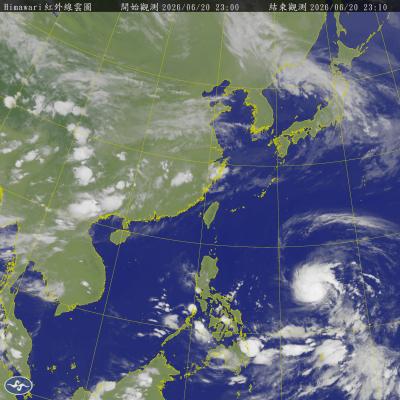
Tropical Storm Mekkhala is forecast to strengthen into a typhoon tomorrow and could come close enough to Taiwan later in the week to prompt a sea warning, the Central Weather Administration (CWA) said yesterday. As of 2 pm, the storm was located 1,870 kilometers southeast of Taiwan's southern tip and moving west- northwest at 23 km per hour. CWA forecaster Cheng Chieh-jen (鄭傑仁) said Mekkhala is expected to continue moving west-northwest through Tuesday under the influence of the Pacific high- pressure system before gradually turning north toward waters east of Taiwan or south of the Ryukyu Islands. The timing and angle of the
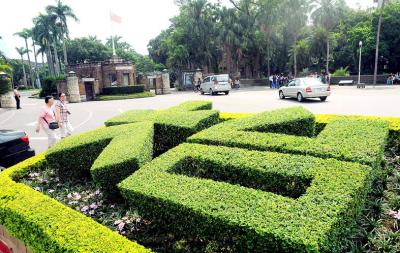
Four Taiwanese universities have been ranked among the world's top 200 institutions in the Quacquarelli Symonds (QS) World University Rankings for next year, the highest Taiwan has ever placed in the category, with National Taiwan University (NTU) achieving its best performance at 54th globally and 17th in Asia. The four Taiwanese institutions in the global top 200 are NTU (54th), National Tsing Hua University (142nd), National Yang Ming Chiao Tung University (177th) and National Cheng Kung University (191st), the rankings showed. All four universities achieved their highest-ever global rankings this year, QS data showed. National Cheng Kung University entered the top 200 for


 RSS
RSS