


China's offer to purchase more atemoya has reignited a cross-strait trade debate, with the government warning the move is a tactic to hook local farmers before cutting off market access.
In a news release yesterday, the Ministry of Agriculture cited atemoya — a specialty of Taitung — as a prime example of China's "raise, trap, kill" strategy, warning that it leaves local farmers exposed to severe market instability.
According to the ministry, China has repeatedly disrupted Taiwan's atemoya exports by suspending imports in September 2021 over pesticide concerns, partially resuming them in June 2023, and later imposing a 20 percent tariff plus 9 percent value-added tax (VAT) in 2024, leaving Taitung's farmers facing steep uncertainty.
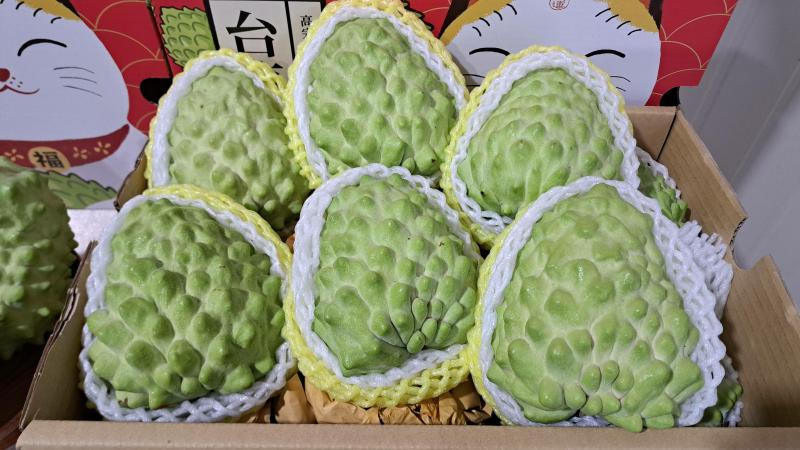
Photo: Huang Ming-tang, Taipei Times
To reduce reliance on unpredictable markets like China, the ministry pledged to help the industry diversify into processed goods -- like frozen cubes, purees, and alcoholic beverages -- and expand into premium emerging markets.
The statement followed heated debates among politicians after the Straits Forum was held in China's Fujian Province on June 13, where Beijing pledged to expand purchases of Taiwanese agricultural and fishery products, such as atemoya, pomelo, tea, and grouper.
Despite a central government ban on official participation, Taitung County Commissioner Yao Ching-ling (饒慶鈴) promoted local produce in a prerecorded video, while five Taiwanese groups signed procurement agreements on agricultural products with Chinese officials.
Liang Wen-chieh (梁文傑), a spokesperson for Taiwan's Mainland Affairs Council, sparked further controversy Thursday when he remarked that "atemoya is a crop almost never eaten in Taiwan and entirely dependent on Beijing's goodwill" and warned that officials who took part in the Straits Forum could face investigation.
Earlier yesterday, Chinese Nationalist Party (KMT) Legislator Huang Chien-pin (黃建賓) led local representatives and farmers at a news conference, accusing the central government of politicizing the atemoya trade instead of helping resolve distribution challenges.
According to Wu Hsiu-hua (吳秀華), speaker of the Taitung County Council, China remains the primary destination for Taiwanese atemoya, accounting for 95 percent of exports because strict quarantine barriers in other countries have yet to be overcome.
"The government's responsibility is to help farmers find distribution channels, not to force them to bear political consequences," Wu said.
Separately, Taipei Mayor Chiang Wan-an (蔣萬安) criticized the MAC for intending to investigate Yao, arguing Yao only sought markets for farmers.
Chiang said atemoya is like Taiwan Semiconductor Manufacturing Co (TSMC) in the fruit world, because no other country can produce such a unique and delicious variety.
He rejected Liang's claim that people in Taiwan don't eat atemoya and warned against politicizing agriculture at the expense of farmers' livelihoods.
Democratic Progressive Party Legislator Chen Ying (陳瑩) defended Liang, saying Liang meant to highlight the risks of over-reliance on a single market, though she admitted his remarks left farmers feeling saddened and wronged.
Chen noted the real challenge in exporting to China lies in tariffs.
As China expands planting and improves cultivation, its atemoya grows more stable in quality and yield, while Taiwanese farmers, burdened by high tariffs, face intensifying competitive pressure that threatens their sustainability and market share, she said.
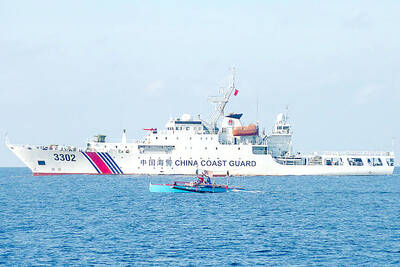
EXPANSIONIST: China deploys an average of 40 to 50 warships and coast guard vessels daily in the South China Sea, despite pledges not to militarize the region, an official said China is attempting to expand its influence across the First Island Chain and increase pressure on Japan by sending coast guard vessels into waters off of Taiwan under the pretext of maritime negotiations with Japan and the Philippines, a national security official said yesterday. China’s recent actions in the waters east of Taiwan and Japan and the Philippines’ exclusive economic zones (EEZ) are attempts to establish dominance in First Island Chain waters, said the official who declined to be named, adding that this is “expansion disguised as law enforcement.” Framing China’s actions solely as a cross-strait issue is a serious misjudgment that
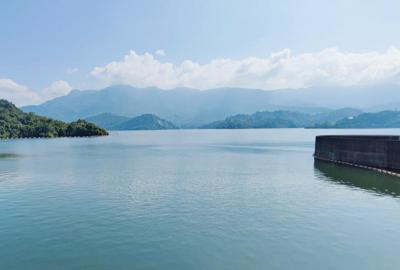
Several major reservoirs are estimated to have received 590 million tonnes of water inflow from June 4 to this morning, with storage levels at Wushantou Reservoir exceeding 50 percent and Zengwen Reservoir approaching 30 percent as of 9am today, data from the Water Resources Agency showed. Of the estimated 590 million tonnes, 450 million have already been stored in reservoirs, the data showed. As of 9am today, Baoshan Reservoir storage levels reached 100 percent, while Baoshan Second Reservoir, Yongheshan Reservoir and Techi Reservoir all exceeded 90 percent, data on the Water Resources Agency’s Web site showed. In addition, the Shimen Reservoir is at

EXCUSES: Beijing is using government and research vessels as a pretext to harass the nation and enter its EEZ, and engage in ‘hegemonic expansion,’ the coast guard said The Coast Guard Administration yesterday said it drove away Chinese oceanographic research vessel Xiang Yang Hong 22 (向陽紅33) from restricted waters after warning it that it was in Taiwan’s exclusive economic zone (EEZ). The Chinese vessel entered restricted waters off the coast of Yilan County’s Suao (蘇澳) at 11:35pm on Thursday, the coast guard said, adding that it dispatched the Lanyu patrol vessel and the boat PP-10077 to shadow the Chinese ship and issue radio warnings ordering it to leave. China has no sovereignty over waters off Taiwan’s east coast, Lanyu’s crew told Xiang Yang Hong 22 over the radio, and demanded
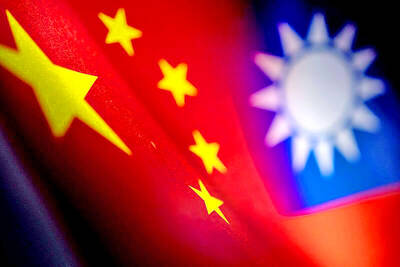
BAIT AND SWITCH: Allowing KMT-run counties to sell to China while the threat of abrupt cancelations hangs overhead is another form of coercion, officials said Beijing is using agricultural purchase offers announced during the Straits Forum to deepen Taiwan’s dependence on the Chinese market, a Taiwanese official said yesterday as they criticized the Taitung County commissioner’s participation in the initiative. During the Straits Forum held in Xiamen on Saturday, Chinese officials announced a sales and purchase agreement for agricultural products from some counties led by the Chinese Nationalist Party (KMT). Taitung County Commissioner Yao Ching-ling (饒慶鈴), who was barred from attending the event in person by the Mainland Affairs Council, participated via video. Under the agreement, China would purchase atemoyas, pomeloes, tea and grouper harvested in Taitung,


 RSS
RSS