


Taipei Mayor Chiang Wan-an (蔣萬安) yesterday said at the World Cities Summit in Singapore that his city’s efforts to build a technology corridor would lay the foundation for the next stage of the innovation-driven economy.
The summit, which began on Sunday last week and ends today, brings together government officials, industry leaders and academics from around the world. Several local officials from Taiwan are attending, including Chiang, Keelung Mayor Hsieh Kuo-liang (謝國樑) and Taoyuan Mayor Simon Chang (張善政).
During his speech at a forum attended by Singaporean Minister for National Development Chee Hong Tat (徐芳達) and London Mayor Sadiq Khan, Chiang highlighted policies including Taipei’s “Fresh Milk Weekly” program for schoolchildren, which provides regular milk subsidies.
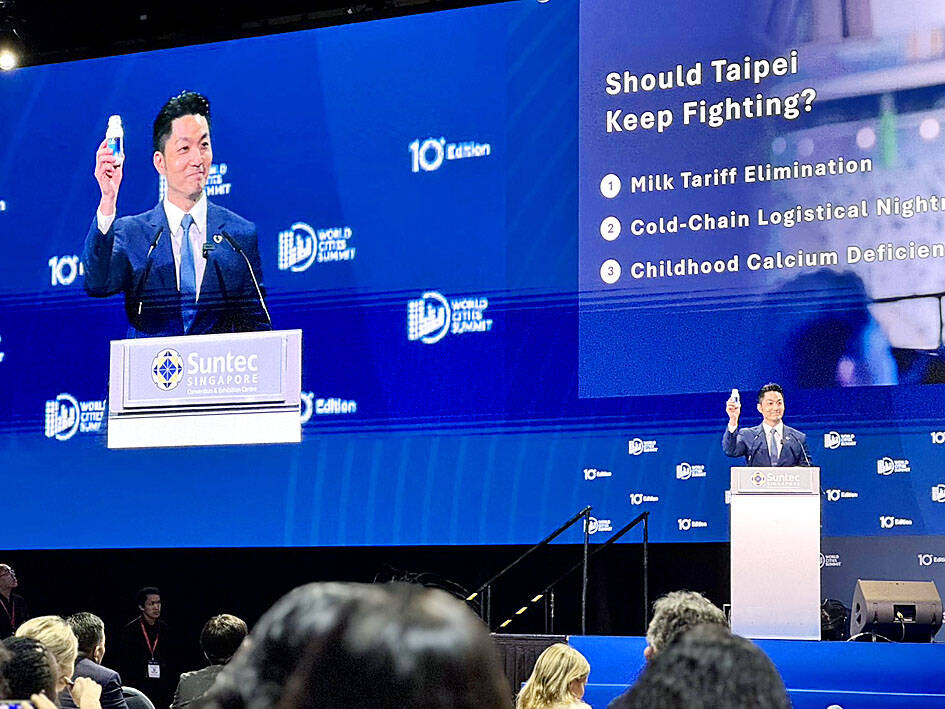
Photo: CNA
A truly smart city relies on efficient systems that reduce shortages and waste, Chiang said, adding that if fresh milk can be delivered reliably, it should also be possible to distribute essential supplies quickly during emergencies, reinforcing urban resilience.
He also highlighted Nvidia’s decision to establish its overseas headquarters in Taipei, saying the move represents not only jobs and investment, but is also an opportunity to reshape the city’s future.
Taipei’s planned artificial intelligence technology corridor would support the next generation of the innovation economy, he said, thanking the Lee Kuan Yew World City Prize for recognizing the city’s efforts.
The prize is one of the highlights of the summit, and Taipei was awarded a Special Mention for outstanding best practices in urban initiatives and innovative approaches to city transformation.
According to the prize’s citation, Taipei’s fresh milk program was highlighted as an example of how public-private partnerships and integrated planning can address practical and social needs.
“Taipei’s commitment to authentic civic engagement through collaborative governance and sustained infrastructure investment offers valuable lessons for dense cities worldwide facing similar challenges of demographic transition, environmental resilience, and social cohesion,” the citation says.
Speaking to reporters at Taiwan Taoyuan International Airport before departing for Singapore on Sunday, Chiang said Taipei was the first city in Taiwan to receive a Special Mention, and that he was honored to be able to accept the recognition in person.
He said the delegation would also visit Singapore’s national sports facilities to learn about the city-state’s strategy of attracting large-scale entertainment events and explore opportunities for cooperation through exchanges during the trip.
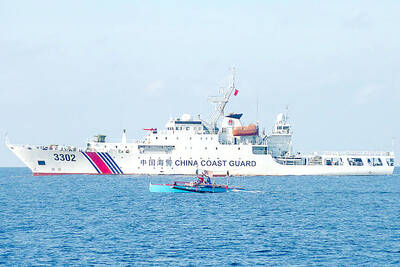
EXPANSIONIST: China deploys an average of 40 to 50 warships and coast guard vessels daily in the South China Sea, despite pledges not to militarize the region, an official said China is attempting to expand its influence across the First Island Chain and increase pressure on Japan by sending coast guard vessels into waters off of Taiwan under the pretext of maritime negotiations with Japan and the Philippines, a national security official said yesterday. China’s recent actions in the waters east of Taiwan and Japan and the Philippines’ exclusive economic zones (EEZ) are attempts to establish dominance in First Island Chain waters, said the official who declined to be named, adding that this is “expansion disguised as law enforcement.” Framing China’s actions solely as a cross-strait issue is a serious misjudgment that
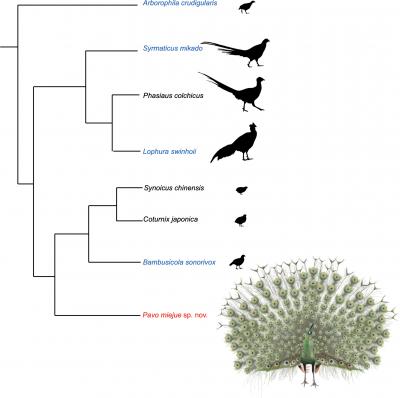
Through analyzing fossil evidence, a research team at National Taiwan University (NTU) discovered the largest endemic bird to have lived in Taiwan, naming it Pavo miejue, or extinct peafowl (滅絕孔雀). The Mikado pheasant, which is printed on the back of the NT$1,000 bank note, was previously believed to be the biggest endemic bird to Taiwan. The research team’s findings suggest that Pavo miejue lived during the Pleistocene epoch tens of thousands of years ago. It is the first endemic extinct bird species discovered and formally named in Taiwan. The study was coauthored by NTU Institute of Ecology and Evolutionary Biology professor Tsai Cheng-hsiu (蔡政修),
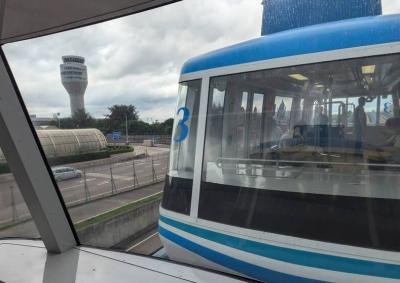
Taiwan Taoyuan International Airport is to suspend its automated Skytrain service connecting Terminal 1 and Terminal 2 starting on July 1 to facilitate connection works for the upcoming Terminal 3, the airport operator said today. Passengers and staff who need to travel between the two terminals after the suspension can instead use the Taoyuan MRT or the airport's 24-hour shuttle bus service, Taoyuan International Airport Corp said. The Taoyuan MRT Airport Line directly links the two terminals, while the shuttle buses are to operate around the clock, the company added. The Skytrain provides free transportation between the airport’s two terminals for travelers and
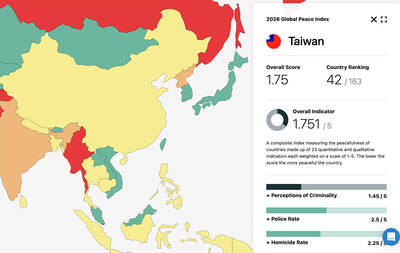
Taiwan ranked 42nd in terms of peacefulness among 163 countries, down five places from last year, according to this year’s Global Peace Index. With an overall score of 1.751, Taiwan dropped from 37th last year, the report published by the global Institute for Economics and Peace showed. The overall score measures a country’s level of peacefulness using 23 quantitative and qualitative indicators across three domains — ongoing domestic and international conflict, societal safety and security, and militarization. While Taiwan ranked 42nd worldwide, it was listed in ninth place among the 19 Asian-Pacific countries in the report, after New Zealand, Singapore, Japan, Malaysia,


 RSS
RSS