


Meetings between Chinese Nationalist Party (KMT) Chairwoman Cheng Li-wun (鄭麗文) and people with alleged links to China during her US trip have drawn attention from US security circles, a source said.
During a two-week visit to the US beginning on June 1, Cheng held a series of public engagements with people reportedly under scrutiny by US security agencies over alleged links to China, surveillance of dissidents in operations directed from Beijing, and cross-border influence activities, the source said yesterday.
In one instance, China Fujian Association chairman Chen Heng (陳恒) appeared alongside Cheng in photographs.
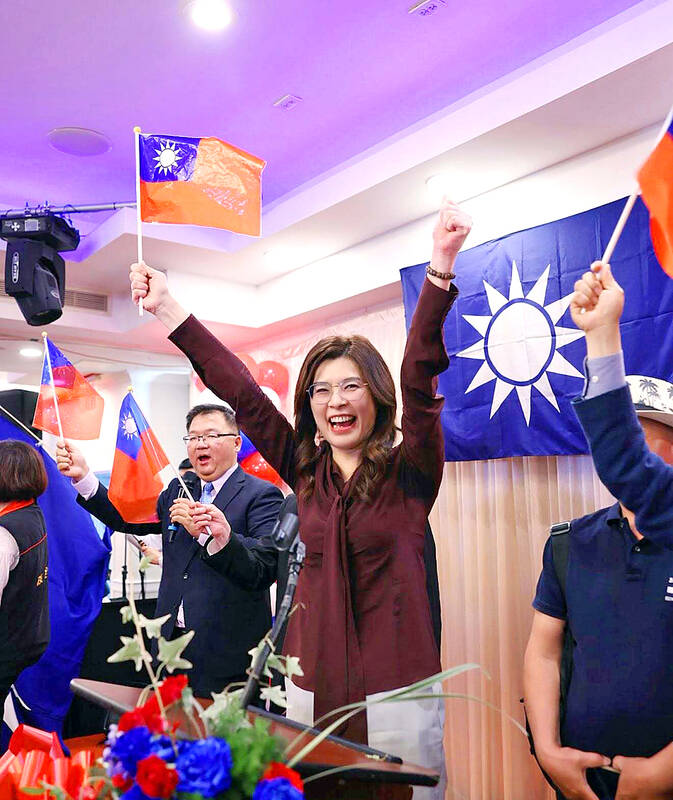
Photo courtesy of the KMT
Chen and another man, Lu Jianwang (盧建旺), were among those who led groups of pro-Beijing Chinese immigrants who protested outside a New York hotel in March 2023 during then-president Tsai Ing-wen’s (蔡英文) transit through the city.
Lu is a Chinese-American community leader and businessman based in New York who came to the attention of US national security authorities following allegations that he helped operate an unauthorized overseas Chinese police station in Manhattan’s Chinatown, the source said.
Last month, Lu was convicted of offences including acting as an unregistered foreign agent and obstruction of justice.
Although Chen was not charged or convicted in connection with the 2023 incident, he has long led the Fujian Association, which is alleged to have operated under the direction of Chinese public security authorities, sources said.
He allegedly engaged in similar activities with Lu, and is described by sources as having long been involved in cross-border influence activities and political mobilization on behalf of Beijing, making him a subject of ongoing US national security scrutiny.
Cheng’s public interactions with such overseas figures have raised questions in the US over whether the KMT lacks awareness of these people’s backgrounds or if other factors are involved, according to people familiar with the matter.
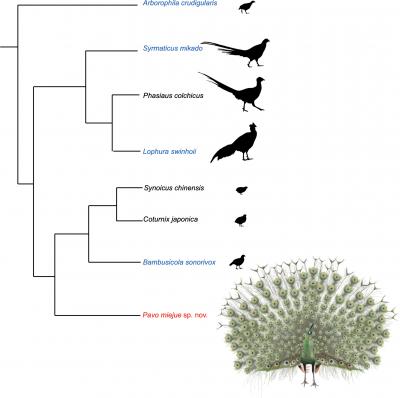
Through analyzing fossil evidence, a research team at National Taiwan University (NTU) discovered the largest endemic bird to have lived in Taiwan, naming it Pavo miejue, or extinct peafowl (滅絕孔雀). The Mikado pheasant, which is printed on the back of the NT$1,000 bank note, was previously believed to be the biggest endemic bird to Taiwan. The research team’s findings suggest that Pavo miejue lived during the Pleistocene epoch tens of thousands of years ago. It is the first endemic extinct bird species discovered and formally named in Taiwan. The study was coauthored by NTU Institute of Ecology and Evolutionary Biology professor Tsai Cheng-hsiu (蔡政修),
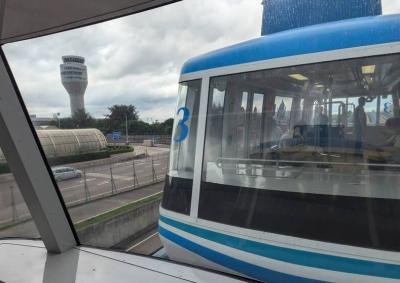
Taiwan Taoyuan International Airport is to suspend its automated Skytrain service connecting Terminal 1 and Terminal 2 starting on July 1 to facilitate connection works for the upcoming Terminal 3, the airport operator said today. Passengers and staff who need to travel between the two terminals after the suspension can instead use the Taoyuan MRT or the airport's 24-hour shuttle bus service, Taoyuan International Airport Corp said. The Taoyuan MRT Airport Line directly links the two terminals, while the shuttle buses are to operate around the clock, the company added. The Skytrain provides free transportation between the airport’s two terminals for travelers and
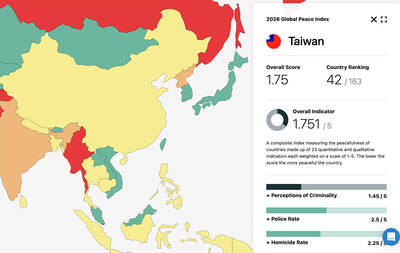
Taiwan ranked 42nd in terms of peacefulness among 163 countries, down five places from last year, according to this year’s Global Peace Index. With an overall score of 1.751, Taiwan dropped from 37th last year, the report published by the global Institute for Economics and Peace showed. The overall score measures a country’s level of peacefulness using 23 quantitative and qualitative indicators across three domains — ongoing domestic and international conflict, societal safety and security, and militarization. While Taiwan ranked 42nd worldwide, it was listed in ninth place among the 19 Asian-Pacific countries in the report, after New Zealand, Singapore, Japan, Malaysia,

TOKYO-MANILA DELIMITATION TALKS: Beijing is attempting to use this opportunity to normalize patrols and law enforcement in the waters east of Taiwan, MOFA said China has no law enforcement authority over the waters east of Taiwan, the Ministry of Foreign Affairs (MOFA) said yesterday, accusing China of undermining regional peace and stability. The Chinese Ministry of Transport on Saturday evening announced that it had launched a “special maritime law enforcement operation” in the waters east of Taiwan, dispatching coast guard vessels to engage in illegal enforcement activities, the ministry said. State-run Xinhua news agency said the operation was “a necessary action taken in response to Japan and the Philippines unilaterally announcing the initiation of maritime boundary delimitation negotiations in the waters east of China’s Taiwan island,


 RSS
RSS