


New Zealand today said it would express its concerns to Beijing after China unexpectedly barred four New Zealand lawmakers from entering Hong Kong, Macau and China as punishment for visiting Taiwan last month.
New Zealand lawmakers had visited the democratically governed nation for decades without a problem, a spokesperson for New Zealand Minister of Foreign Affairs Winston Peters said.
"Such visits are not inconsistent with New Zealand's one China policy," the spokesperson said, referring to its policy since 1972 of recognizing Beijing as the sole government of China.
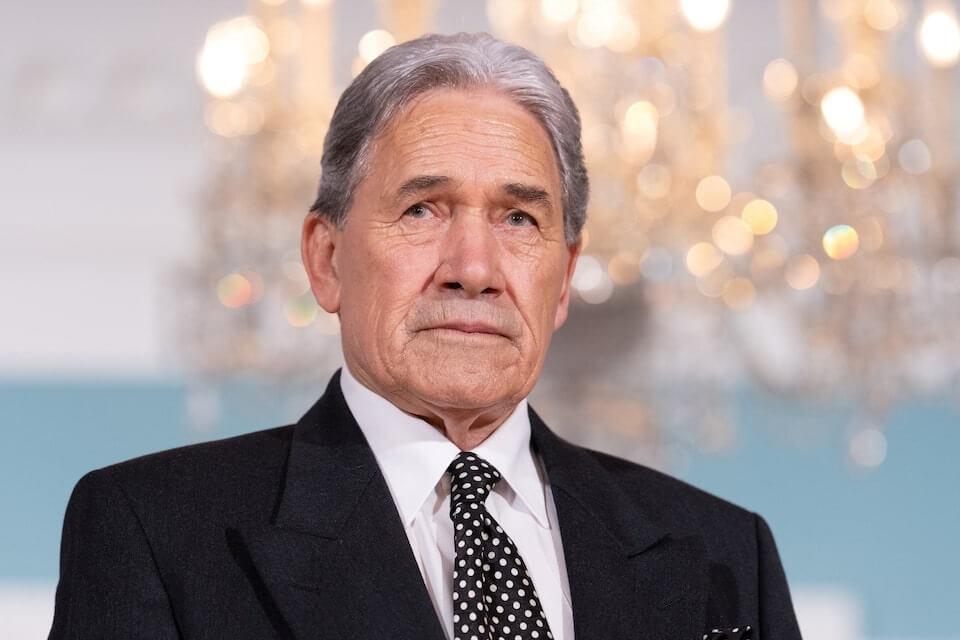
Photo: Reuters
"In the context of that long history, the minister was surprised to learn that China has taken a decision to, for the first time, impose travel bans on New Zealand MPs as a result of travel to Taiwan," they said.
Peters instructed New Zealand Ministry of Foreign Affairs officials in Beijing and Wellington to discuss the matter with Chinese authorities "in order to express concern at this departure from past practice and to better understand it," the spokesperson said.
In Taipei, the Ministry of Foreign Affairs said it strongly condemned China's "retaliatory" measures, adding that Beijing has no right to interfere in Taipei's interactions with "international friends."
"Parliamentary diplomacy is a normal practice among democratic nations," it said in a statement, urging China to stop pressuring and interfering with elected legislators from other countries who engage in exchanges with Taiwan.
New Zealand and China have maintained a largely stable relationship over the past few years, with China remaining New Zealand's largest trading partner, even as Wellington has grown more outspoken about Beijing's expanding influence in the Pacific.
Senior politicians from both countries have exchanged a number of visits over the past three years, with New Zealand Prime Minister Christopher Luxon visiting China last year.
China claims Taiwan as its own and has never renounced the use of force to bring it under its control.
"MPs are not ordinary citizens," a spokesperson from the Chinese embassy in New Zealand said in a statement on its Web site.
"China has consistently opposed visits to China's Taiwan region by members of the legislatures of countries that have established diplomatic relations with China, including New Zealand, and this case is no exception," the spokesperson said. "The New Zealand side should not be surprised."
The Chinese embassy said that four lawmakers had been banned from entering China, Hong Kong and Macau for a year, according to an e-mail from the Office of the Clerk, which administers New Zealand's parliament.
The ban targeted three lawmakers from the ruling center-right coalition, Laura McClure, David Wilson and Maureen Pugh, along with opposition Labour Party lawmaker Duncan Webb.
McClure told the New Zealand Herald the travel ban was "a type of foreign interference."
"I'm not going to apologize for visiting Taiwan," she said.
The Chinese embassy told New Zealand parliament officials that the travel ban could be reduced or waived if the lawmakers apologized for the trip, the e-mail said.
A New Zealand parliament official confirmed a meeting with Chinese embassy representatives but did not disclose details.
Like most countries, New Zealand has no formal ties with Taiwan. Under New Zealand's constitution, lawmakers are independent of the government and make their own travel decisions when invited.

NATIONAL SECURITY: Authorities are working to confirm the identities of the military personnel involved and investigating possible illegal conduct and regulatory violations Authorities are probing possible national security implications after Kinmen police and immigration officers on Sunday found a Chinese woman allegedly posing as a tourist while engaging in prostitution involving more than 10 military personnel. The woman, surnamed Chen (陳), has since been deported, authorities said, adding that investigators are still working to confirm the identities of those implicated, as the records only listed code names and aliases. The case stemmed from a report received by the Kinmen District Prosecutors’ Office on Friday last week from the Jinhu Precinct of the Kinmen County Police Bureau. On Sunday, police, along with the National Immigration

GLOBALGIVING: ‘ Caving to external pressure is not acceptable for an organization that has cultivated justice reform and human rights for 30 years,’ one NGO said A slew of non-government organizations (NGOs) have withdrawn from the GlobalGiving fundraising platform after it announced it would use “Chinese Taipei” instead of “Taiwan” from next month. The Taiwan Good Rice Association wrote on Facebook on Friday that it was informed on April 28 via a teleconference call of the change, which was made because the platform wanted to operate in China. Taiwan Good Rice is to terminate all cooperative relationships with GlobalGiving in response to the platform’s “unilateral and non-negotiable” decision to remove references to Taiwan, the NGO said. “Taiwan is in the official name of Taiwan Good Rice Association and the

HEAVY WEATHER: Typhoon Jangmi is due to crash straight into the Ryukyus as airlines look to shift flights to larger aircraft or cancel flights to Okinawa entirely Taiwan’s international air carriers announced flight adjustments over the weekend as Typhoon Jangmi is forecast to hit the Ryukyu Islands today and tomorrow. The Central Weather Administration (CWA) upgraded Jangmi from a tropical storm to a typhoon at 8am yesterday, with the eye located 580km south of Naha city. It was moving north at 19kph. Today, China Airlines’ CI-120, CI-121, CI-122 and CI-123 flights between Taoyuan and Naha, Okinawa, have been canceled as well as CI-132 and CI-133 between Kaohsiung and Naha. EVA Air’s BR-112, BR-113, BR-186 and BR-185 flights between Taoyuan and Naha are also canceled. Low-cost carrier Tigerair Taiwan canceled IT-230,
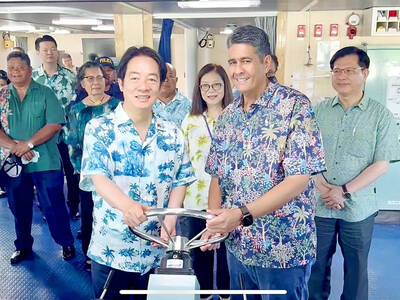
MULTIPRONGED APPROACH: China has sought to pressure Palau across a number of fronts, but the island nation has staunchly resisted overtures to ditch Taiwan Palau has been firm in backing Taiwan despite Chinese pressure that uses tourism economics, cyberattacks and criminal infiltration as tools to threaten the Pacific ally into renouncing its recognition of Taiwan as a sovereign state. The Presidential Office yesterday announced that Vice President Hsiao Bi-khim (蕭美琴) would visit Palau from Saturday to Wednesday next week at the invitation of Palauan President Surangel Whipps Jr. Whipps in April said in an interview that China had outspokenly asked Palau to “denounce Taiwan.” “And we have said: ‘We have no enemies, but nobody tells us who our friends are,’” he said. Whipps has told reporters multiple times


 RSS
RSS