


Those who consume marijuana or other drugs legally abroad could have their licenses suspended or revoked if they are found driving with residual traces in their system under new amendments proposed by the Ministry of Transportation and Communications (MOTC).
Those who use Class I or Class II narcotics, including cannabis, could have their driver’s license revoked, even if they were not driving at the time, with restrictions on reapplication, the amendments say.
Users of Class III or IV narcotics would have their license suspended.
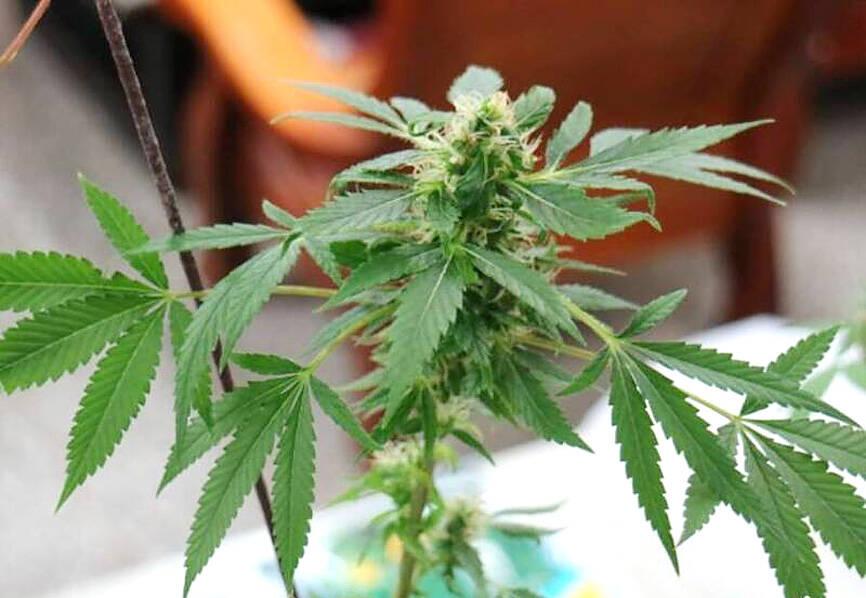
Photo: Taipei Times
Given the addictive nature of narcotics and the potential for impaired judgement, cognition and driving ability, authorities believe that drug users could drive at any time under the influence, so removing their driving privileges until they have been treated is necessary to protect public road safety, the ministry said.
The proposed amendments further include increased fines for first-time and repeat drug driving offenses of up to NT$120,000, and license suspensions of one or two years expanded to revocations with a ban on reapplying for three years, it said.
Moreover, those aged over 18 who knowingly ride with a driver under the influence of drugs would also face penalties, with fines up to NT$15,000, it added.
The ministry also announced today that it plans to establish a driver qualification management system for drug users and drug-impaired drivers, with those whose licenses are suspended or revoked required to complete addiction treatment or drug awareness courses.
They would also have to remain drug-free for a specified period before they could obtain a new license or renew an existing one, it said.
Fines for drug-impaired car drivers would increase from NT$30,000 to NT$120,000, while motorcycle drivers would face fines up from NT$15,000 to NT$90,000, Minister of Transportation and Communications Chen Shih-kai (陳世凱) said.
The MOTC plans to submit the proposed amendments to the Road Traffic Management and Penalty Act (道路交通管理處罰條例) to the Executive Yuan this month, and following approval, it would be sent to the legislature for review.
The ministry said it aims to implement the amendments by the end of the year.
Under Taiwanese law, drug use itself is illegal, and driving under the influence could turn a vehicle into a deadly weapon, MOTC Secretary-General Shen Hui-hung (沈慧虹) said.
Article 5-8 of the Criminal Code provides that narcotics offenses committed outside of Taiwan are still subject to Taiwanese law, except in cases of simple possession or use, he added.
Cannabis, a Class II narcotic, presents an issue, as THC remains detectable in the body a long time after use, he said.
However, if drugs are legal overseas, but illegal in Taiwan, people still need to comply with Taiwan’s laws, he added.
Therefore, if police confirm drug use within Taiwan and report it, the offender may be penalized under the new amendments, even if the cannabis consumption occurred overseas, the MOTC said.
Enforcement of the new penalties would rely on police stops and investigations, although police do not conduct random inspections and are looking for suspicious behavior, Shen said.
Asked whether the revised laws would authorize law enforcement to directly confiscate vehicles involved in drug-driving, Department of Public Transportation and Supervision specialist Michael Chao (趙晉緯) told reporters the ministry would study the feasibility of the measure.

NATIONAL SECURITY: Authorities are working to confirm the identities of the military personnel involved and investigating possible illegal conduct and regulatory violations Authorities are probing possible national security implications after Kinmen police and immigration officers on Sunday found a Chinese woman allegedly posing as a tourist while engaging in prostitution involving more than 10 military personnel. The woman, surnamed Chen (陳), has since been deported, authorities said, adding that investigators are still working to confirm the identities of those implicated, as the records only listed code names and aliases. The case stemmed from a report received by the Kinmen District Prosecutors’ Office on Friday last week from the Jinhu Precinct of the Kinmen County Police Bureau. On Sunday, police, along with the National Immigration

GLOBALGIVING: ‘ Caving to external pressure is not acceptable for an organization that has cultivated justice reform and human rights for 30 years,’ one NGO said A slew of non-government organizations (NGOs) have withdrawn from the GlobalGiving fundraising platform after it announced it would use “Chinese Taipei” instead of “Taiwan” from next month. The Taiwan Good Rice Association wrote on Facebook on Friday that it was informed on April 28 via a teleconference call of the change, which was made because the platform wanted to operate in China. Taiwan Good Rice is to terminate all cooperative relationships with GlobalGiving in response to the platform’s “unilateral and non-negotiable” decision to remove references to Taiwan, the NGO said. “Taiwan is in the official name of Taiwan Good Rice Association and the

HEAVY WEATHER: Typhoon Jangmi is due to crash straight into the Ryukyus as airlines look to shift flights to larger aircraft or cancel flights to Okinawa entirely Taiwan’s international air carriers announced flight adjustments over the weekend as Typhoon Jangmi is forecast to hit the Ryukyu Islands today and tomorrow. The Central Weather Administration (CWA) upgraded Jangmi from a tropical storm to a typhoon at 8am yesterday, with the eye located 580km south of Naha city. It was moving north at 19kph. Today, China Airlines’ CI-120, CI-121, CI-122 and CI-123 flights between Taoyuan and Naha, Okinawa, have been canceled as well as CI-132 and CI-133 between Kaohsiung and Naha. EVA Air’s BR-112, BR-113, BR-186 and BR-185 flights between Taoyuan and Naha are also canceled. Low-cost carrier Tigerair Taiwan canceled IT-230,
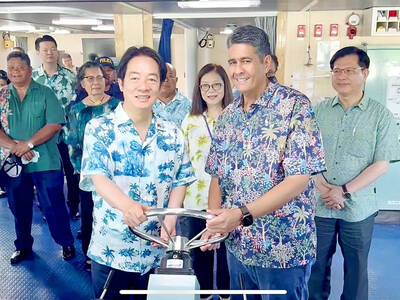
MULTIPRONGED APPROACH: China has sought to pressure Palau across a number of fronts, but the island nation has staunchly resisted overtures to ditch Taiwan Palau has been firm in backing Taiwan despite Chinese pressure that uses tourism economics, cyberattacks and criminal infiltration as tools to threaten the Pacific ally into renouncing its recognition of Taiwan as a sovereign state. The Presidential Office yesterday announced that Vice President Hsiao Bi-khim (蕭美琴) would visit Palau from Saturday to Wednesday next week at the invitation of Palauan President Surangel Whipps Jr. Whipps in April said in an interview that China had outspokenly asked Palau to “denounce Taiwan.” “And we have said: ‘We have no enemies, but nobody tells us who our friends are,’” he said. Whipps has told reporters multiple times


 RSS
RSS