


Although 91.1 percent of parents said they were aware of infant safe sleep practices, 84 percent said they were unable to put their babies in a separate bed, the Jing Chuan Child Safety Foundation said in its Infants’ Sleeping Conditions Safety Index Report released yesterday.
According the Ministry of Health and Welfare’s 2022-2023 Cause of Death for Children under the Age of Six Retrospective Analysis Report, 43 of 84 infant deaths during sleep were “highly preventable,” foundation executive officer Hsu Ya-jen (許雅荏) said, adding that it showed there was still room for improvement in infant sleep safety.
The poll found that many parents found it difficult to let infants sleep in a separate bed due to convenience and ease of access factors, Hsu said.
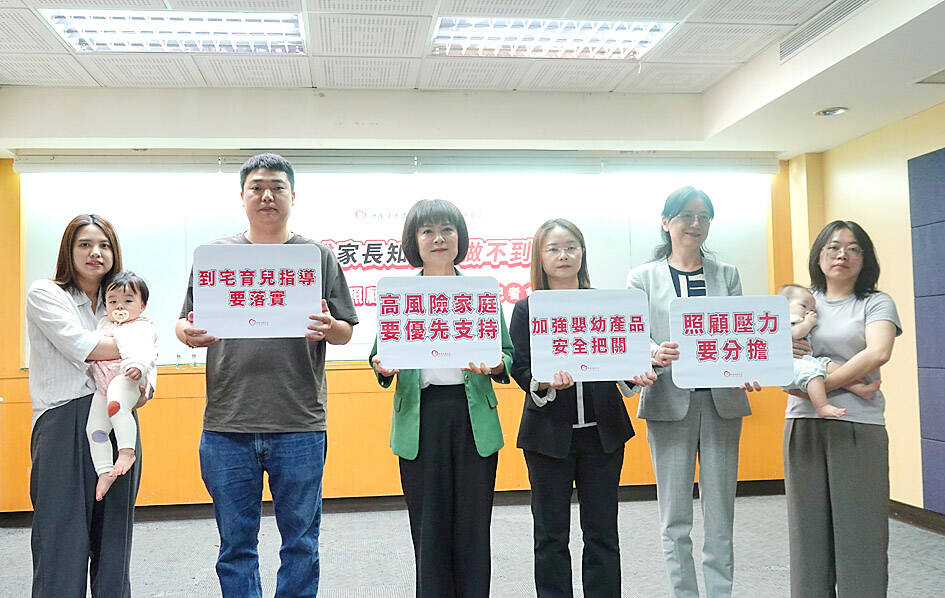
Photo courtesy of the Jing Chuan Child Safety Foundation
About 80 percent of parents said they seldom received, or were almost entirely ignorant of, information regarding sleep safety for infants, and the same number of respondents said they did not know infants should sleep on their backs nor that it is better to have a hard mattress, the poll found.
Mattress hardness was the least covered topic in infant sleep safety, with only 57.56 percent of polled parents saying they were aware of it, the survey found.
MacKay Children’s Hospital pediatrician Peng Chun-chih (彭純芝) cited a few myths that increase the risk of infants suffocating while sleeping, such as allowing infants to lay on their bellies make it easier to sleep, side sleeping helps prevent vomiting and using “head shaping” pillows.
The risk of infants suffocating increases by two to three times when sleeping on the same bed with parents or siblings, Peng added.
Hsu said the foundation is stepping up efforts to conduct family visits — prioritizing high-risk families — and making infant products safer.
Parents should not only know, but also implement sleep safety concepts such as that infants should not sleep on their bellies, use pillows, sleep in soft mattresses, suffer from heat, nor sleep on the same bed as other people, Hsu added.
Sleeping mattresses and other sleep products should be subject to inspection standards, and the government should have systems in place to issue warnings to daycare centers, family childcare services and other child-friendly locations, Hsu said.
Democratic Progressive Party Legislator Lin Yueh-chin (林月琴) said the government should establish systems to warn parents about high-risk infant products and promptly shelve them.
The poll, conducted between February and March, surveyed parents of children younger than one in all six special municipalities, and yielded 406 valid samples.

AGING: While Japan has 22 submarines, Taiwan only operates four, two of which were commissioned by the US in 1945 and 1946, and transferred to Taiwan in 1973 Taiwan would need at least 12 submarines to reach modern fleet capabilities, CSBC Corp, Taiwan chairman Chen Cheng-hung (陳政宏) said in an interview broadcast on Friday, citing a US assessment. CSBC is testing the nation’s first indigenous defense submarine, the Hai Kun (海鯤, Narwhal), which is scheduled to be delivered to the navy next month or in July. The Hai Kun has completed torpedo-firing tests and is scheduled to undergo overnight sea trials, Chen said on an SET TV military affairs program. Taiwan would require at least 12 submarines to establish a modern submarine force after assessing the nation’s operational environment and defense
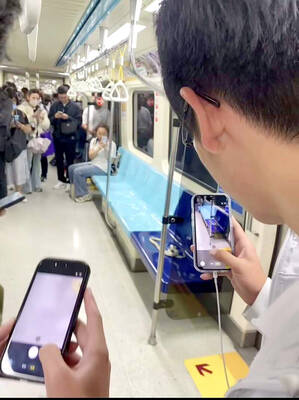
A white king snake that frightened passengers and caused a stir on a Taipei MRT train on Friday evening has been claimed by its owner, who would be fined, Taipei Rapid Transit Corp (TRTC) said yesterday. A person on Threads posted that he thought he was lucky to find an empty row of seats on Friday after boarding a train on the Bannan (Blue) Line, only to spot a white snake with black stripes after sitting down. Startled, he jumped up, he wrote, describing the encounter as “terrifying.” “Taipei’s rat control plan: Release snakes on the metro,” one person wrote in reply, referring

The coast guard today said that it had disrupted "illegal" operations by a Chinese research ship in waters close to the nation and driven it away, part of what Taipei sees a provocative pattern of China's stepped up maritime activities. The coast guard said that it on Thursday last week detected the Chinese ship Tongji (同濟號), which was commissioned only last year, 29 nautical miles (54km) southeast of the southern tip of Taiwan, although just outside restricted waters. The ship was observed lowering ropes into the water, suspected to be the deployment of scientific instruments for "illegal" survey operations, and the coast
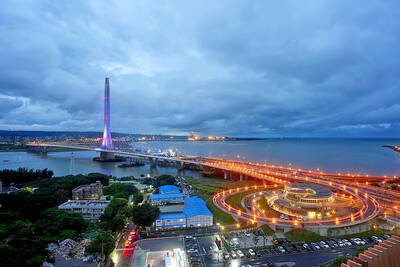
An inauguration ceremony was held yesterday for the Danjiang Bridge, the world’s longest single-mast asymmetric cable-stayed bridge, ahead of its official opening to traffic on Tuesday, marking a major milestone after nearly three decades of planning and construction. At the ceremony in New Taipei City attended by President William Lai (賴清德), Premier Cho Jung-tai (卓榮泰), Minister of Transportation and Communications Chen Shih-kai (陳世凱) and New Taipei City Mayor Hou Yu-ih (侯友宜), the bridge was hailed as both an engineering landmark and a long-awaited regional transport link connecting Tamsui (淡水) and Bali (八里)


 RSS
RSS