


Taipei is stepping up efforts against rodent infestations by expanding tracking methods and calling on the central government to establish a unified national monitoring system to better assess pest control effectiveness.
Speaking at the launch of the city’s new community rodent detection service yesterday, Taipei Department of Environmental Protection Director Shyu Shyh-shiun (徐世?) said Taiwan lacks a standardized method for estimating rodent populations.
Until such a system is established, the city would expand its use of the “trap-night” method, while also tracking active rat burrows and public reports as indicators of infestation trends, Shyu said.
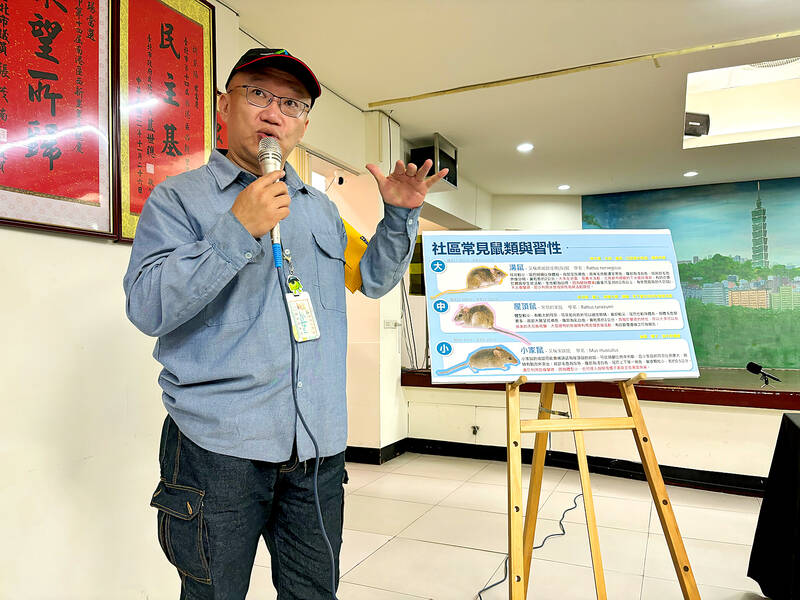
Photo: CNA
The department said the “trap-night” method evaluates rodent control effectiveness by placing baited traps before and after extermination measures are carried out and comparing capture results.
The department also announced that residents can apply for free professional rodent inspection services starting tomorrow by downloading an application form from the department Web site and submitting it by mail, fax or e-mail.
Shyu said the department has more than 80 disinfection specialists, each assisted by one or two cleaning workers, which should be sufficient to meet demand.
Kao Chien-fu (高健富), head of a department disinfection squad and one of the city’s newly designated rodent detection specialists, said a typical household inspection takes about two hours, including identifying rodent traces, determining species and recommending prevention measures.
Kao said three rodent species are commonly found in Taiwanese homes.
The roof rat, the most common household invader, has a tail longer than its body and prefers fruit and sweet potatoes, often nesting in ceilings or elevated hiding spots, he said.
“You won’t catch them with meat in a trap,” Kao said.
The Norway rat, also known as the brown rat, has a shorter tail and poor climbing ability, and is commonly found in sewers, garbage collection areas and traditional markets, where it prefers meat-based food sources, he added.
The house mouse, the smallest of the three, feeds mainly on grains and is often mistaken for a young roof rat, Kao said.
The inspection service would focus on identifying rodent access routes, such as pipes, wiring and structural gaps, while providing residents with customized recommendations on sanitation and environmental management to reduce food sources and nesting sites.
Taipei has rolled out a series of sanitation and pest control measures, including district-wide cleaning campaigns and the deployment of rodent prevention specialists, amid heightened public concern over rodent-related disease risks.
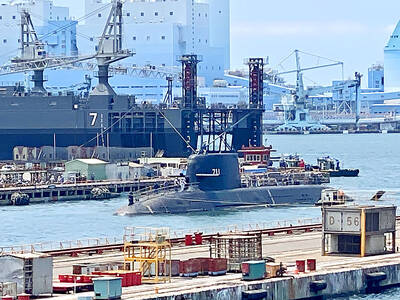
AGING: While Japan has 22 submarines, Taiwan only operates four, two of which were commissioned by the US in 1945 and 1946, and transferred to Taiwan in 1973 Taiwan would need at least 12 submarines to reach modern fleet capabilities, CSBC Corp, Taiwan chairman Chen Cheng-hung (陳政宏) said in an interview broadcast on Friday, citing a US assessment. CSBC is testing the nation’s first indigenous defense submarine, the Hai Kun (海鯤, Narwhal), which is scheduled to be delivered to the navy next month or in July. The Hai Kun has completed torpedo-firing tests and is scheduled to undergo overnight sea trials, Chen said on an SET TV military affairs program. Taiwan would require at least 12 submarines to establish a modern submarine force after assessing the nation’s operational environment and defense

A white king snake that frightened passengers and caused a stir on a Taipei MRT train on Friday evening has been claimed by its owner, who would be fined, Taipei Rapid Transit Corp (TRTC) said yesterday. A person on Threads posted that he thought he was lucky to find an empty row of seats on Friday after boarding a train on the Bannan (Blue) Line, only to spot a white snake with black stripes after sitting down. Startled, he jumped up, he wrote, describing the encounter as “terrifying.” “Taipei’s rat control plan: Release snakes on the metro,” one person wrote in reply, referring
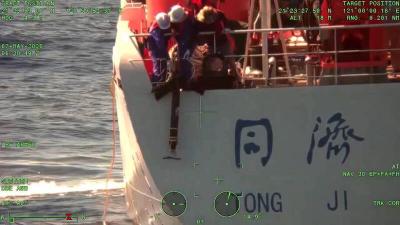
The coast guard today said that it had disrupted "illegal" operations by a Chinese research ship in waters close to the nation and driven it away, part of what Taipei sees a provocative pattern of China's stepped up maritime activities. The coast guard said that it on Thursday last week detected the Chinese ship Tongji (同濟號), which was commissioned only last year, 29 nautical miles (54km) southeast of the southern tip of Taiwan, although just outside restricted waters. The ship was observed lowering ropes into the water, suspected to be the deployment of scientific instruments for "illegal" survey operations, and the coast
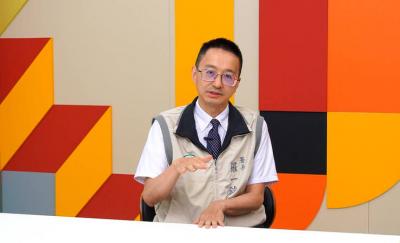
Taiwan’s two cases of hantavirus so far this year are on par with previous years’ case numbers, and the government is coordinating rat extermination work, so there should not be any outbreaks, Centers for Disease Control (CDC) Director-General Philip Lo (羅一鈞) said today in an interview with the Liberty Times (the Taipei Times’ sister newspaper). An increase in rat sightings in Taipei and New Taipei City has raised concerns about the spread of hantavirus, as rats can carry the disease. In January, a man in his 70s who lived in Taipei’s Daan District (大安) tested positive posthumously for hantavirus, Taiwan’s


 RSS
RSS