


It is a verbal tightrope US presidents have had to walk for about 50 years, where even small slip-ups when stating official US policy toward Taiwan and China can trigger geopolitical alarm bells.
The way the US views Taiwan under the “one China” policy acknowledges the Chinese position that Taiwan is part of China, while still allowing for informal US relations with Taiwan.
It is intended to be vague, built on what has become known as strategic ambiguity.
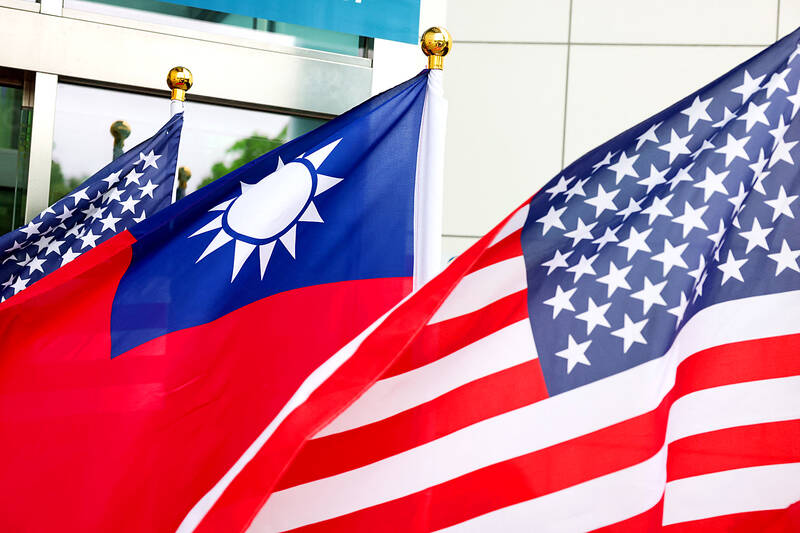
Photo: I-hwa Cheng, AFP
Then-US assistant secretary of defense Joseph Nye in 1995 said to Chinese officials wondering how the US would react to a Taiwan crisis: “We don’t know, and you don’t know.”
“The idea was, stick to the very careful language that’s been crafted and don’t vary,” said Mike McCurry, former White House press secretary under former US president Bill Clinton.
“Because there are too many people listening and paying attention,” McCurry said.
The policy could again be pushed into the spotlight during US President Donald Trump’s visit to China this week.
In the past, some US officials have flubbed it, requiring swift diplomatic cleanup.
“It’s the precision of the words,” former US National Security Council spokesman John Kirby said. “They just have to be so extraordinarily precise when you’re talking about Taiwan because, quite frankly, the stakes are enormously high.”
Former US president Joe Biden suggested four times that the US would intervene militarily if China were to invade Taiwan, forcing White House officials to clarify that he was not undoing decades of precedent.
Trump was president-elect in 2016 when he took a call from then-president Tsai Ing-wen (蔡英文) — likely the first president to do so since the US severed diplomatic relations with the nation in 1979.
He later scoffed at the hubbub, posting: “Interesting how the US sells Taiwan billions of dollars of military equipment, but I should not accept a congratulatory call.”
The following year, the Trump White House issued a statement about a meeting in Germany between Chinese President Xi Jinping (習近平) and Trump that described Xi as president of the Republic of China, the formal name for Taiwan — not the People’s Republic of China.
“There is a lot of difficulty to navigate a lot of these concepts. However, the reason why that is the case — a lot of misunderstanding and misspeaking — is because those concepts are conceptual traps set up by China,” said Miles Yu (余茂春), principal China policy adviser to former US secretary of state Mike Pompeo. “You cannot explain something that’s unexplainable.”
Yu, now a senior fellow and director of the China Center at the Hudson Institute, has advocated for more firmly stating the US commitment to defending Taiwan.
The concept of a “one China” policy or a “one China” principle, as Beijing calls its insistence that Taiwan is an inalienable part of China, was “completely of Chinese making,” he said.
“No one inside the Chinese high command has ever believed there is any ambiguity as to America’s resolve to defend Taiwan,” Yu said.
Instead, the US has long adhered to plans to defend Taiwan in proportion to Chinese threats, as evidenced by Washington repeatedly mobilizing forces to the Taiwan Strait over the years amid heightened tensions, he said.
Today, the Trump White House says there has been no change in policy, but scoffs at the idea of verbal gymnastics required in stating it, saying that Trump has approved major arms sales to Taiwan over the years.
The policy was always hard to articulate.
Under an agreement with Beijing beginning in 1979 with then-US president Jimmy Carter, the US began adhering to the “one China” policy.
Carter’s administration spent months in secret negotiations with China to reach the agreement, yet Carter later said that it “does nothing to prevent” a future president or US Congress from “even going to war” to protect Taiwan.
Clinton, during a 1998 roundtable in Shanghai, said he supported the “three no’s”: The US not supporting Taiwanese independence, not supporting the “two Chinas” idea and not backing Taiwan’s admittance into international organizations.
However, the following year, Clinton said: “You know what I’ve done in the past,” seeming to point to previous US military interventions and suggesting he could do something similar involving Taiwan.
During a 2001 interview with The Associated Press, then-US president George W. Bush was asked whether the US might use military force to counter a Chinese attack on Taiwan and answered: “It’s certainly an option.”
Bush later told CNN that did not mean the US was toughening its stance, saying: “I have said that I will do what it takes to help Taiwan defend itself.”
In 1989, then-US president George H.W. Bush said during a banquet in China that while the US adheres to “the bedrock principle that there is but one China, we have found ways to address Taiwan constructively without rancor.”
During a 2014 joint news conference in Beijing with Xi, then-US president Barack Obama said: “We encourage further progress by both sides of the Taiwan Strait towards building ties, reducing tensions and promoting stability on the basis of dignity and respect.”
Still, getting it right can be tricky.
“Anybody who has been at the State Department, the Pentagon or even the White House podium can tell you: When the issue of Taiwan came up, you went to your notes,” Kirby said. “You didn’t freelance it.”
Yet Kirby recalled that he “got cocky once and didn’t,” mischaracterizing the policy and causing “a little kerfuffle.”
Any big error usually first draws complaints from US policy officials, who are not shy with their displeasure, Kirby said, adding that “you’ll be highly encouraged to make a statement correcting it right away.”
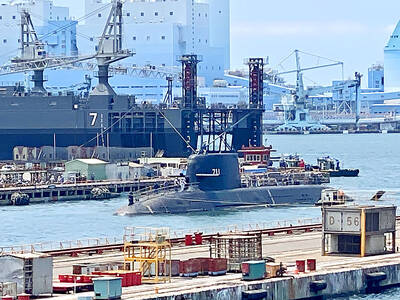
AGING: While Japan has 22 submarines, Taiwan only operates four, two of which were commissioned by the US in 1945 and 1946, and transferred to Taiwan in 1973 Taiwan would need at least 12 submarines to reach modern fleet capabilities, CSBC Corp, Taiwan chairman Chen Cheng-hung (陳政宏) said in an interview broadcast on Friday, citing a US assessment. CSBC is testing the nation’s first indigenous defense submarine, the Hai Kun (海鯤, Narwhal), which is scheduled to be delivered to the navy next month or in July. The Hai Kun has completed torpedo-firing tests and is scheduled to undergo overnight sea trials, Chen said on an SET TV military affairs program. Taiwan would require at least 12 submarines to establish a modern submarine force after assessing the nation’s operational environment and defense

A white king snake that frightened passengers and caused a stir on a Taipei MRT train on Friday evening has been claimed by its owner, who would be fined, Taipei Rapid Transit Corp (TRTC) said yesterday. A person on Threads posted that he thought he was lucky to find an empty row of seats on Friday after boarding a train on the Bannan (Blue) Line, only to spot a white snake with black stripes after sitting down. Startled, he jumped up, he wrote, describing the encounter as “terrifying.” “Taipei’s rat control plan: Release snakes on the metro,” one person wrote in reply, referring
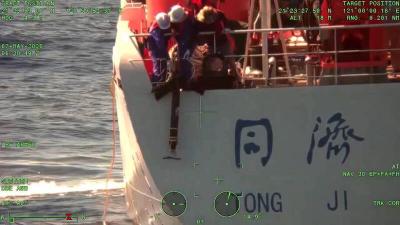
The coast guard today said that it had disrupted "illegal" operations by a Chinese research ship in waters close to the nation and driven it away, part of what Taipei sees a provocative pattern of China's stepped up maritime activities. The coast guard said that it on Thursday last week detected the Chinese ship Tongji (同濟號), which was commissioned only last year, 29 nautical miles (54km) southeast of the southern tip of Taiwan, although just outside restricted waters. The ship was observed lowering ropes into the water, suspected to be the deployment of scientific instruments for "illegal" survey operations, and the coast
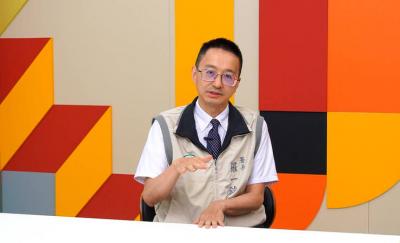
Taiwan’s two cases of hantavirus so far this year are on par with previous years’ case numbers, and the government is coordinating rat extermination work, so there should not be any outbreaks, Centers for Disease Control (CDC) Director-General Philip Lo (羅一鈞) said today in an interview with the Liberty Times (the Taipei Times’ sister newspaper). An increase in rat sightings in Taipei and New Taipei City has raised concerns about the spread of hantavirus, as rats can carry the disease. In January, a man in his 70s who lived in Taipei’s Daan District (大安) tested positive posthumously for hantavirus, Taiwan’s


 RSS
RSS