


The Mainland Affairs Council (MAC) yesterday condemned Beijing for urging local media outlets to "expose" Taiwan independence activities, saying that media representatives could face prosecution if they help China target Taiwanese.
Chinese authorities had "summoned certain Taiwanese media outlets to Beijing for instructions and urged them to 'jointly expose Taiwan independence separatist activities,'" the MAC said in a statement.
Such a move "essentially amounts to asking Taiwanese media to cooperate with the Chinese Communist Party's transnational repression against Taiwan and restrict the freedoms of the Taiwanese people through intimidation," the MAC said.
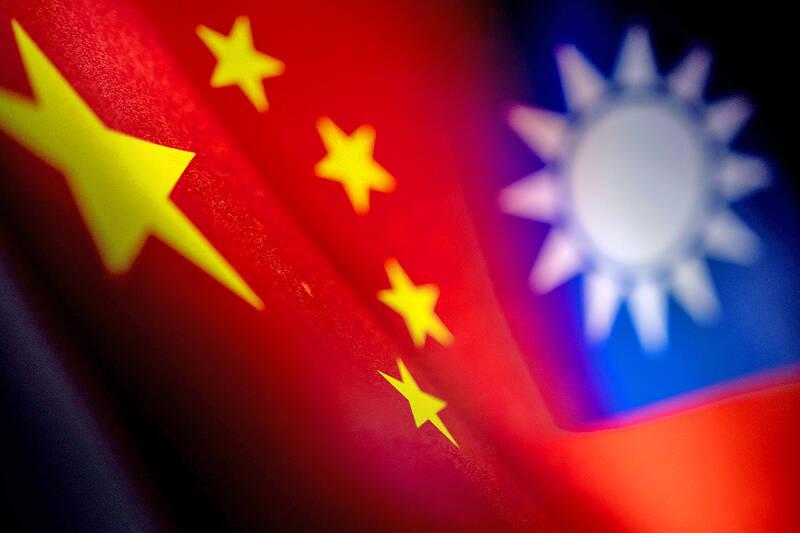
Photo: Reuters
In Taiwan, peaceful advocacy of independence is protected as free speech.
The MAC described the move as Beijing's tactic of "using Taiwan to control Taiwan."
The agency's statement came after Wu Xi (吳璽), deputy director of China's Taiwan Affairs Office, made remarks on the role of cross-strait media at the seventh edition of the cross-strait media summit in Beijing earlier yesterday.
Speaking at the event, Wu said that "Taiwan independence separatist forces" have been spreading false information and malicious remarks to incite anti-China sentiment and create cross-strait confrontation, seriously undermining peace and stability in the Taiwan Strait.
Wu urged media professionals from both sides to "use truthful reporting and rational commentary to expose the harmfulness and danger of Taiwanese independence activities and external interference."
Taiwanese media outlets that sent representatives to the event could breach laws such as the Anti-Infiltration Act (反滲透法) and National Security Act (國家安全法) if they cooperate with Beijing as "local collaborators" in its campaign to "punish Taiwan independence,” the MAC said.
Examples of such conduct include following Beijing's instructions to "exploit press freedom" by accusing specific individuals of being Taiwanese independence advocates, providing Taiwanese citizens' personal information or disseminating bounty notices, MAC said.
Contraventions could carry a maximum prison sentence of more than seven years, the agency added.
More than 100 media executives and journalism academics attended this year's summit, including Chou Hsi-wei (周錫瑋), vice chairman of the Want Want Group, which owns media outlets such as CTi Television Inc and the China Times, China's state-run Xinhua news agency said.
An exclusive report by the Liberty Times (the Taipei Times’ sister newspaper) yesterday cited national security sources as saying that other Taiwanese attendees included representatives from United Daily News, TVBS and The Observer magazine.
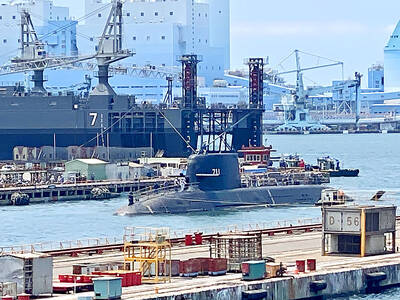
AGING: While Japan has 22 submarines, Taiwan only operates four, two of which were commissioned by the US in 1945 and 1946, and transferred to Taiwan in 1973 Taiwan would need at least 12 submarines to reach modern fleet capabilities, CSBC Corp, Taiwan chairman Chen Cheng-hung (陳政宏) said in an interview broadcast on Friday, citing a US assessment. CSBC is testing the nation’s first indigenous defense submarine, the Hai Kun (海鯤, Narwhal), which is scheduled to be delivered to the navy next month or in July. The Hai Kun has completed torpedo-firing tests and is scheduled to undergo overnight sea trials, Chen said on an SET TV military affairs program. Taiwan would require at least 12 submarines to establish a modern submarine force after assessing the nation’s operational environment and defense

A white king snake that frightened passengers and caused a stir on a Taipei MRT train on Friday evening has been claimed by its owner, who would be fined, Taipei Rapid Transit Corp (TRTC) said yesterday. A person on Threads posted that he thought he was lucky to find an empty row of seats on Friday after boarding a train on the Bannan (Blue) Line, only to spot a white snake with black stripes after sitting down. Startled, he jumped up, he wrote, describing the encounter as “terrifying.” “Taipei’s rat control plan: Release snakes on the metro,” one person wrote in reply, referring
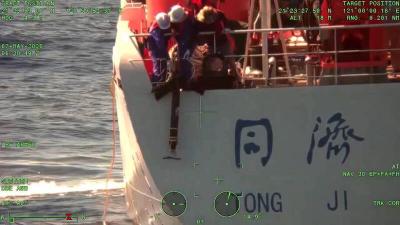
The coast guard today said that it had disrupted "illegal" operations by a Chinese research ship in waters close to the nation and driven it away, part of what Taipei sees a provocative pattern of China's stepped up maritime activities. The coast guard said that it on Thursday last week detected the Chinese ship Tongji (同濟號), which was commissioned only last year, 29 nautical miles (54km) southeast of the southern tip of Taiwan, although just outside restricted waters. The ship was observed lowering ropes into the water, suspected to be the deployment of scientific instruments for "illegal" survey operations, and the coast
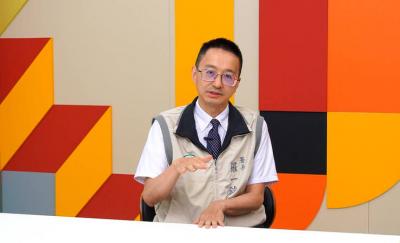
Taiwan’s two cases of hantavirus so far this year are on par with previous years’ case numbers, and the government is coordinating rat extermination work, so there should not be any outbreaks, Centers for Disease Control (CDC) Director-General Philip Lo (羅一鈞) said today in an interview with the Liberty Times (the Taipei Times’ sister newspaper). An increase in rat sightings in Taipei and New Taipei City has raised concerns about the spread of hantavirus, as rats can carry the disease. In January, a man in his 70s who lived in Taipei’s Daan District (大安) tested positive posthumously for hantavirus, Taiwan’s


 RSS
RSS