


The Taipei District Court today sentenced well-known author Wang Yun (王薀) to 12 years in prison for injury causing death, following the fatal abuse of a follower at a Taipei Buddhist center in July 2024.
Actor Lee Wei (李威), 45, and his wife, Chien Yu-chia (簡瑀家), who were also implicated in the case as followers of Wang, were sentenced to one year and 10 months and one year and eight months in prison respectively, suspended for five years as they cooperated with the state as witnesses.
Several senior followers who acted as "enforcers" and the center's abbess were given 10-year sentences, while the remaining defendants received terms ranging from one-and-a-half to 10 years.
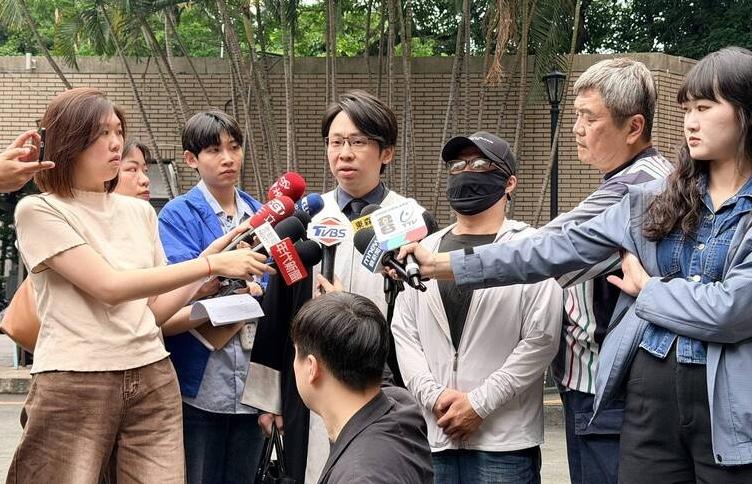
Photo: Chang Wen-chuan, Taipei Times
The rulings can be appealed.
Wang, whose real name is Wang Chiang-chen (王江鎮), styled himself as a "spiritual master" at the center he founded 30 years ago.
If followers were deemed to have made mistakes or exhibited character flaws, they were subjected to "review sessions" involving mob encirclement, verbal abuse and physical coercion, the court said.
The victim, a female follower surnamed Tsai (蔡), served as an accountant for the center.
According to the court, Wang became furious after Tsai allegedly made an accounting error while handling the division of his property during a divorce, causing him to lose millions of New Taiwan dollars.
In retaliation, Wang and his followers organized "struggle sessions" to force Tsai to admit her mistakes, it said.
They subjected her to extreme physical punishments, including forcing her to perform 400 to 500 full prostrations daily, the court said.
Despite Tsai being only 141cm tall, Wang ordered her to do running jumps to touch ceiling lights, carry other followers on her back and roll on the ground, the court said.
The physical abuse culminated in a nearly five-hour ordeal in which she was forced to repeatedly kneel before a Bodhisattva statue, dragged back and forth, and kneed in the back to force her to kowtow, it said.
Other followers also struck her on the back of the head, shoulders and buttocks, the court said.
At one point, Tsai was dragged, causing her head to strike the pavement, it said, adding that other followers either watched, voiced support or stood guard at the door.
Tsai ultimately died of rhabdomyolysis — or severe skeletal muscle breakdown — brought on by prolonged physical abuse, the court said.
Despite finding Tsai unconscious, the followers failed to call an ambulance and formed a chat group to collude on a story attributing her death to poor health, it said, adding that by the time an ambulance was called, Tsai was already deceased.
Due to the complexity of the case, the court opted not to use the citizen judge system and instead proceeded with a standard trial, delivering its verdict today.
Additional reporting by CNA
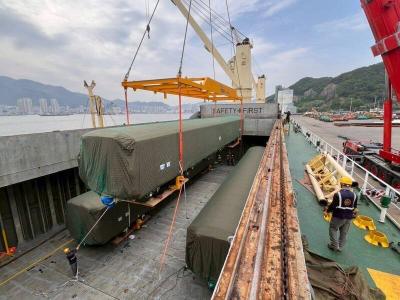
The first of 10 new high-capacity trains purchased from South Korea’s Hyundai Rotem arrived at the Port of Taipei yesterday to meet the demands of an expanding metro network, Taipei Rapid Transit Corp (TRTC) said yesterday. The train completed a three-day, 1,200km voyage from the Port of Masan in South Korea, the company said. Costing NT$590 million (US$18.79 million) each, the new six-carriage trains feature a redesigned interior based on "human-centric" transportation concepts, TRTC said. The design utilizes continuous longitudinal seating to widen the aisles and optimize passenger flow, while also upgrading passenger information displays and driving control systems for a more comfortable

AGING: While Japan has 22 submarines, Taiwan only operates four, two of which were commissioned by the US in 1945 and 1946, and transferred to Taiwan in 1973 Taiwan would need at least 12 submarines to reach modern fleet capabilities, CSBC Corp, Taiwan chairman Chen Cheng-hung (陳政宏) said in an interview broadcast on Friday, citing a US assessment. CSBC is testing the nation’s first indigenous defense submarine, the Hai Kun (海鯤, Narwhal), which is scheduled to be delivered to the navy next month or in July. The Hai Kun has completed torpedo-firing tests and is scheduled to undergo overnight sea trials, Chen said on an SET TV military affairs program. Taiwan would require at least 12 submarines to establish a modern submarine force after assessing the nation’s operational environment and defense

A white king snake that frightened passengers and caused a stir on a Taipei MRT train on Friday evening has been claimed by its owner, who would be fined, Taipei Rapid Transit Corp (TRTC) said yesterday. A person on Threads posted that he thought he was lucky to find an empty row of seats on Friday after boarding a train on the Bannan (Blue) Line, only to spot a white snake with black stripes after sitting down. Startled, he jumped up, he wrote, describing the encounter as “terrifying.” “Taipei’s rat control plan: Release snakes on the metro,” one person wrote in reply, referring
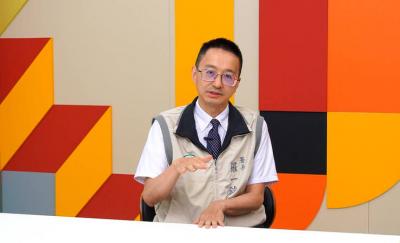
Taiwan’s two cases of hantavirus so far this year are on par with previous years’ case numbers, and the government is coordinating rat extermination work, so there should not be any outbreaks, Centers for Disease Control (CDC) Director-General Philip Lo (羅一鈞) said today in an interview with the Liberty Times (the Taipei Times’ sister newspaper). An increase in rat sightings in Taipei and New Taipei City has raised concerns about the spread of hantavirus, as rats can carry the disease. In January, a man in his 70s who lived in Taipei’s Daan District (大安) tested positive posthumously for hantavirus, Taiwan’s


 RSS
RSS