


An appeal by a Chinese woman married to a Taiwanese national to obtain “settlement residency” in Taiwan, a prerequisite for applying for Taiwanese citizenship, has been denied due to her past employment in Chinese state-linked entities.
In its April 29 decision, the Executive Yuan’s appeal committee also upheld a previous Ministry of the Interior (MOI) review committee ruling that barred Cao from reapplying for settlement residency for three years.
The woman, surnamed Cao (曹), can file an administrative appeal within two months of receiving the decision.
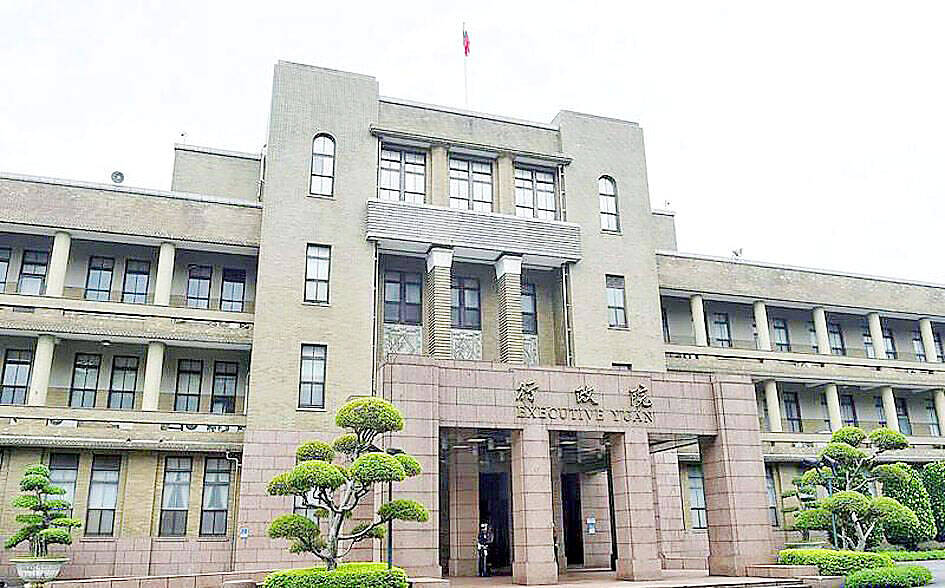
Photo: Chung Li-hua, Taipei Times
Cao first applied for “settlement residency” in August 2025, but the MOI review committee rejected her application in early November, according to the Executive Yuan committee decision.
“Settlement residency” is an intermediate status granted to Chinese spouses in Taiwan, allowing them to apply for household registration in Taiwan within a 30-day window and thereby obtain Taiwanese citizenship.
Under Taiwan’s rules governing residency applications by Chinese nationals, people who currently or previously held posts in Chinese Communist Party (CCP), government, military or political entities in China may be denied “settlement residency.”
The Executive Yuan appeal committee upheld the MOI review committee’s view that her previous employment “clearly” fell within the restricted category.
It also said Cao had “failed to truthfully declare” her work history when applying for “settlement residency” and was suspected of “abnormal China-related activities,” though the decision did not provide further details.
The MOI had found that Cao had previously worked for two entities in China’s Henan Province classified by Taiwan as a CCP, government or military-related unit.
She worked as a specialist at a railway office in Xinxiang between 1991 and 1996, and as director of the Nanqiao office under a district office in Xinxiang between 2001 and 2006, the Executive Yuan committee’s decision said.
The MOI’s review committee learned of Cao’s two previous posts from her 2009 application for “family-based residency” made a few months before marrying her husband that same year.
She was granted “family-based residency” in 2015 and later obtained “long-term residency,” which is valid until July 19, 2026.
When Cao filed her appeal, she argued that she had truthfully disclosed during her immigration screening in 2015 that the posts were assigned to her after graduation in 2000 and only involved errands and other clerical tasks, such as buying office supplies.
Through that screening, she said, she was granted residency in Taiwan at the time, according to the decision.
Cao also argued that the two positions were not covered by a 2004 notice issued by the Mainland Affairs Council (MAC).
In a written statement to the appeal committee to present its side of the argument prior to the decision, the MOI rejected Cao’s arguments, saying the 2004 MAC notice applied to Taiwanese citizens, not Chinese nationals, the decision said.
The ministry also cited a MAC response in September 2025 stating that the railway office was a wholly state- owned company established by the Xinxiang municipal government, and that the Nanqiao office was under the same municipal government, meaning both were Chinese government units.
Cao also argued that denying her “settlement residency” could violate human rights because she has a child in Taiwan.
The Executive Yuan committee disagreed, saying the rejection did not affect her ability to live with her child in Taiwan because she still holds “long-term residency” and may apply to extend it under existing rules.

UPGRADE: The Kang Ding-class frigate is replacing its Chaparall missiles with Tien Chien II and Hua Yang VLS, which would provide it with long-range, 360° air defense Taiwan plans to produce 1,200 to 1,376 Hai Chien II missiles (海劍二, Sea Sword II) — also known as TC-2N — to serve as the standard air defense system of the navy’s surface combatant fleet, a source said yesterday. Last week, the Hai Chien II, the naval version of the Tien Kung II missile (天劍二, Sky Sword II), completed a live-fire test in waters off the National Chungshan Institute of Science and Technology’s Jiupeng facility (九鵬) in Pingtung County’s Manjhou Township (滿州). The MIM72 Chaparral and other dated air defense missiles that currently arm Taiwanese ships have inadequate range to combat Chinese

REASONS FOR TRAVEL: An assistant professor said that proposed amendments to penalize drivers if they used drugs overseas would not deter people from traveling People who operate a motor vehicle under the influence of marijuana would have their driver’s license revoked, even if they used the substance while overseas, the Ministry of Transportation and Communications said yesterday, citing proposed amendments to the Road Traffic Management and Penalty Act (道路交通管理處罰條例). The amendments would also authorize the government to revoke the licenses of people determined to have used Category 1 or Category 2 narcotics, even if they were not operating a vehicle while under the influence of drugs, as well as ban them from taking the license test for three years, the ministry said. People aged 18 or

HEAVY WEATHER: Typhoon Jangmi is due to crash straight into the Ryukyus as airlines look to shift flights to larger aircraft or cancel flights to Okinawa entirely Taiwan’s international air carriers announced flight adjustments over the weekend as Typhoon Jangmi is forecast to hit the Ryukyu Islands today and tomorrow. The Central Weather Administration (CWA) upgraded Jangmi from a tropical storm to a typhoon at 8am yesterday, with the eye located 580km south of Naha city. It was moving north at 19kph. Today, China Airlines’ CI-120, CI-121, CI-122 and CI-123 flights between Taoyuan and Naha, Okinawa, have been canceled as well as CI-132 and CI-133 between Kaohsiung and Naha. EVA Air’s BR-112, BR-113, BR-186 and BR-185 flights between Taoyuan and Naha are also canceled. Low-cost carrier Tigerair Taiwan canceled IT-230,
Johanne Liou (劉喬安), a Taiwanese woman who shot to unwanted fame during the Sunflower movement protests in 2014, returned to Taiwan last night after being deported from the US. She is to stand trial in Taiwan for charges involving embezzlement, fraud and drug crimes. The Criminal Investigation Bureau (CIB) said it took her into custody at Taiwan Taoyuan International Airport and would first question her before transferring her to the New Taipei District Prosecutors’ Office. She was arrested upon disembarking a flight from San Francisco that landed shortly before 7pm. Liou absconded to the US in 2019 after jumping bail


 RSS
RSS