


Hostile foreign powers could exploit transparency rules mandated by the Political Donations Act (政治獻金法) to target Taiwanese nationals and businesses for reprisal, the Control Yuan said yesterday.
Control Yuan member Jao Yung-ching (趙永清) made the remark at news conference on campaign contributions during the 2022 local elections, calling on legislative amendments to protect the political process from foreign interference.
Taiwanese law on political donations is mature and largely enforced without partisan bias, but aspects of the legislation lend itself to foreign governments intent on meddling with the nation’s political affairs, he said.
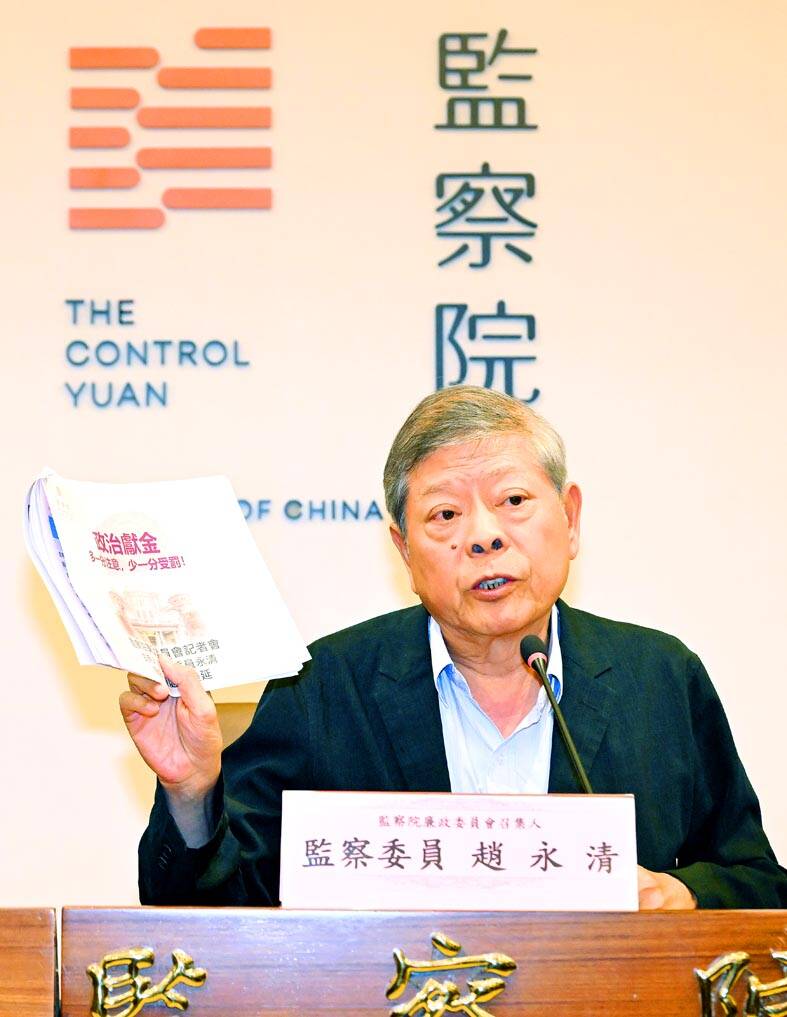
Photo: Liao Chen-huei, Taipei Times
Using information meant to uphold transparency, pro-Beijing propaganda outlets have created blacklists of Taiwanese politicians, businesses and donors who do not support Chinese designs against the nation, Jao said.
These lists appeared to cause Taiwanese entrepreneurs to fear donating to causes that would offend China, which possess much stronger leverage to exert influence, he said.
Such fears might have a perverse effect of encouraging major donors to make anonymous campaign contributions to avoid Beijing’s revenge, with broader negative implications for transparency as a whole, he said.
Citing an example, the Chinese government and its influencers systematically targeted Minister of the Interior Liu Shyh-fang (劉世芳) and his donors with disinformation, smear attacks and threats of prosecution using China’s national security laws, Jao said.
The practicality of Taiwan’s transparency laws — which are some of the world’s most stringent — should be scrutinized in light of direct and targeted threats from Beijing against the nation’s public figures, he said.
Separately, Jao highlighted possible flaws in the laws governing subsidies for political campaigns.
Some politicians appeared to have retained sizeable surpluses from the public subsidies they received for their political campaign after the end of the election or even their full term in office, he said.
The Control Yuan has no specific recommendation for legal changes on political subsidies at the present time, but urges regulators to create better tools for monitoring politician’s use of such subsidies, Jao said.
More data and observation are required for revamping political subsidies, he said.
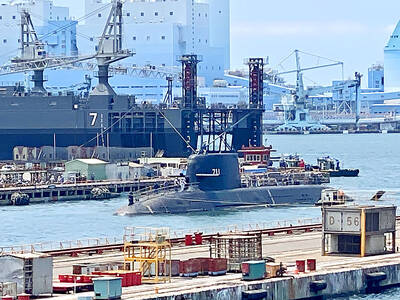
AGING: While Japan has 22 submarines, Taiwan only operates four, two of which were commissioned by the US in 1945 and 1946, and transferred to Taiwan in 1973 Taiwan would need at least 12 submarines to reach modern fleet capabilities, CSBC Corp, Taiwan chairman Chen Cheng-hung (陳政宏) said in an interview broadcast on Friday, citing a US assessment. CSBC is testing the nation’s first indigenous defense submarine, the Hai Kun (海鯤, Narwhal), which is scheduled to be delivered to the navy next month or in July. The Hai Kun has completed torpedo-firing tests and is scheduled to undergo overnight sea trials, Chen said on an SET TV military affairs program. Taiwan would require at least 12 submarines to establish a modern submarine force after assessing the nation’s operational environment and defense

A white king snake that frightened passengers and caused a stir on a Taipei MRT train on Friday evening has been claimed by its owner, who would be fined, Taipei Rapid Transit Corp (TRTC) said yesterday. A person on Threads posted that he thought he was lucky to find an empty row of seats on Friday after boarding a train on the Bannan (Blue) Line, only to spot a white snake with black stripes after sitting down. Startled, he jumped up, he wrote, describing the encounter as “terrifying.” “Taipei’s rat control plan: Release snakes on the metro,” one person wrote in reply, referring
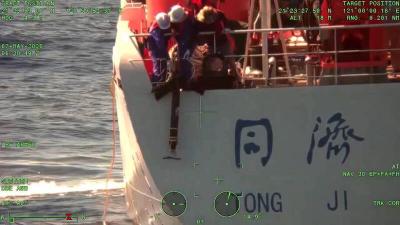
The coast guard today said that it had disrupted "illegal" operations by a Chinese research ship in waters close to the nation and driven it away, part of what Taipei sees a provocative pattern of China's stepped up maritime activities. The coast guard said that it on Thursday last week detected the Chinese ship Tongji (同濟號), which was commissioned only last year, 29 nautical miles (54km) southeast of the southern tip of Taiwan, although just outside restricted waters. The ship was observed lowering ropes into the water, suspected to be the deployment of scientific instruments for "illegal" survey operations, and the coast
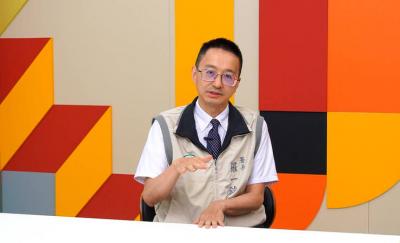
Taiwan’s two cases of hantavirus so far this year are on par with previous years’ case numbers, and the government is coordinating rat extermination work, so there should not be any outbreaks, Centers for Disease Control (CDC) Director-General Philip Lo (羅一鈞) said today in an interview with the Liberty Times (the Taipei Times’ sister newspaper). An increase in rat sightings in Taipei and New Taipei City has raised concerns about the spread of hantavirus, as rats can carry the disease. In January, a man in his 70s who lived in Taipei’s Daan District (大安) tested positive posthumously for hantavirus, Taiwan’s


 RSS
RSS