


The Ministry of Labor yesterday announced a new workplace bullying section to the Occupational Safety and Health Act (職業安全衛生法) to provide standards for preventive action against vocational bullying for employers’ consideration.
The amendments are expected to be promulgated in July.
The changes introduce a chapter clearly defining vocational bullying as actions by managers or colleagues in the workplace, including verbal abuse, vocational intervention, social isolation or criticizing an employee beyond what is necessary and reasonable for the performance of official duties, resulting in the worker suffering from physical or psychological pressure, Occupational Safety and Health Administration official Peng Feng-mei (彭鳳美) said.
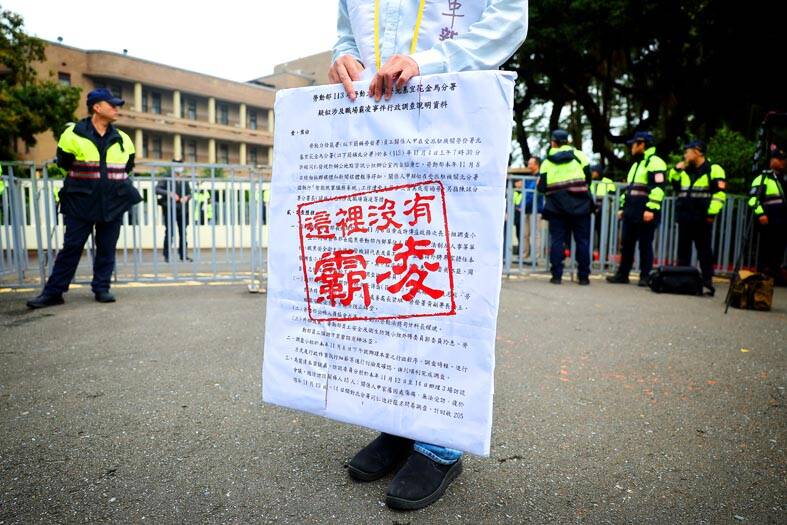
Photo: CNA
The clause “beyond what is necessary and reasonable for the performance of official duties” has drawn concern from industry representatives, as it might blur the boundary between legitimate management and bullying, Peng said.
For example, if a task, on average, requires a month, but instead must be completed within three days, it could be deemed unreasonable, she said.
On what constitutes inappropriate conduct, Occupational Health Division Director Chang Kuo-ming (張國明) said assessments should consider job relevance and repetitive behavior, although each case must be evaluated in context, Chang said.
Under the amendments, all cases must be handled, regardless of company size, Peng said.
Workplaces with more than 10 employees must establish reporting channels, while those with 30 or more must adopt preventive regulations and designate units to handle such cases.
Companies with more than 100 employees must form investigative task forces, with at least half of the members being external experts, Peng said.
An appeals mechanism is required, consisting of at least three members, with two-thirds drawn from third parties, she added.
Workers have a three-year statute of limitations to file complaints, while those who have left their jobs must file within one year of departure.
Designated investigators must complete at least three hours of training on workplace bullying, Peng said.
Employers are required to take prompt and appropriate action upon becoming aware of bullying, including mediation if acceptable to the complainant.
If senior management is involved, local authorities must intervene, notify the organization and ensure that the complainant is protected, Peng said.
Investigations should be completed within two months, with a possible one-month extension.
Preventing workplace bullying is a legal obligation and breaches could be fined up to NT$3 million (US$95,271), which could be increased by up to 50 percent depending on the severity of the offense, Chang said.
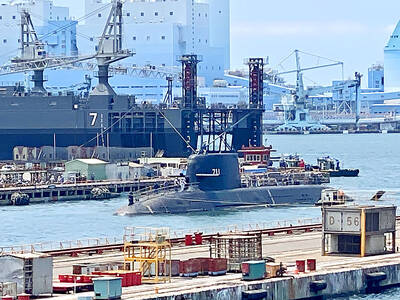
AGING: While Japan has 22 submarines, Taiwan only operates four, two of which were commissioned by the US in 1945 and 1946, and transferred to Taiwan in 1973 Taiwan would need at least 12 submarines to reach modern fleet capabilities, CSBC Corp, Taiwan chairman Chen Cheng-hung (陳政宏) said in an interview broadcast on Friday, citing a US assessment. CSBC is testing the nation’s first indigenous defense submarine, the Hai Kun (海鯤, Narwhal), which is scheduled to be delivered to the navy next month or in July. The Hai Kun has completed torpedo-firing tests and is scheduled to undergo overnight sea trials, Chen said on an SET TV military affairs program. Taiwan would require at least 12 submarines to establish a modern submarine force after assessing the nation’s operational environment and defense

A white king snake that frightened passengers and caused a stir on a Taipei MRT train on Friday evening has been claimed by its owner, who would be fined, Taipei Rapid Transit Corp (TRTC) said yesterday. A person on Threads posted that he thought he was lucky to find an empty row of seats on Friday after boarding a train on the Bannan (Blue) Line, only to spot a white snake with black stripes after sitting down. Startled, he jumped up, he wrote, describing the encounter as “terrifying.” “Taipei’s rat control plan: Release snakes on the metro,” one person wrote in reply, referring
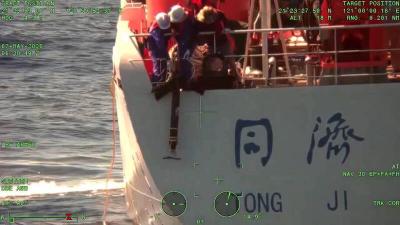
The coast guard today said that it had disrupted "illegal" operations by a Chinese research ship in waters close to the nation and driven it away, part of what Taipei sees a provocative pattern of China's stepped up maritime activities. The coast guard said that it on Thursday last week detected the Chinese ship Tongji (同濟號), which was commissioned only last year, 29 nautical miles (54km) southeast of the southern tip of Taiwan, although just outside restricted waters. The ship was observed lowering ropes into the water, suspected to be the deployment of scientific instruments for "illegal" survey operations, and the coast
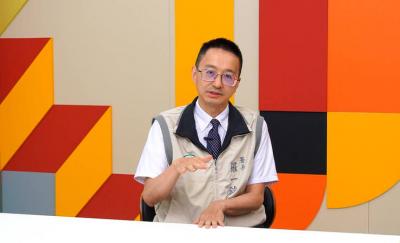
Taiwan’s two cases of hantavirus so far this year are on par with previous years’ case numbers, and the government is coordinating rat extermination work, so there should not be any outbreaks, Centers for Disease Control (CDC) Director-General Philip Lo (羅一鈞) said today in an interview with the Liberty Times (the Taipei Times’ sister newspaper). An increase in rat sightings in Taipei and New Taipei City has raised concerns about the spread of hantavirus, as rats can carry the disease. In January, a man in his 70s who lived in Taipei’s Daan District (大安) tested positive posthumously for hantavirus, Taiwan’s


 RSS
RSS