


The Legislative Yuan’s Internal Administration Committee yesterday approved a draft amendment to Article 23 of the Urban Road Act (市區道路條例), which would change Motor Vehicle Fuel Usage Fees to the “public road usage and maintenance fund.”
Democratic Progressive Party (DPP) Legislator Lin Chun-hsien (林俊憲) said the fees were used for the maintenance, repair and management of public roads, and ensure that the “users pay” principle is observed.
Given the growing prevalence of electric vehicles (EVs), there is a need to change the fee’s name, he said.
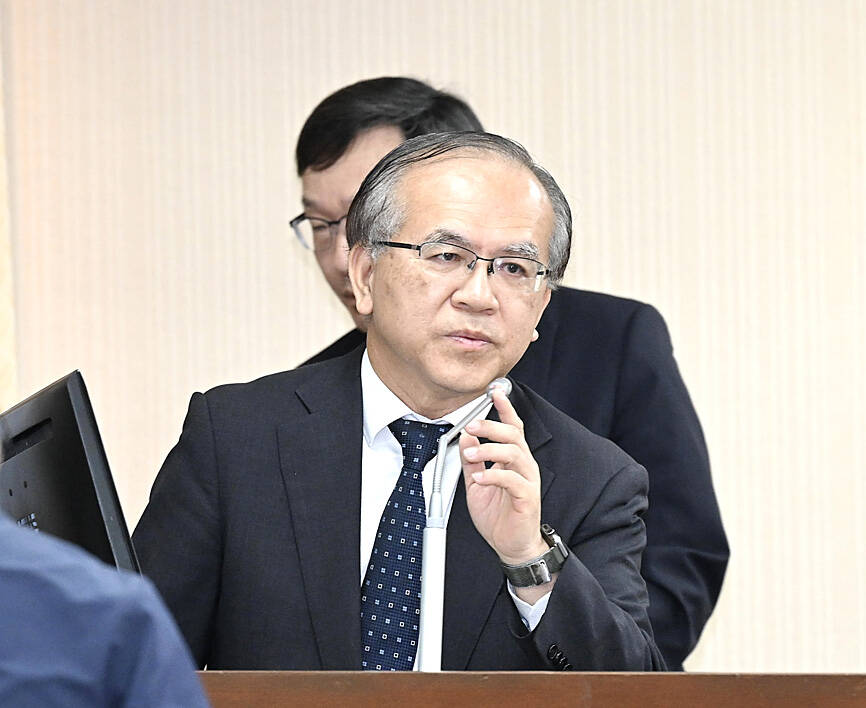
Photo: Lo Pei-de, Taipei Times
During the item-by-item debate at the committee, Chinese Nationalist Party (KMT) Legislator Chang Chih-lun (張智倫) questioned whether changing the fee’s name would affect electric vehicle taxes.
Chang was referring to the government suspending the fuel tax to encourage the transition to electric vehicless.
DPP Legislator Lee Po-yi (李柏毅) said the proposal does not aim to create legitimacy for another tax, but to change the fee’s name to reflect its actual use.
The legislature last year passed amendments to the Vehicle License Tax Act (使用牌照稅法) and the Commodity Tax Act (貨物稅條例), ensuring that commodity tax preferential rates and electric vehicle owners’ waived vehicle license taxes would continue into 2030, Lee said.
Deputy Minister of the Interior Tung Chien-hung (董建宏) said that should the change be ratified, electric vehicle owners would also have to pay to use highways or public roads, per the “users should pay” principle.
The ministry is in talks with the Ministry of Transportation and Communications regarding such fees to ensure that the government’s “net zero by 2050” goal is achieved, Tung said.
Department of Public Transportation and Supervision specialist Michael Chao (趙晉緯) said the goal of encouraging the public to transition to electric vehicles has been achieved, and with the increasing number of electric vehicles on highways and expressways, they as users should also pay maintenance fees.
The details are still being discussed and would be thoroughly talked over with the Ministry of Finance, Chao added.

Kenting National Park service technician Yang Jien-fon (楊政峰) won a silver award in World Grand Prix Photography Awards Spring Season for his photograph of two male rat snakes intertwined in combat. Yang’s colleagues at Kenting National Park said he is a master of nature photography who has been held back by his job in civil service. The awards accept entries in all four seasons across six categories: architectural and urban photography, black-and-white and fine art photography, commercial and fashion photography, documentary and people photography, nature and experimental photography, and mobile photography. Awards are ranked according to scores and divided into platinum, gold and

More than half of the bamboo vipers captured in Tainan in the past few years were found in the city’s Sinhua District (新化), while other districts had smaller catches or none at all. Every year, Tainan captures about 6,000 snakes which have made their way into people’s homes. Of the six major venomous snakes in Taiwan, the cobra, the many-banded krait, the brown-spotted pit viper and the bamboo viper are the most frequently captured. The high concentration of bamboo vipers captured in Sinhua District is puzzling. Tainan Agriculture Bureau Forestry and Nature Conservation Division head Chu Chien-ming (朱健明) earlier this week said that the
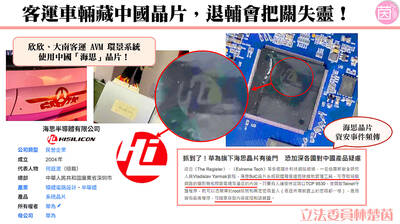
BREACH OF CONTRACT: The bus operators would seek compensation and have demanded that the manufacturer replace the chips with ones that meet regulations Two bus operators found to be using buses with China-made chips are to demand that the original manufacturers replace the systems and provide compensation for breach of contract, the Veterans Affairs Council said yesterday. Democratic Progressive Party Legislator Michelle Lin (林楚茵) yesterday said that Da Nan Bus Co and Shin-Shin Bus Co Ltd have fielded a total of 82 buses that are using Chinese chips. The bus models were made by Tron-E, while the systems provider was CYE Electronics, Lin said. Lin alleged that the buses were using chips manufactured by Huawei subsidiary HiSilicon Co, which presents a national security risk if the
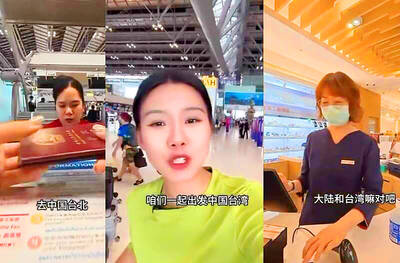
The National Immigration Agency has banned two Chinese from returning to Taiwan, after they published social media content it described as disrespectful to national sovereignty. The agency imposed a two-month ban on a Chinese man surnamed Liang (梁) and a permanent ban on a woman surnamed Yang (楊), an influencer with 23 million followers, in October last year and last week respectively. Minister of the Interior Liu Shyh-fang (劉世芳) yesterday said on the sidelines of a legislative meeting that Chinese visitors to Taiwan are required to comply with the rules and regulations governing their entry permits. The government has handled the ban and


 RSS
RSS