


Ministry of Agriculture officials have proposed to increase the quota for agricultural migrant workers by 20,000, but the Ministry of Labor said it would initially approve 7,000.
The proposal aims to address the labor shortage in agricultural sectors, such as farming, dairy production, livestock raising and beekeeping by raising the quota on foreign workers, agriculture ministry officials said last month.
The pilot program started in 2019 with 800 migrant workers, mainly from Southeast Asian countries, then expanded to 12,000 by mid-2023 and added 8,000 more in 2024, officials said.
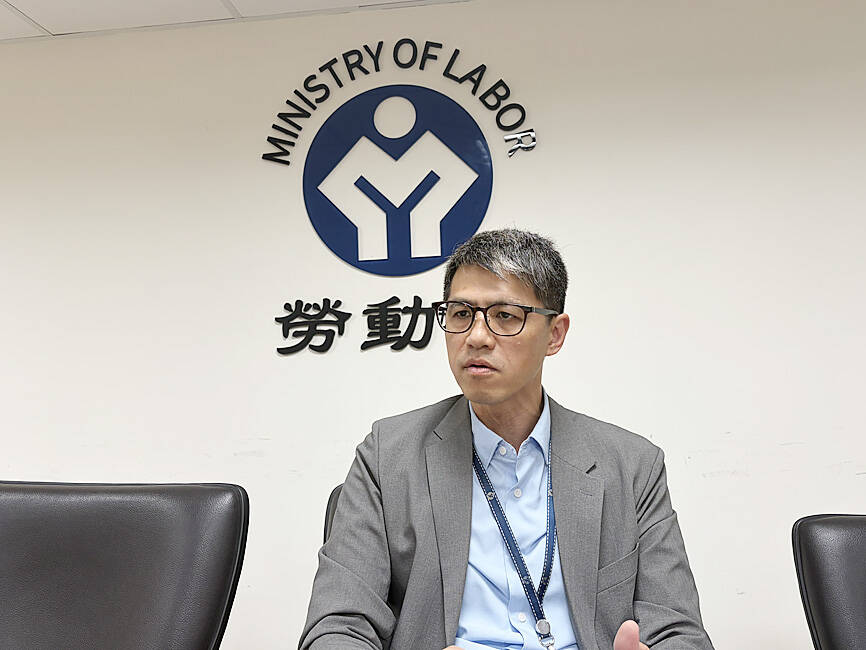
Photo: CNA
The labor ministry said its Cross-Border Workforce Policy Consultation Committee conducted an evaluation and review, and found that there was a high rate of absconding migrant workers — or those who leave their legal contracts to become undocumented migrant workers in the underground economy.
Approval for raising the quota would be contingent on the agriculture ministry’s success in tackling the issue, the labor ministry said, adding that the agriculture ministry must submit a report on the situation of the “missing” migrant workers, as well as plans to better mediate labor management disputes, bolster employers’ legal compliance and reduce the overall absconding rate.
Workforce Management Agency (勞動力發展署) division head Su Yu-kuo (蘇裕國) said the quota expansion must be rolled out in phases to improve management.
Phase 1 would include opening 7,000.
Phase 2 could be implemented within one year if the absconding rate drops to 8 percent, adding 7,000 more slots.
The final phase of the remaining 6,000 slots could be implemented once the absconding rate drops to 6.8 percent.
Committee members recognize the need for labor on farmlands and sectors such as dairy and raising livestock, but data show that the absconding rate for agricultural migrant workers is 9 percent, significantly higher than the overall average of 3 percent for all contract migrant workers in Taiwan, Su said.
For Phase 1, the agriculture ministry has introduced adjustments, which are expected to affect about 2,300 workers, Su said, adding that new sectors would be open to migrant workers, such as beekeeping, organic farming and integrated crop-livestock management, Su said.
The needs of employers in agricultural sectors should be addressed through new openings and quota increases to encourage employers to hire people legally, he said.
Meanwhile, Ministry of Labor officials also provided updates on other sectors, including the recent approval of a proposal to hire more foreign fishery workers.
Quotas would be based on the number of registered crew members, to delineate foreign workers from fishery employees who are Taiwanese, they said.
Fireworks manufacturing would also be reclassified as “chemical product manufacturing,” which would allow the sector to hire migrant laborers at a 15 percent ratio and recruit foreign skilled workers, they said.

Kenting National Park service technician Yang Jien-fon (楊政峰) won a silver award in World Grand Prix Photography Awards Spring Season for his photograph of two male rat snakes intertwined in combat. Yang’s colleagues at Kenting National Park said he is a master of nature photography who has been held back by his job in civil service. The awards accept entries in all four seasons across six categories: architectural and urban photography, black-and-white and fine art photography, commercial and fashion photography, documentary and people photography, nature and experimental photography, and mobile photography. Awards are ranked according to scores and divided into platinum, gold and

More than half of the bamboo vipers captured in Tainan in the past few years were found in the city’s Sinhua District (新化), while other districts had smaller catches or none at all. Every year, Tainan captures about 6,000 snakes which have made their way into people’s homes. Of the six major venomous snakes in Taiwan, the cobra, the many-banded krait, the brown-spotted pit viper and the bamboo viper are the most frequently captured. The high concentration of bamboo vipers captured in Sinhua District is puzzling. Tainan Agriculture Bureau Forestry and Nature Conservation Division head Chu Chien-ming (朱健明) earlier this week said that the
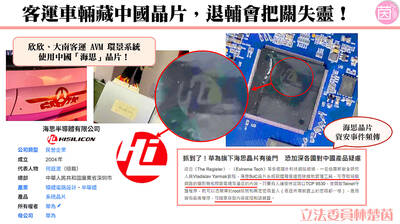
BREACH OF CONTRACT: The bus operators would seek compensation and have demanded that the manufacturer replace the chips with ones that meet regulations Two bus operators found to be using buses with China-made chips are to demand that the original manufacturers replace the systems and provide compensation for breach of contract, the Veterans Affairs Council said yesterday. Democratic Progressive Party Legislator Michelle Lin (林楚茵) yesterday said that Da Nan Bus Co and Shin-Shin Bus Co Ltd have fielded a total of 82 buses that are using Chinese chips. The bus models were made by Tron-E, while the systems provider was CYE Electronics, Lin said. Lin alleged that the buses were using chips manufactured by Huawei subsidiary HiSilicon Co, which presents a national security risk if the

The National Immigration Agency has banned two Chinese from returning to Taiwan, after they published social media content it described as disrespectful to national sovereignty. The agency imposed a two-month ban on a Chinese man surnamed Liang (梁) and a permanent ban on a woman surnamed Yang (楊), an influencer with 23 million followers, in October last year and last week respectively. Minister of the Interior Liu Shyh-fang (劉世芳) yesterday said on the sidelines of a legislative meeting that Chinese visitors to Taiwan are required to comply with the rules and regulations governing their entry permits. The government has handled the ban and


 RSS
RSS