


Anti-blockade drills are standard military exercises, Minister of National Defense Wellington Koo (顧立雄) said yesterday, following reports that the Ministry of the Interior plans to hold joint drills with the military and coast guard to prepare for a potential Chinese maritime blockade.
Deputy Minister of the Interior Sawyer Mars (馬士元) earlier this month told Bloomberg News that Taiwan is to conduct new drills in the coming weeks to ensure the nation has access to critical supplies in the event of a Chinese blockade, a risk demonstrated by Iran’s closure of a global energy chokepoint.
The government is to carry out its first-ever joint exercise between the interior ministry and other departments to escort ships carrying natural gas and oil during a naval blockade, Mars said.
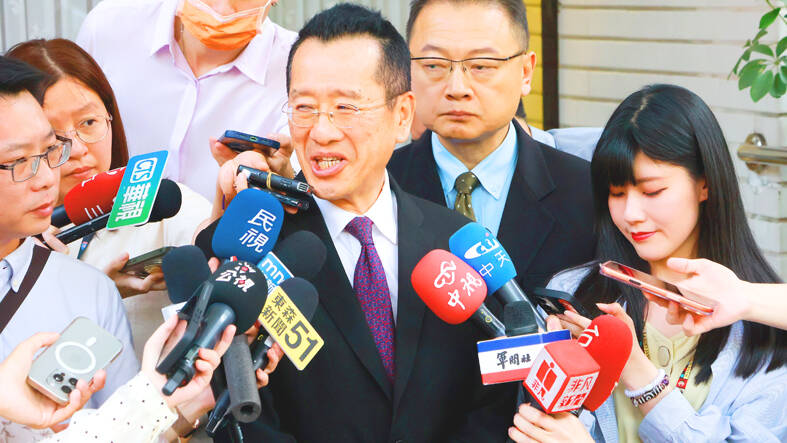
Photo: Huang Ching-hsuan, Taipei Times
“If the Taiwan Strait or the surrounding area of Taiwan will be blockaded, it is almost a 100 percent of the blockade of the regional energy supply,” he said. “It’s not only Taiwan’s problem; it’s the whole area’s problem.”
The interior ministry is to lead land transportation drills that are to take place before July, focused on moving supplies within Taiwan, while the navy and coast guard would be responsible for maritime escort operations for ships sailing in waters near Taiwan, Mars said.
Unlike in the Strait of Hormuz, which is controlled by Iran, ships can bypass the Taiwan Strait by sailing around the eastern side of Taiwan, but rerouting shipments farther out into the Pacific Ocean would drive up costs and create delays.
“There are three corridors we hope to maintain to counter a blockade from China,” Mars said, adding that humanitarian operations in the event of a large-scale disaster are also a major focus.
Those corridors would seek to maintain Taiwan’s access to routes toward the Philippines, Japan and the US.
Mars said he expects Japan and other countries to assist in future escort missions.
He pointed to freedom of navigation operations in the Taiwan Strait as evidence that an informal international consensus already exists to keep the waterway open.
“There are no agreements, but there’s a consensus between countries,” he said, expressing confidence that Taiwan could maintain shipping corridors even if a blockade began tomorrow.
Speaking to reporters prior to a legislative session yesterday, Koo was asked whether anti-blockade drills would be incorporated into this year’s Han Kuang exercises.
Isolation and blockade scenarios have always fallen within the scope of the military’s regular exercises, Koo said.
The Ministry of National Defense would coordinate with other ministries on necessary cooperative measures, he said, but declined to provide specific details.
When pressed on whether warships would be deployed to escort natural gas carriers, Koo reiterated that such situations are among the military’s contingency plans, but declined to disclose operational specifics.
Taiwan’s military is drawing lessons from active conflicts.
On Saturday, the armed forces began annual tabletop war games that reference events including the Iran crisis and the US seizure of then-Venezuelan president Nicolas Maduro in January, the defense ministry said on Friday.
Separately, a coast guard spokesperson last week said that it would join a drill led by the Maritime and Port Bureau in late September on Taiwan’s east coast, simulating a wartime blockade.

AGING: While Japan has 22 submarines, Taiwan only operates four, two of which were commissioned by the US in 1945 and 1946, and transferred to Taiwan in 1973 Taiwan would need at least 12 submarines to reach modern fleet capabilities, CSBC Corp, Taiwan chairman Chen Cheng-hung (陳政宏) said in an interview broadcast on Friday, citing a US assessment. CSBC is testing the nation’s first indigenous defense submarine, the Hai Kun (海鯤, Narwhal), which is scheduled to be delivered to the navy next month or in July. The Hai Kun has completed torpedo-firing tests and is scheduled to undergo overnight sea trials, Chen said on an SET TV military affairs program. Taiwan would require at least 12 submarines to establish a modern submarine force after assessing the nation’s operational environment and defense
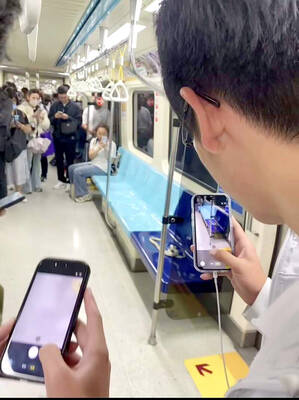
A white king snake that frightened passengers and caused a stir on a Taipei MRT train on Friday evening has been claimed by its owner, who would be fined, Taipei Rapid Transit Corp (TRTC) said yesterday. A person on Threads posted that he thought he was lucky to find an empty row of seats on Friday after boarding a train on the Bannan (Blue) Line, only to spot a white snake with black stripes after sitting down. Startled, he jumped up, he wrote, describing the encounter as “terrifying.” “Taipei’s rat control plan: Release snakes on the metro,” one person wrote in reply, referring
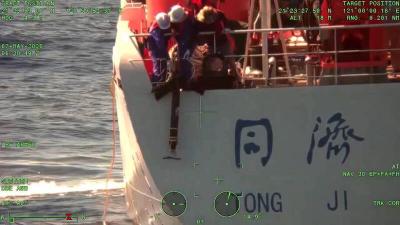
The coast guard today said that it had disrupted "illegal" operations by a Chinese research ship in waters close to the nation and driven it away, part of what Taipei sees a provocative pattern of China's stepped up maritime activities. The coast guard said that it on Thursday last week detected the Chinese ship Tongji (同濟號), which was commissioned only last year, 29 nautical miles (54km) southeast of the southern tip of Taiwan, although just outside restricted waters. The ship was observed lowering ropes into the water, suspected to be the deployment of scientific instruments for "illegal" survey operations, and the coast
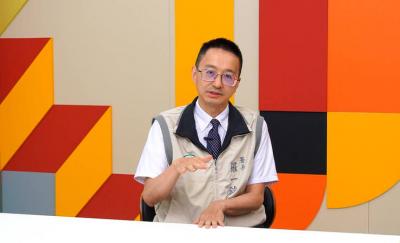
Taiwan’s two cases of hantavirus so far this year are on par with previous years’ case numbers, and the government is coordinating rat extermination work, so there should not be any outbreaks, Centers for Disease Control (CDC) Director-General Philip Lo (羅一鈞) said today in an interview with the Liberty Times (the Taipei Times’ sister newspaper). An increase in rat sightings in Taipei and New Taipei City has raised concerns about the spread of hantavirus, as rats can carry the disease. In January, a man in his 70s who lived in Taipei’s Daan District (大安) tested positive posthumously for hantavirus, Taiwan’s


 RSS
RSS