


The Tainan District Court has ruled against a woman who sought NT$100,000 in compensation for her insomnia and mental distress allegedly caused by her neighbor’s pet birds.
The woman, surnamed Chen (陳), said that her neighbor, surnamed Tsai (蔡), has kept birds on a second-floor balcony since September last year.
Chen said the birds made sharp, piercing noises that frequently startled her and accused Tsai of creating long-term disturbances by dragging chairs, hammering and playing loud music.
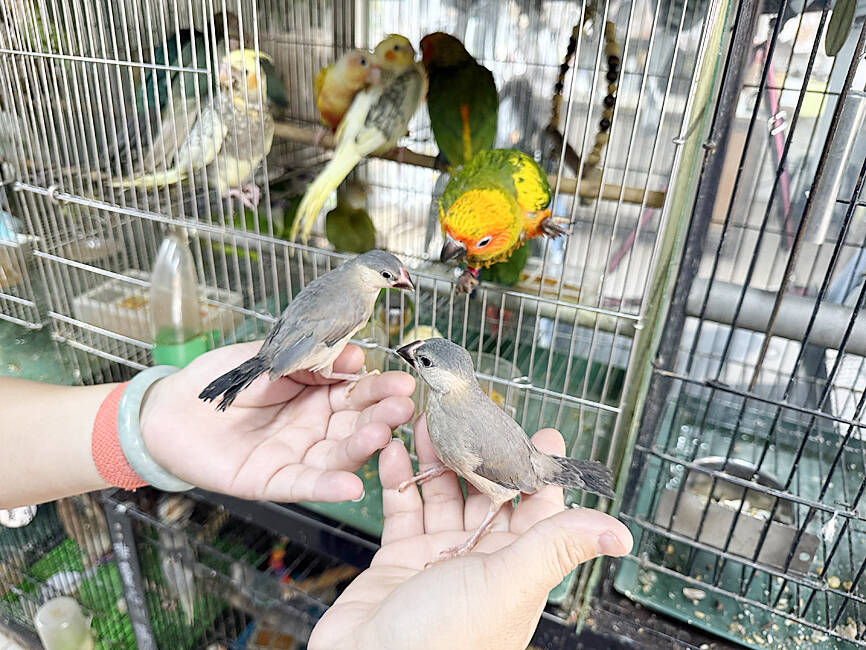
Photo: Wang Chun-chung, Taipei Times
She said the noise severely impacted her quality of life and forced her to seek psychiatric treatment.
Tsai said she owns six birds, with three kept indoors and three on the balcony, and that the birds only chirp during the day and remain quiet at night.
The residences are in a Category 2 noise control zone in Tainan, meaning that the average noise limits are set at 60 decibels during the day, 55 decibels in the evening and 50 decibels at night, the judge said.
The court found that the recordings made by Chen included significant background noise, such as human voices, washing machines and passing vehicles, with some recordings failing to display decibel levels entirely.
The bird sounds occurred between 9am and 6pm, which should not interfere with nighttime sleep, the judge said.
The court ruled that Chen failed to prove that her decibel meter or her recording methods met the professional standards required by environmental protection authorities.
As the recordings could not definitively prove the noise exceeded levels tolerable to the average person, the court ruled in favor of Tsai.
The ruling can be appealed.
Taiwan’s noise control zones are divided into four categories based on land use and population density, lawyer Shih Chih-yuan (施志遠) said, adding that while a person could be held liable for infringing on a neighbor’s right to a peaceful living environment if they produce persistent noise beyond tolerable social limits, the methodology of providing evidence is critical.
Citizens collecting evidence should use noise meters that meet national standards, he said.
Measurements should be taken at the heights specified in Article 3 of the Noise Control Standards (噪音管制標準) and should account for background noise to ensure the evidence is not deemed invalid by a court, he said.

NATIONAL SECURITY: Authorities are working to confirm the identities of the military personnel involved and investigating possible illegal conduct and regulatory violations Authorities are probing possible national security implications after Kinmen police and immigration officers on Sunday found a Chinese woman allegedly posing as a tourist while engaging in prostitution involving more than 10 military personnel. The woman, surnamed Chen (陳), has since been deported, authorities said, adding that investigators are still working to confirm the identities of those implicated, as the records only listed code names and aliases. The case stemmed from a report received by the Kinmen District Prosecutors’ Office on Friday last week from the Jinhu Precinct of the Kinmen County Police Bureau. On Sunday, police, along with the National Immigration

GLOBALGIVING: ‘ Caving to external pressure is not acceptable for an organization that has cultivated justice reform and human rights for 30 years,’ one NGO said A slew of non-government organizations (NGOs) have withdrawn from the GlobalGiving fundraising platform after it announced it would use “Chinese Taipei” instead of “Taiwan” from next month. The Taiwan Good Rice Association wrote on Facebook on Friday that it was informed on April 28 via a teleconference call of the change, which was made because the platform wanted to operate in China. Taiwan Good Rice is to terminate all cooperative relationships with GlobalGiving in response to the platform’s “unilateral and non-negotiable” decision to remove references to Taiwan, the NGO said. “Taiwan is in the official name of Taiwan Good Rice Association and the
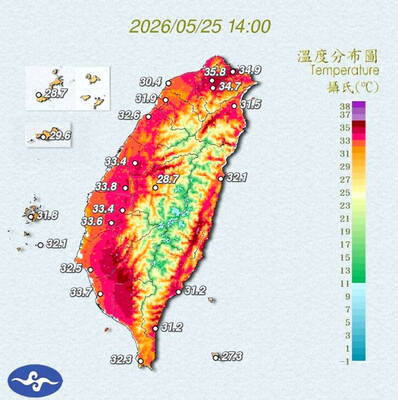
STAY COOL: The HPA recommended that people stay hydrated, use air-conditioning or fans while indoors, wear loose-fitting clothes and walk in the shade while outdoors Employers must implement measures such as installing cooling equipment, and providing drinking water and rest breaks for outdoor workers starting from Monday next week, the Taipei Department of Labor said on Sunday. Employers who fail to comply could face fines of NT$30,000 to NT$300,000 under the Occupational Safety and Health Act (職業安全衛生法), the department said. Businesses in Taipei employing fewer than 100 workers, as well as registered self-employed workers with labor insurance coverage, could receive on-site assessments and guidance from occupational safety consultants to help them apply for central government subsidies to implement or improve heat-protection measures, it said. Under the Ministry of

HEAVY WEATHER: Typhoon Jangmi is due to crash straight into the Ryukyus as airlines look to shift flights to larger aircraft or cancel flights to Okinawa entirely Taiwan’s international air carriers announced flight adjustments over the weekend as Typhoon Jangmi is forecast to hit the Ryukyu Islands today and tomorrow. The Central Weather Administration (CWA) upgraded Jangmi from a tropical storm to a typhoon at 8am yesterday, with the eye located 580km south of Naha city. It was moving north at 19kph. Today, China Airlines’ CI-120, CI-121, CI-122 and CI-123 flights between Taoyuan and Naha, Okinawa, have been canceled as well as CI-132 and CI-133 between Kaohsiung and Naha. EVA Air’s BR-112, BR-113, BR-186 and BR-185 flights between Taoyuan and Naha are also canceled. Low-cost carrier Tigerair Taiwan canceled IT-230,


 RSS
RSS