


A NT$380 billion (US$11.89 billion) spending cap on weapons systems approved by Washington for sale to Taiwan proposed by the Chinese Nationalist Party (KMT) is “highly unfeasible” and should be raised to at least NT$800 billion, former KMT lawmaker Jason Hsu (許 毓仁) said yesterday.
The KMT’s defense bill, under review at the legislature’s Foreign Affairs and National Defense Committee, would fund eight systems announced by the US in December last year, with a follow-on budget proposed by the Ministry of National Defense in the event of new US arms sale packages.
It is being considered alongside the Cabinet’s and Taiwan People’s Party’s (TPP) versions, which set the spending cap at NT$1.25 trillion and NT$400 billion, respectively.

Photo: Huang Ching-hsuan, Taipei Times
As a former ruling party, the KMT should have known better than to propose a “highly unfeasible” budget for foreign arms procurement, Hsu said in a social media post.
The bill’s phased budget planning approach contradicts the nature of foreign arms procurement packages, which are not made at random, but require a lengthy negotiation and assessment period between Taiwan and the US, said Hsu, a senior fellow at the Hudson Institute, a Washington-based think tank.
With US President Donald Trump and Chinese President Xi Jinping (習近平) scheduled to meet in just more than a month, Hsu said that time is not on Taiwan’s side.
If the Legislative Yuan has not passed the special defense budget by then, Trump could make concessions on planned arms sales to Taiwan that the US Congress has yet to be notified of to secure certain terms with Xi, Hsu said.
If that happens, Taiwan would not even receive letters of acceptance from the US, effectively denying the follow-on budget proposal route espoused by the KMT, he said.
The KMT should raise the amount stipulated in its bill to between NT$800 billion and NT$900 billion, which would be more “practical,” Hsu said.
As for the remaining NT$300 billion gap between the KMT’s and the Cabinet’s bills, Hsu said that could be gradually offset by adopting a general budget planning route.
“The last thing I want to see is the review being stymied by an excessive gap between the ruling and opposition proposals,” Hsu said, adding that that could “lead to the Cabinet’s version being rejected in a floor vote through a joint opposition effort.”
“Such an outcome would be a true disaster for Taiwan,” he said.
The KMT bill’s exclusion of drone procurement, which is covered by the Cabinet’s bill, is “extremely dangerous” given China’s escalating “gray zone” coercion and other potential military actions to take Taiwan, Hsu said.
Later in the day, President William Lai (賴清德) also noted the omission of drones and artificial intelligence-assisted command and control systems in the KMT’s and TPP’s bills.
Excluding these critical systems shows the opposition’s lack of understanding of modern warfare, Lai said at a Democratic Progressive Party Central Standing Committee meeting in Taipei, calling on nonpartisan support for the Cabinet’s “comprehensive” special defense budget bill.
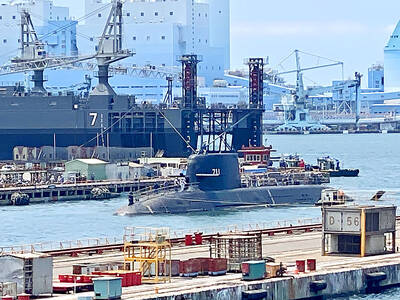
AGING: While Japan has 22 submarines, Taiwan only operates four, two of which were commissioned by the US in 1945 and 1946, and transferred to Taiwan in 1973 Taiwan would need at least 12 submarines to reach modern fleet capabilities, CSBC Corp, Taiwan chairman Chen Cheng-hung (陳政宏) said in an interview broadcast on Friday, citing a US assessment. CSBC is testing the nation’s first indigenous defense submarine, the Hai Kun (海鯤, Narwhal), which is scheduled to be delivered to the navy next month or in July. The Hai Kun has completed torpedo-firing tests and is scheduled to undergo overnight sea trials, Chen said on an SET TV military affairs program. Taiwan would require at least 12 submarines to establish a modern submarine force after assessing the nation’s operational environment and defense
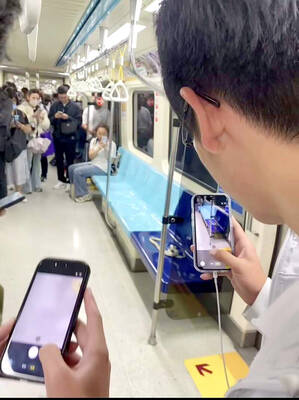
A white king snake that frightened passengers and caused a stir on a Taipei MRT train on Friday evening has been claimed by its owner, who would be fined, Taipei Rapid Transit Corp (TRTC) said yesterday. A person on Threads posted that he thought he was lucky to find an empty row of seats on Friday after boarding a train on the Bannan (Blue) Line, only to spot a white snake with black stripes after sitting down. Startled, he jumped up, he wrote, describing the encounter as “terrifying.” “Taipei’s rat control plan: Release snakes on the metro,” one person wrote in reply, referring
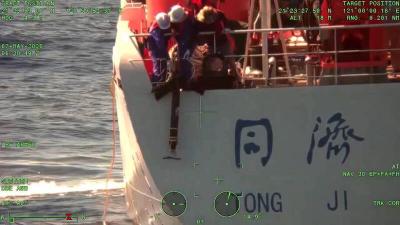
The coast guard today said that it had disrupted "illegal" operations by a Chinese research ship in waters close to the nation and driven it away, part of what Taipei sees a provocative pattern of China's stepped up maritime activities. The coast guard said that it on Thursday last week detected the Chinese ship Tongji (同濟號), which was commissioned only last year, 29 nautical miles (54km) southeast of the southern tip of Taiwan, although just outside restricted waters. The ship was observed lowering ropes into the water, suspected to be the deployment of scientific instruments for "illegal" survey operations, and the coast
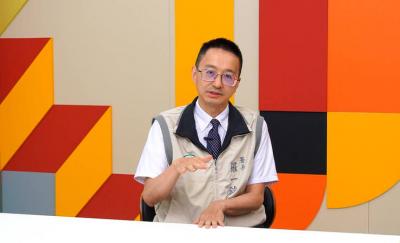
Taiwan’s two cases of hantavirus so far this year are on par with previous years’ case numbers, and the government is coordinating rat extermination work, so there should not be any outbreaks, Centers for Disease Control (CDC) Director-General Philip Lo (羅一鈞) said today in an interview with the Liberty Times (the Taipei Times’ sister newspaper). An increase in rat sightings in Taipei and New Taipei City has raised concerns about the spread of hantavirus, as rats can carry the disease. In January, a man in his 70s who lived in Taipei’s Daan District (大安) tested positive posthumously for hantavirus, Taiwan’s


 RSS
RSS