


The National Communications Commission (NCC) has joined with mobile telecom operators to pilot a voice alert system for incoming calls from hidden numbers as a way to combat fraud.
Chunghwa Telecom has been trialing the system for mobile users since March 2.
It is expected to be fully rolled out by May across Taiwan’s three major mobile carriers — Chunghwa, Taiwan Mobile and Far EasTone, NCC Acting Commissioner Chen Chung-shu (陳崇樹) said today at the Legislative Yuan.

Photo: Fang Wei-chieh, Taipei Times
The National Police Agency found that mobile users are at higher risk of fraud, so the NCC is to roll out the system for landlines later in June, he said.
The new system would play an alert warning that the incoming call is from a hidden number in both Chinese and Taiwanese.
Users can press any key to skip the warning.
Data show that fraud cases have trended downward since the trial began, as telecom operators proactively terminated 40,000 calls, Chen said.
The measure has proven particularly effective among high-risk groups such as the elderly and has also helped younger users, who often answer calls quickly without first checking the number, he added.
Lawmakers today also expressed concerns about a recent case in which a man allegedly broke into an older residential building and stole more than 1,000 landline phone numbers, which were provided to Chinese scam groups to register Line accounts, generating profits exceeding NT$1 million (US$31,282).
Chen said that newer residential buildings typically have better controls in place, with telecom equipment locked away.
However, the NCC would convene meetings with telecom operators to review and improve safeguards, while discussing with Line ways to strengthen landline user verification mechanisms, he added.

The Ministry of Finance this afternoon announced the winning numbers for the March-April uniform invoice lottery. The winning number for the NT$10 million (US$318,060) special prize is 19531471, and the winning number for the NT$2 million grand prize is 85941329. Three numbers were drawn for the NT$200,000 first prize: 07225810, 20231230 and 83518781. Those with receipts matching the last seven digits of any of the first-prize numbers will win the NT$40,000 second prize, while those matching the last six digits will win the NT$10,000 third prize. Those whose receipts match the last five digits of the first-prize numbers can claim the NT$4,000 fourth prize,

SIX SUBSIDIES: The monthly allowance for older farmers is to increase to NT$10,000, and NT$5,000 is to be given to homemakers under the national pension system, Lai said The government is to implement major welfare policies for disadvantaged groups, including raising the monthly allowance for older farmers to NT$10,000 and providing homemakers with NT$5,000 per month, President William Lai (賴清德) said yesterday. Lai made the remarks during a visit to Wangling Temple in Chiayi County, saying that the planned increases were being introduced amid economic growth and an increase in tax revenue. Touting a policy, in which the government plans to provide a monthly allowance of NT$5,000 for every child under the age of 18 in a bid to address Taiwan’s low birthrate, Lai said that if received for the
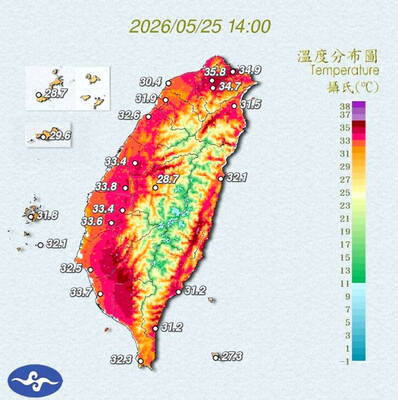
STAY COOL: The HPA recommended that people stay hydrated, use air-conditioning or fans while indoors, wear loose-fitting clothes and walk in the shade while outdoors Employers must implement measures such as installing cooling equipment, and providing drinking water and rest breaks for outdoor workers starting from Monday next week, the Taipei Department of Labor said on Sunday. Employers who fail to comply could face fines of NT$30,000 to NT$300,000 under the Occupational Safety and Health Act (職業安全衛生法), the department said. Businesses in Taipei employing fewer than 100 workers, as well as registered self-employed workers with labor insurance coverage, could receive on-site assessments and guidance from occupational safety consultants to help them apply for central government subsidies to implement or improve heat-protection measures, it said. Under the Ministry of

NATIONAL SECURITY: Authorities are working to confirm the identities of the military personnel involved and investigating possible illegal conduct and regulatory violations Authorities are probing possible national security implications after Kinmen police and immigration officers on Sunday found a Chinese woman allegedly posing as a tourist while engaging in prostitution involving more than 10 military personnel. The woman, surnamed Chen (陳), has since been deported, authorities said, adding that investigators are still working to confirm the identities of those implicated, as the records only listed code names and aliases. The case stemmed from a report received by the Kinmen District Prosecutors’ Office on Friday last week from the Jinhu Precinct of the Kinmen County Police Bureau. On Sunday, police, along with the National Immigration


 RSS
RSS