


Nearly one in five schoolchildren in Taiwan show signs of social anxiety, a survey released yesterday by the Child Welfare League Foundation showed.
The survey found that 18.6 percent of children exhibit traits associated with social anxiety.
Even among those who self-identified as extroverts, 11.2 percent met the criteria.
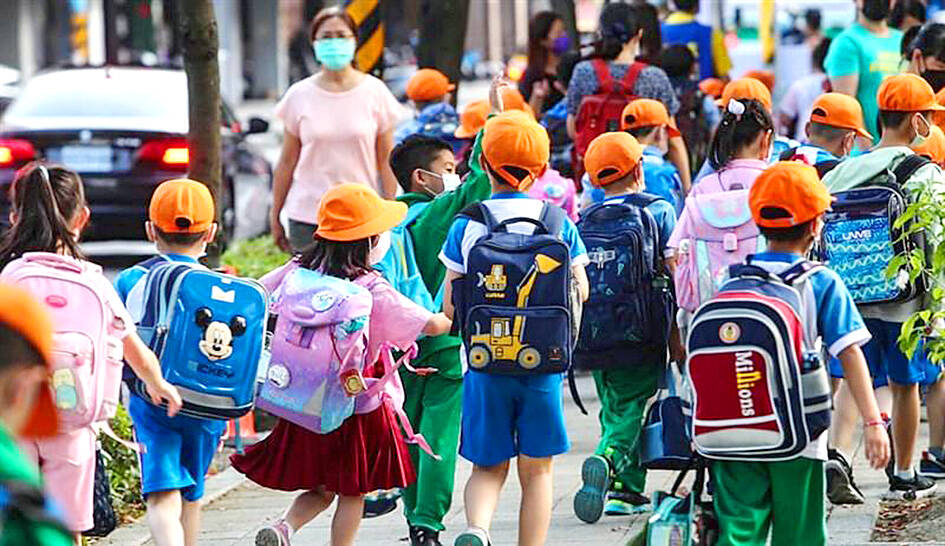
Photo: CNA
The foundation said that some outwardly active children may be masking anxiety.
Children with social anxiety were significantly less likely to express themselves.
About 16.2 percent said they rarely interact with others in real life, compared with 8.2 percent of other children.
Meanwhile, 18.3 percent said they are too nervous to express themselves online, versus 4.3 percent of their peers.
They were also less likely to defend themselves. Only 9.6 percent said they would stand up to online attacks, compared with 24.4 percent of those without anxiety.
In real-life situations, 23.4 percent said they would stop name-calling, versus 35.5 percent of other children.
The survey found that 28.9 percent of socially anxious children would not tell anyone when facing difficulties. Many instead turn to online interactions, with 36.9 percent saying they feel more relaxed chatting with online friends.
Social anxiety also affects school engagement and health. About 17.3 percent of affected children reported not wanting to go to school, compared with 4.5 percent of others.
Meanwhile, 63.9 percent reported sleep problems, with 11.9 percent experiencing them every night — about twice the rate of other children.
Family and peer dynamics may be associated with the condition. Socially anxious children were more likely to report being scolded or questioned about schoolwork at home (18.4 percent versus 11.5 percent).
The CWLF said weakening peer support systems may also play a role, with 46.9 percent of all surveyed children seldom receiving comfort and 36.1 percent rarely receiving help.
The survey also pointed to declining social skills. About 38.3 percent of children said they do not know how to make friends, up from 23.3 percent in 2019, while 51.6 percent said they do not dare express their true opinions.
Those unsure how to reconcile after conflicts rose to 56.9 percent from 42.4 percent.
Online behavior showed a contrast with real-life interactions.
While 32.7 percent said they avoid conflict at school, 21.7 percent said they would directly confront others online.
In addition, 29 percent said it is easier to talk to friends online than in person, and 42.5 percent said they interact more with classmates online.
The foundation urged parents to provide emotional support and build trust with their children, while calling on schools to strengthen social and emotional education.
It also encouraged the public to avoid labeling withdrawn children and to help build supportive environments.
The survey collected 1,255 valid responses from fifth and sixth-grade students in Taiwan in September and October last year.
It had a 95 percent confidence level and a margin of error of 2.76 percentage points.
Social anxiety was measured using self-reported responses based on the Social Anxiety Scale for Children-Revised.
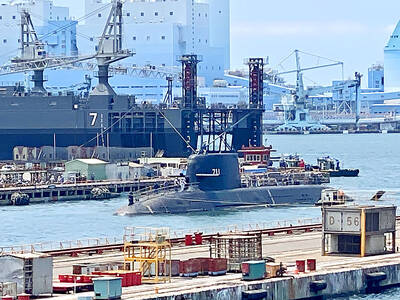
AGING: While Japan has 22 submarines, Taiwan only operates four, two of which were commissioned by the US in 1945 and 1946, and transferred to Taiwan in 1973 Taiwan would need at least 12 submarines to reach modern fleet capabilities, CSBC Corp, Taiwan chairman Chen Cheng-hung (陳政宏) said in an interview broadcast on Friday, citing a US assessment. CSBC is testing the nation’s first indigenous defense submarine, the Hai Kun (海鯤, Narwhal), which is scheduled to be delivered to the navy next month or in July. The Hai Kun has completed torpedo-firing tests and is scheduled to undergo overnight sea trials, Chen said on an SET TV military affairs program. Taiwan would require at least 12 submarines to establish a modern submarine force after assessing the nation’s operational environment and defense
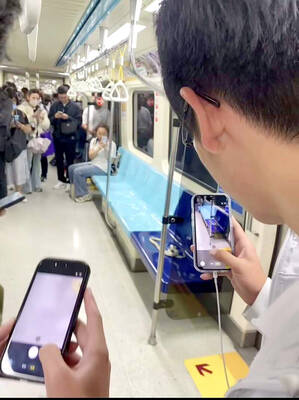
A white king snake that frightened passengers and caused a stir on a Taipei MRT train on Friday evening has been claimed by its owner, who would be fined, Taipei Rapid Transit Corp (TRTC) said yesterday. A person on Threads posted that he thought he was lucky to find an empty row of seats on Friday after boarding a train on the Bannan (Blue) Line, only to spot a white snake with black stripes after sitting down. Startled, he jumped up, he wrote, describing the encounter as “terrifying.” “Taipei’s rat control plan: Release snakes on the metro,” one person wrote in reply, referring
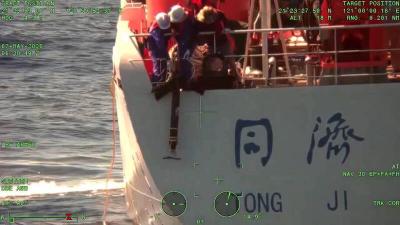
The coast guard today said that it had disrupted "illegal" operations by a Chinese research ship in waters close to the nation and driven it away, part of what Taipei sees a provocative pattern of China's stepped up maritime activities. The coast guard said that it on Thursday last week detected the Chinese ship Tongji (同濟號), which was commissioned only last year, 29 nautical miles (54km) southeast of the southern tip of Taiwan, although just outside restricted waters. The ship was observed lowering ropes into the water, suspected to be the deployment of scientific instruments for "illegal" survey operations, and the coast
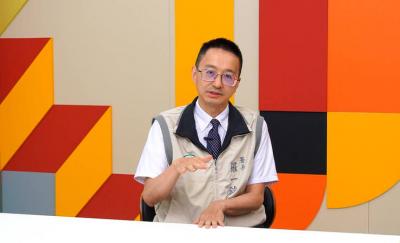
Taiwan’s two cases of hantavirus so far this year are on par with previous years’ case numbers, and the government is coordinating rat extermination work, so there should not be any outbreaks, Centers for Disease Control (CDC) Director-General Philip Lo (羅一鈞) said today in an interview with the Liberty Times (the Taipei Times’ sister newspaper). An increase in rat sightings in Taipei and New Taipei City has raised concerns about the spread of hantavirus, as rats can carry the disease. In January, a man in his 70s who lived in Taipei’s Daan District (大安) tested positive posthumously for hantavirus, Taiwan’s


 RSS
RSS