


In Taiwan, mothers can easily find quiet and clean spaces to breastfeed — a convenience that sometimes impresses visiting tourists.
For Thai lawmaker Sasinan Thamnithinan, that small but striking detail during a visit years ago planted the seed for a political mission — one she is pursuing in Thailand’s parliament.
“When I had my first child, I traveled to Taiwan, and I appreciated that they had a lot of breastfeeding rooms. They were everywhere. But it’s very hard to find them in Thailand,” Sasinan said in an interview. “Thailand should also do this.”

Photo: Hsu Cheng-yang, Taipei Times
In Thailand, she often has to go home or to department stores to breastfeed her baby, she said.
Sasinan said that Taiwan’s laws governing breastfeeding in public places impressed her when she studied them, adding that in Thailand, regulations are in the draft stage and have not yet been extended to public policies.
A human rights lawyer, Sasinan was elected a member of parliament in 2023, winning re-election last month. She officially began her second term this month.
During her time in office, she has laid the groundwork for amendments on maternity leave and workplace breastfeeding spaces that would require companies to set aside designated spaces and time for female employees.
Taiwan enacted the Public Breastfeeding Act (公共場所母乳哺育條例) in 2010, guaranteeing a woman’s right to breastfeed in public and requiring some establishments to provide spaces.
Sasinan said that ensuring similar legislation is passed in Thailand remains one of her top priorities.
In addition to advocating women’s rights, Sasinan has pushed back against the gender inequality that she says exists within Thailand’s parliament.
In Thailand’s newly formed parliament, female lawmakers account for about 20 percent of the body, far below the roughly 40 percent representation in the Legislative Yuan, and they have a tough time making their voices heard.
“When parliament debates important issues, male lawmakers often speak forcefully or in a domineering tone and many female lawmakers are unable to get the microphone to speak up,” Sasinan said.
She described the challenges female lawmakers face in Thailand, where simply “having a voice” can be a struggle in itself.
Even within her own progressive People’s Party, Sasinan said there is room for improvement when it comes to discussions in internal meetings on gender issues.
Political parties, she said, tend to prioritize competence over gender diversity, which “may lead to critical issues being overlooked in major decisionmaking,” and she said that parties consider introducing gender quotas in their decisionmaking processes.
Drawing on her background as a human rights lawyer before entering politics, Sasinan said she has “learned to survive” within the system and is striving to drive change in a rigid political culture.
Acknowledging that the People’s Party fell short of expectations in the last month’s elections and would serve in the opposition, Sasinan said advancing reforms would be challenging.
She said her commitment to pushing forward change and said that while progress might be gradual, “there is always room to move forward.”
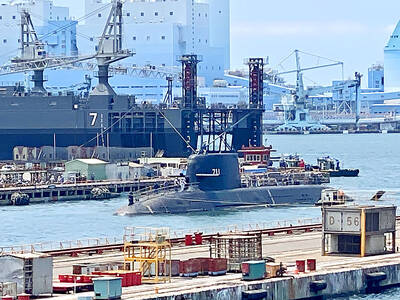
AGING: While Japan has 22 submarines, Taiwan only operates four, two of which were commissioned by the US in 1945 and 1946, and transferred to Taiwan in 1973 Taiwan would need at least 12 submarines to reach modern fleet capabilities, CSBC Corp, Taiwan chairman Chen Cheng-hung (陳政宏) said in an interview broadcast on Friday, citing a US assessment. CSBC is testing the nation’s first indigenous defense submarine, the Hai Kun (海鯤, Narwhal), which is scheduled to be delivered to the navy next month or in July. The Hai Kun has completed torpedo-firing tests and is scheduled to undergo overnight sea trials, Chen said on an SET TV military affairs program. Taiwan would require at least 12 submarines to establish a modern submarine force after assessing the nation’s operational environment and defense

A white king snake that frightened passengers and caused a stir on a Taipei MRT train on Friday evening has been claimed by its owner, who would be fined, Taipei Rapid Transit Corp (TRTC) said yesterday. A person on Threads posted that he thought he was lucky to find an empty row of seats on Friday after boarding a train on the Bannan (Blue) Line, only to spot a white snake with black stripes after sitting down. Startled, he jumped up, he wrote, describing the encounter as “terrifying.” “Taipei’s rat control plan: Release snakes on the metro,” one person wrote in reply, referring
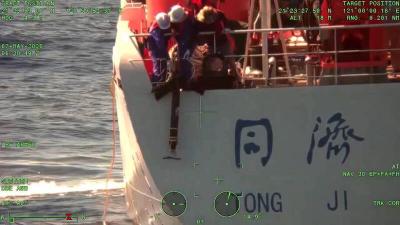
The coast guard today said that it had disrupted "illegal" operations by a Chinese research ship in waters close to the nation and driven it away, part of what Taipei sees a provocative pattern of China's stepped up maritime activities. The coast guard said that it on Thursday last week detected the Chinese ship Tongji (同濟號), which was commissioned only last year, 29 nautical miles (54km) southeast of the southern tip of Taiwan, although just outside restricted waters. The ship was observed lowering ropes into the water, suspected to be the deployment of scientific instruments for "illegal" survey operations, and the coast
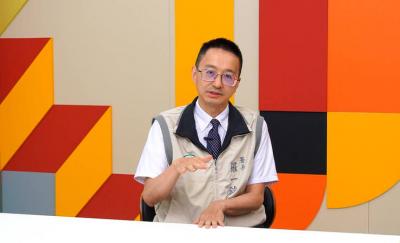
Taiwan’s two cases of hantavirus so far this year are on par with previous years’ case numbers, and the government is coordinating rat extermination work, so there should not be any outbreaks, Centers for Disease Control (CDC) Director-General Philip Lo (羅一鈞) said today in an interview with the Liberty Times (the Taipei Times’ sister newspaper). An increase in rat sightings in Taipei and New Taipei City has raised concerns about the spread of hantavirus, as rats can carry the disease. In January, a man in his 70s who lived in Taipei’s Daan District (大安) tested positive posthumously for hantavirus, Taiwan’s


 RSS
RSS