


Air pollution attributable to Taiwan’s electronics manufacturing sector would be linked to nearly US$500 million in health-related economic damages in 2030, a joint report published today by Greenpeace and the Centre for Research on Energy and Clean Air (CREA) showed.
The industry, which draws the vast majority of its power from the nation’s highly fossil-reliant grid, is in 2030 predicted to be linked to an estimated 90 premature deaths, 277 child asthma cases and 19,000 work absences due to health complications from air pollution, assuming that companies maintain renewable energy procurement at 2023 levels, the report said.
The report, titled “Clean chips, clear air: Public health impacts from electronics industry electricity consumption in Taiwan,” assessed the air quality impacts of Taiwan’s projected 2030 electricity demand from industries related to artificial intelligence (AI).
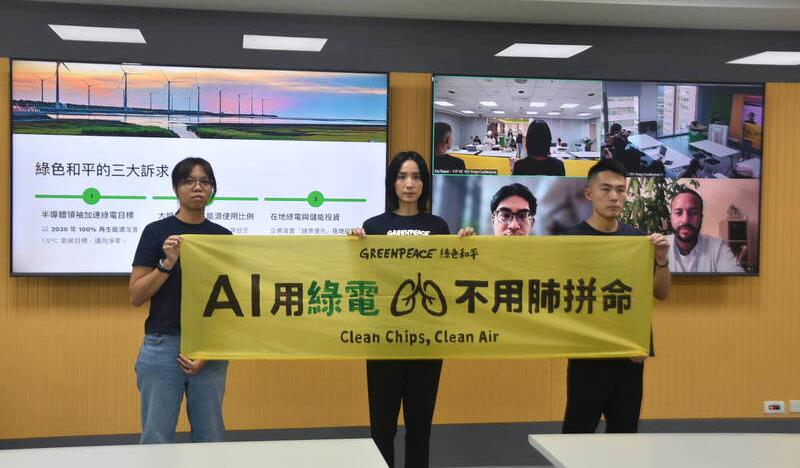
Photo: Wu Pai-hsuan, Taipei Times
The greatest effects would be felt in Taiwan’s highly industrialized and urbanized counties, with health costs estimated at US$114 million in Kaohsiung, US$64 million in New Taipei City and US$52 million in Taichung, the report said.
If three leading semiconductor companies — Taiwan Semiconductor Manufacturing Co (TSMC), United Microelectronics Corp (UMC) and Micron Technology Inc — fulfill and further accelerate their renewable energy targets, the effects on air quality would be significantly reduced, saving about 41 lives and US$229 million per year, it said.
“As Taiwan’s power demand rises with the expansion of the AI industry, replacing fossil fuels with renewable energy sources delivers substantial public health benefits by reducing air pollution exposure,” said Daniel Nesan, an analyst at CREA and one of the report’s authors.
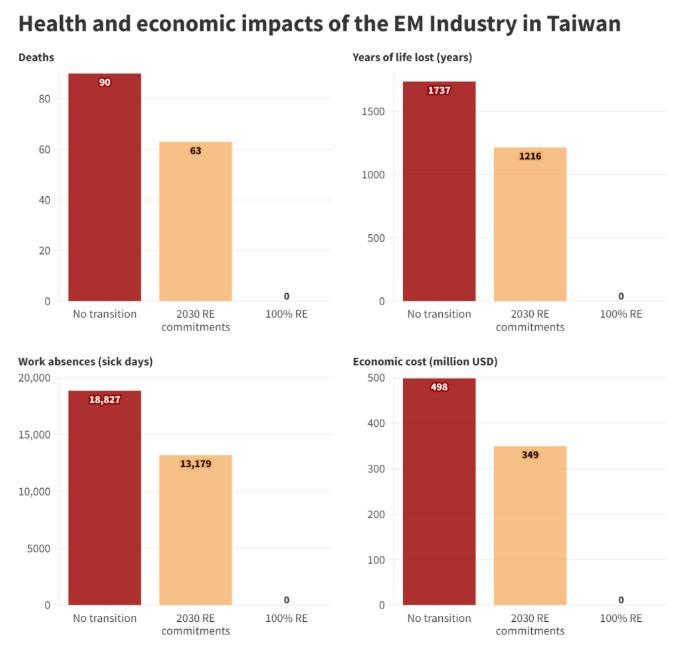
Photo courtesy of the Centre for Research on Energy and Clean Air
Power consumption from AI-related semiconductor manufacturing grew by 350 percent in 2024, with government-owned utility Taiwan Power Co (Taipower) estimating that semiconductor energy demand would exceed 5 gigawatts by 2030, the report said.
The electronics manufacturing industry accounts for about one-quarter of national electricity demand, with Taipower generating 34 percent of its electricity from coal and 44 percent from natural gas, while renewables make up only a modest share of the mix, it said.
Under the government’s Energy Transition Goals, coal is set to drop to 20 percent, while gas is expected to rise to about 50 percent, with renewable energy to take up about 30 percent of the mix by 2030, leaving the country still “heavily reliant on fossil fuels,” the report said.
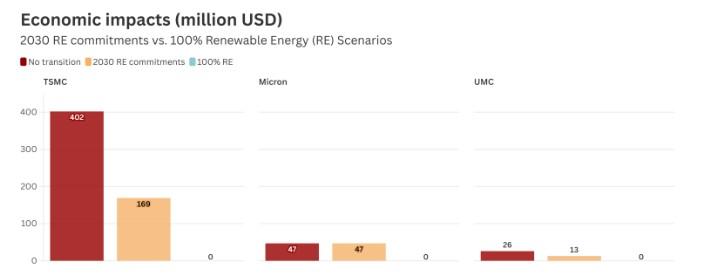
Photo courtesy of the Centre for Research on Energy and Clean Air
The trajectory risks locking in air pollution and carbon emissions at a time when clean alternatives are increasingly affordable, it said.
The government and energy-intensive semiconductor companies are advised to review and enhance their energy transition targets, set 2030 as the milestone for 100 percent renewable energy and provide a transparent, trackable road map to reduce fossil power-related health and economic impacts, the report said.
Taiwan's semiconductor industry could “also serve as a ‘life preserver’ by transitioning more quickly to renewables and directly deploying distributed energy and energy storage systems locally,” Greenpeace campaigner Lena Chang (張皪心) said.
“Semiconductor companies must be responsible for residents who have long suffered from air pollution by subsidizing their health checkups, medical care and long-term care costs,” she added.
Direct investment in local renewable energy and storage is needed to reduce air pollution and ensure stable power supplies to support the growing demand from AI and electronics manufacturing, the report said.
Better protections are also needed for children, who are most vulnerable to health implications from fossil fuel pollution, such as asthma, it said.
Additional reporting by Wu Pai-hsuan

Kenting National Park service technician Yang Jien-fon (楊政峰) won a silver award in World Grand Prix Photography Awards Spring Season for his photograph of two male rat snakes intertwined in combat. Yang’s colleagues at Kenting National Park said he is a master of nature photography who has been held back by his job in civil service. The awards accept entries in all four seasons across six categories: architectural and urban photography, black-and-white and fine art photography, commercial and fashion photography, documentary and people photography, nature and experimental photography, and mobile photography. Awards are ranked according to scores and divided into platinum, gold and

More than half of the bamboo vipers captured in Tainan in the past few years were found in the city’s Sinhua District (新化), while other districts had smaller catches or none at all. Every year, Tainan captures about 6,000 snakes which have made their way into people’s homes. Of the six major venomous snakes in Taiwan, the cobra, the many-banded krait, the brown-spotted pit viper and the bamboo viper are the most frequently captured. The high concentration of bamboo vipers captured in Sinhua District is puzzling. Tainan Agriculture Bureau Forestry and Nature Conservation Division head Chu Chien-ming (朱健明) earlier this week said that the
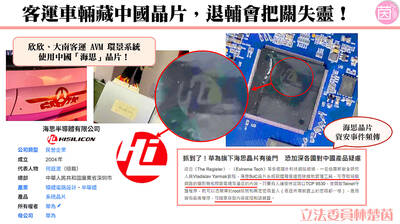
BREACH OF CONTRACT: The bus operators would seek compensation and have demanded that the manufacturer replace the chips with ones that meet regulations Two bus operators found to be using buses with China-made chips are to demand that the original manufacturers replace the systems and provide compensation for breach of contract, the Veterans Affairs Council said yesterday. Democratic Progressive Party Legislator Michelle Lin (林楚茵) yesterday said that Da Nan Bus Co and Shin-Shin Bus Co Ltd have fielded a total of 82 buses that are using Chinese chips. The bus models were made by Tron-E, while the systems provider was CYE Electronics, Lin said. Lin alleged that the buses were using chips manufactured by Huawei subsidiary HiSilicon Co, which presents a national security risk if the

The National Immigration Agency has banned two Chinese from returning to Taiwan, after they published social media content it described as disrespectful to national sovereignty. The agency imposed a two-month ban on a Chinese man surnamed Liang (梁) and a permanent ban on a woman surnamed Yang (楊), an influencer with 23 million followers, in October last year and last week respectively. Minister of the Interior Liu Shyh-fang (劉世芳) yesterday said on the sidelines of a legislative meeting that Chinese visitors to Taiwan are required to comply with the rules and regulations governing their entry permits. The government has handled the ban and


 RSS
RSS