


Taiwan’s “peace through strength” strategy seeks to make any Chinese attempt at coercion prohibitively costly by reinforcing military deterrence, societal resilience and government continuity, National Security Council Deputy Secretary-General Lin Fei-fan (林飛帆) wrote in an article.
Writing in the inaugural issue of Statecraft and Strategy, a quarterly journal published by the American Foreign Policy Council, Lin said the core of Taiwan’s defense approach is to eliminate any expectation in Beijing that military pressure could succeed at an acceptable cost.
Taiwan’s defense strategy is designed to counter China’s rapidly expanding military capabilities and deny the possibility of a swift takeover, he said.

Photo: Chang Chia-ming, Taipei Times
Preventing a “quick seizure” scenario would also reduce the risk that delayed or fragmented international responses could embolden Beijing, he added.
To that end, Taiwan and its partners should “prepare clearly defined, trigger-based economic and political measures” that could be implemented rapidly in response to aggression, Lin said.
The nation is also working to minimize early losses and ensuring sustained operations under pressure by bolstering fuel and munitions reserves, and repair capacity, he added.
Beyond the military sphere, Taiwan is seeking to ensure the continued functioning of critical sectors such as education, healthcare, transportation and governance during a crisis, Lin said, adding that military action is often preceded by attempts to disrupt society and weaken public resolve.
“Energy, communications, logistics, healthcare and public trust are all targets an adversary will seek to disrupt,” he said.
In response to that threat, Taiwan has been bolstering redundancy across essential systems, including energy, telecommunications, transportation, and emergency and medical services, while ensuring stable access to key civilian and military supplies, Lin said.
Demonstrating the ability to sustain daily life amid disruption, maintain effective defense and coordinate closely with international partners would make any attempt to alter the “status quo” in the Taiwan Strait impractical, Lin said, adding that such a strategy is key to preserving peace.
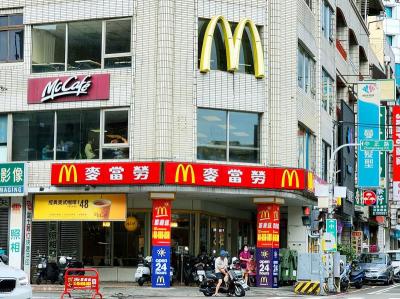
Fast food chain McDonald's is to raise prices by up to NT$5 on some products at its restaurants across Taiwan, starting on Wednesday next week, the company announced today. The prices of all extra value meals and sharing boxes are to increase by NT$5, while breakfast combos and creamy corn soup would go up by NT$3, the company said in a statement. The price of the main items of those meals, if ordered individually, would remain the same. Meanwhile, the price of a medium-sized lemon iced tea and hot cappuccino would rise by NT$3, extra dipping sauces for chicken nuggets would go up
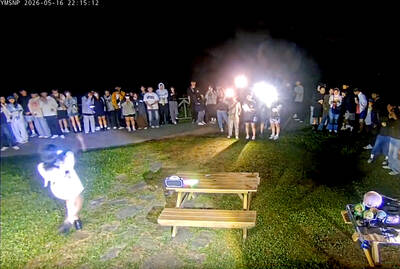
Yangmingshan National Park’s Qingtiangang (擎天崗) nature area has gone viral after a park livestream camera observed a couple in the throes of intimate congress, which was broadcast live on YouTube, drawing large late-night crowds and sparking a backlash over noise, bright lights and disruption to wildlife habitat. The area’s livestream footage appeared to show a couple engaging in sexual activity on a picnic table in the park on Friday last week, with the uncensored footage streamed publicly online. The footage quickly spread across social media, prompting a tide of visitors to travel to the site to “check in” and recreate the
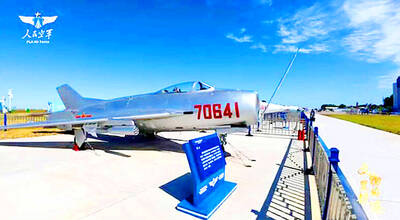
GROUNDED: A KMT lawmaker proposed eliminating drone development programs and freezing funding for counterdrone systems, despite China’s adoption of the technology China has deployed attack drones at air bases near the Taiwan Strait in a strategy aimed at overwhelming Taiwan’s air defense systems through saturation attacks, the Mainland Affairs Council (MAC) said. The council’s latest quarterly report on China said that satellite imagery and open-source intelligence indicate that the Chinese People’s Liberation Army (PLA) had converted retired J-6 fighter jets into J-6W drones, which the PLA has stationed at six air bases near Taiwan, five in China’s Fujian Province and one in Guangdong Province. The report cited J. Michael Dahm, a senior fellow at the US-based Mitchell Institute, as saying that China has

Carrefour Taiwan is to begin using a new name from the start of July, but it cannot divulge the name until then, the chairman of the supermarket chain's parent company said today. President Chain Store Co chairman Lo Chih-hsien (羅智先) was asked by reporters after a shareholders' meeting to confirm whether the company has settled on a new name for the supermarket brand. In March, the government-registered name of two Carrefour Taiwan branches was quietly changed to "Le Chia Kang" (樂家康) in Chinese, raising speculation that has been selected as the name. Lo said that because of local regulations and contractual obligations, the


 RSS
RSS