


Eating more meat would not be necessary to adhere to the Health Promotion Administration’s (HPA) draft revisions to its Dietary Reference Intakes and Daily Dietary Guidelines, a dietician said yesterday.
The HPA on March 5 announced changes to its dietary recommendations, including an increase in the recommended upper limits for daily protein intake, whole grains, fruit and vegetables.
The draft revisions also adjust the recommended daily intake of several food groups, including protein, whole grains, fruit and vegetables, while reducing the dairy recommendation.
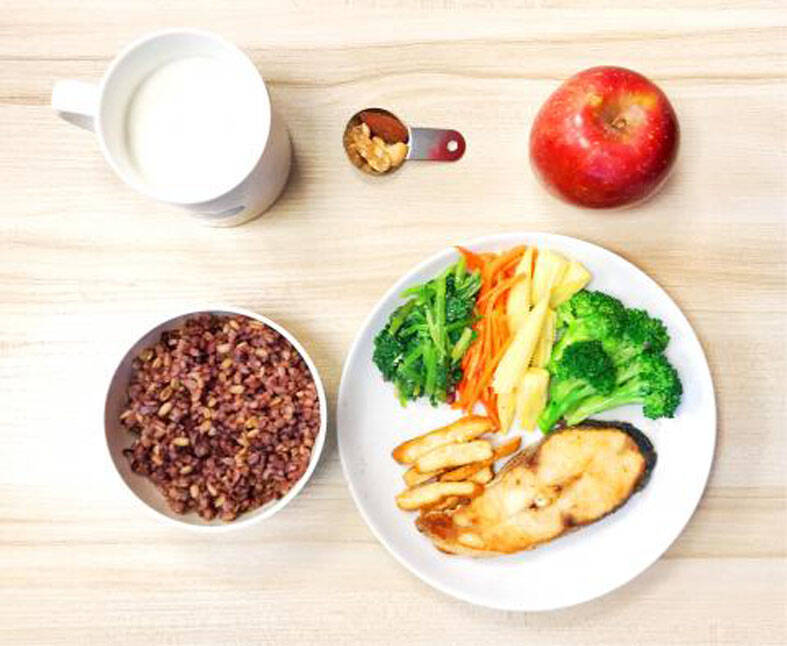
Photo courtesy of the Health Promotion Administration
Cancer Care Foundation dietician Huang Shu-hui (黃淑惠) said that people might have the misconception that they must eat more meat if the protein intake recommendation is increased.
However, meat is not the only source of protein and intake would not need to be increased with a proper diet, Huang said.
There is no revolutionary change in the overall structure of the draft revisions, which keep carbohydrates as the primary energy source while adjusting recommended proportions, she said, adding that people should eat more plant-based food and less red meat.
The increase in recommended protein intake — from “three to eight servings” of beans, fish, eggs and meat to “three to 13 servings” per day — is one of the most significant changes in the draft, she said.
The adjustment was made due to a trend of sarcopenia (muscle loss) affecting young people, Huang said.
Dietitians generally recommend 1.2g to 1.5g of protein per kilogram of body weight per day, up from 0.8g/kg to 1g/kg previously, she said.
However, meat is not the only source of protein, as whole grains, dairy products and nuts also contain protein, she added.
A serving of grains contains about 2g of protein, while a serving of nuts contains about 1g to 2g, so if people consume enough staple foods and nuts, their meat intake can be reduced, she said.
A 60kg adult requires about 72g of protein per day, Huang said.
Two servings of nuts, 1.5 bowls of whole grains and a cup of milk provide about 26g of protein, which can be supplemented by beans, fish, eggs and meat, she said.
The HPA draft also reaffirms the recommendations for protein sources, with legumes (beans) being first, followed by fish, eggs and meat, with red meat last, she said.
Red meats — including beef, pork, and lamb — are high in saturated fats, which are associated with an increased risk of obesity, cardiovascular disease and diabetes, Huang said, adding that processed meats are linked to colorectal cancer.
The Daily Dietary Guidelines encourage reduced intake of red meat and processed foods, she added.
The draft revisions also recommend increasing intake of unrefined grains, she said.
Whole grains contain more dietary fiber, vitamin B and micronutrients such as magnesium and zinc, so increasing intake would help stabilize blood sugar and lower the risk of Type 2 diabetes, while boosting phytochemical intake, Huang said.
The recommendation for fruit and vegetables have been increased to “two to six servings” of fruit and “three to eight servings” of vegetables per day, up from two to four and three of five servings respectively, she said.
The recommended daily dietary fiber intake is at least 25g for women and 30g for men, but if people do not consume enough fruit, vegetables and whole grains, the targets can be difficult to reach, which is why the revisions were made, she said.
The draft revisions are open to public comment until the end of this month, the HPA said, adding that the updated recommendations would be officially released following a review by experts.


UPGRADE: The Kang Ding-class frigate is replacing its Chaparall missiles with Tien Chien II and Hua Yang VLS, which would provide it with long-range, 360° air defense Taiwan plans to produce 1,200 to 1,376 Hai Chien II missiles (海劍二, Sea Sword II) — also known as TC-2N — to serve as the standard air defense system of the navy’s surface combatant fleet, a source said yesterday. Last week, the Hai Chien II, the naval version of the Tien Kung II missile (天劍二, Sky Sword II), completed a live-fire test in waters off the National Chungshan Institute of Science and Technology’s Jiupeng facility (九鵬) in Pingtung County’s Manjhou Township (滿州). The MIM72 Chaparral and other dated air defense missiles that currently arm Taiwanese ships have inadequate range to combat Chinese

REASONS FOR TRAVEL: An assistant professor said that proposed amendments to penalize drivers if they used drugs overseas would not deter people from traveling People who operate a motor vehicle under the influence of marijuana would have their driver’s license revoked, even if they used the substance while overseas, the Ministry of Transportation and Communications said yesterday, citing proposed amendments to the Road Traffic Management and Penalty Act (道路交通管理處罰條例). The amendments would also authorize the government to revoke the licenses of people determined to have used Category 1 or Category 2 narcotics, even if they were not operating a vehicle while under the influence of drugs, as well as ban them from taking the license test for three years, the ministry said. People aged 18 or
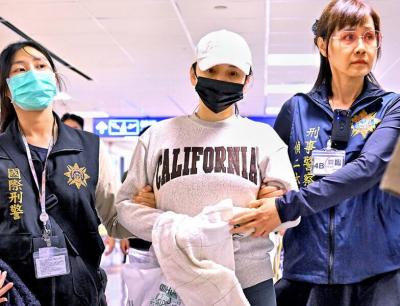
Johanne Liou (劉喬安), a Taiwanese woman who shot to unwanted fame during the Sunflower movement protests in 2014, returned to Taiwan last night after being deported from the US. She is to stand trial in Taiwan for charges involving embezzlement, fraud and drug crimes. The Criminal Investigation Bureau (CIB) said it took her into custody at Taiwan Taoyuan International Airport and would first question her before transferring her to the New Taipei District Prosecutors’ Office. She was arrested upon disembarking a flight from San Francisco that landed shortly before 7pm. Liou absconded to the US in 2019 after jumping bail
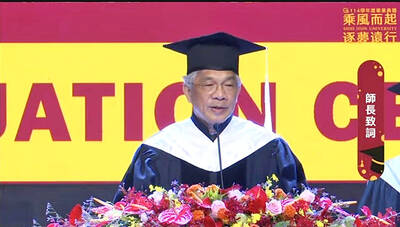
Shih Hsin University President Chen Ching-he (陳清河) yesterday issued a public apology for comments made in his commencement speech last week, stating that he has asked the school to suspend his duties and halt his wages for two months as a show of contrition. At the commencement ceremony on May 30, Chen said, “If you don’t manage your time well, or your own emotions, or your health, then I am telling every one of you — put a quick end to ‘you,’ because the world has no need for ‘you.’” The comments have sparked significant controversy online, and Chen through an open


 RSS
RSS