


Environmental groups yesterday said they would file an administrative lawsuit after their appeal to revoke the approval of a liquefied natural gas (LNG) terminal in Keelung was rejected.
Led by the Protect Waimushan Action Group, the groups had sought to overturn an environmental impact assessment (EIA) for the fourth LNG receiving terminal at Hsieh-ho Power Plant, but the Administrative Court in January dismissed the appeal.
The groups said the assessment, approved last year, contained multiple inaccuracies and was hastily approved.
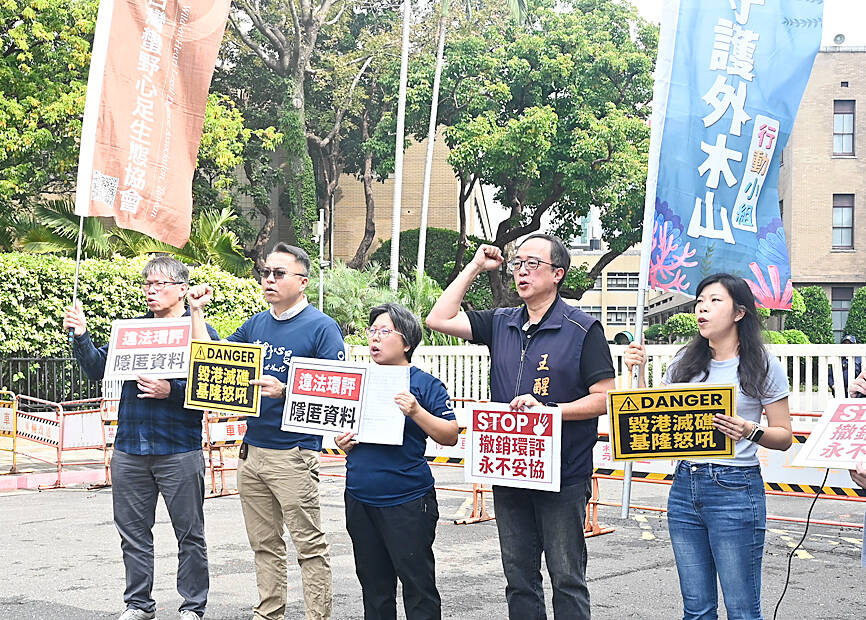
Photo: Wang Yi-sung, Taipei Times
The Hsieh-ho Power Plant is Taiwan’s only heavy-oil-fired power plant. The terminal is part of an upgrade and reconstruction plan proposed by Taiwan Power Co (Taipower), which involves dismantling four oil-fired units and replacing them with two gas-fired ones, with a combined capacity of less than 2.6 gigawatts.
The plan also calls for approximately 14.5 hectares of land reclamation to construct LNG storage tanks and unloading terminals for a fourth natural gas receiving station, intended to stabilize power supply to northern and eastern Taiwan.
Environmental groups have raised concerns about the project’s potential impacts on marine ecology, port operations and navigation safety.
Wang Hsing-chih (王醒之), convener of the Protect Waimushan Action Group and chairman of the Wild at Heart Legal Defense Association, said that Taiwan’s energy transition has become an excuse for aggressive development, with the EIA process effectively turned into a “development accelerator” and a “pollution cover-up.”
The Hsieh-ho plant has long caused severe soil contamination, with heavy metals and total petroleum hydrocarbons exceeding legal limits by multiple times, sometimes even dozens of times, Wang said.
Whistle-blowers exposed the issues before the EIA meeting, yet the committee ignored errors and misrepresentations in Taipower’s data, he said.
The groups’ administrative lawsuit to revoke the EIA states that portions of Taipower’s assessment report were released one day before the EIA meeting, contravening rules requiring publication seven days in advance.
Soil contamination information was inaccurate, coral identification data contained errors, illegal landfilling occurred in protected areas and the scope of review was not properly redone, the groups said.
The lawsuit further states that the project threatens the Port of Keelung and that claims regarding reductions in air pollution and carbon emissions in the EIA were inaccurate, while the assessment ignored the impacts of climate change.
The issues justify revoking the EIA, the group said.
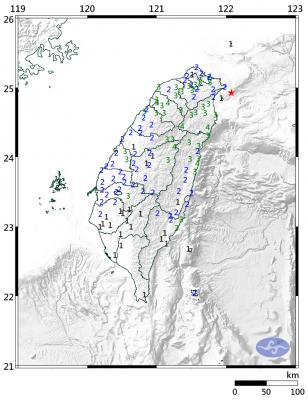
A magnitude 6.1 earthquake struck off the coast of Yilan County at 8:39pm tonight, the Central Weather Administration (CWA) said, with no immediate reports of damage or injuries. The epicenter was 38.7km east-northeast of Yilan County Hall at a focal depth of 98.3km, the CWA’s Seismological Center said. The quake’s maximum intensity, which gauges the actual physical effect of a seismic event, was a level 4 on Taiwan’s 7-tier intensity scale, the center said. That intensity level was recorded in Yilan County’s Nanao Township (南澳), Hsinchu County’s Guansi Township (關西), Nantou County’s Hehuanshan (合歡山) and Hualien County’s Yanliao (鹽寮). An intensity of 3 was
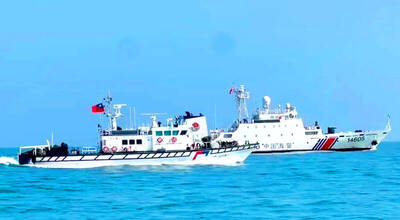
Instead of focusing solely on the threat of a full-scale military invasion, the US and its allies must prepare for a potential Chinese “quarantine” of Taiwan enforced through customs inspections, Stanford University Hoover fellow Eyck Freymann said in a Foreign Affairs article published on Wednesday. China could use various “gray zone” tactics in “reconfiguring the regional and ultimately the global economic order without a war,” said Freymann, who is also a nonresident research fellow at the US Naval War College. China might seize control of Taiwan’s links to the outside world by requiring all flights and ships entering or leaving Taiwan
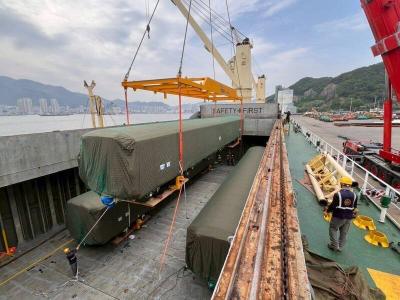
The first of 10 new high-capacity trains purchased from South Korea’s Hyundai Rotem arrived at the Port of Taipei yesterday to meet the demands of an expanding metro network, Taipei Rapid Transit Corp (TRTC) said yesterday. The train completed a three-day, 1,200km voyage from the Port of Masan in South Korea, the company said. Costing NT$590 million (US$18.79 million) each, the new six-carriage trains feature a redesigned interior based on "human-centric" transportation concepts, TRTC said. The design utilizes continuous longitudinal seating to widen the aisles and optimize passenger flow, while also upgrading passenger information displays and driving control systems for a more comfortable
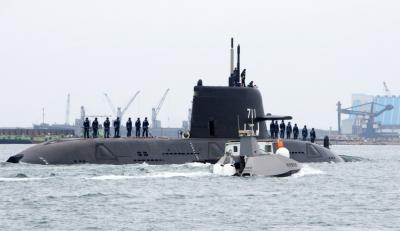
Taiwan's first indigenous defense submarine, the SS-711 Hai Kun (海鯤, or Narwhal), departed for its 13th sea trial at 7am today, marking its seventh submerged test, with delivery to the navy scheduled for July. The outing also marked its first sea deployment since President William Lai (賴清德) boarded the submarine for an inspection on March 19, drawing a crowd of military enthusiasts who gathered to show support. The submarine this morning departed port accompanied by CSBC Corp’s Endeavor Manta (奮進魔鬼魚號) uncrewed surface vessel and a navy M109 assault boat. Amid public interest in key milestones such as torpedo-launching operations and overnight submerged trials,


 RSS
RSS