


A total of 106 people have been indicted and 43 plots of land seized in Kaohsiung’s Meinong District (美濃) in connection to the illegal excavation of gravel pits later backfilled with construction waste, the Ciaotou District Prosecutors’ Office said today.
The office in a news release said it has concluded its investigation into the so-called “Grand Canyon of Meinong” (美濃大峽谷).
Prosecutors said the excavated area was double the size of Kaohsiung’s Chengching Lake Baseball Stadium and averages 15m deep.
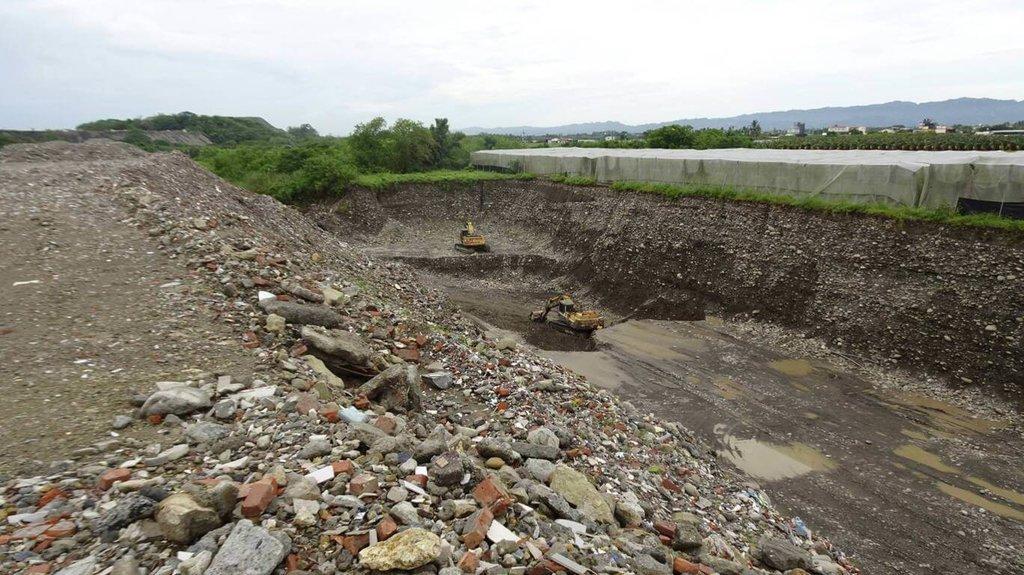
Photo courtesy of the Ciaotou District Prosecutors' Office
The sites were filled with foul, stagnant water, polluting the surrounding farmland, they said.
The excavation-and-backfill scheme earned illegal profits estimated at NT$300 million (US$9.54 million), they added.
Prosecutors said they received a tip off in August last year that multiple areas in Meinong had been extensively excavated, creating large canyon-like pits.
Since Aug. 27, authorities have carried out 14 waves of searches and arrests, investigating a total of 57 suspects and applying to the court to detain 21 of them, they said.
The suspects face pending charges under the Waste Disposal Act (廢棄物清理法) and the Organized Crime Prevention Act (組織犯罪防制條例), they added.
Prosecutors said they had seized a total of NT$31.97 million in cash, 43 plots of land, 38 vehicles and various heavy machinery, including tractor-trailers and excavators.
On Dec. 23, the office auctioned off 11 seized excavators and gravel trucks, with total proceeds reaching NT$12.25 million.
Among the suspects is landowner Shih Li-chun (石麗君), who served as an aide to independent Kaohsiung City Councilor Chu Hsin-chiang (朱信強), prosecutors said.
Shih is among those now detained by the Ciaotou District Court, they said.
The scheme has seriously damaged national land conservation, agricultural production and public safety, requiring extensive cleanup costs and leaving a severe long-term impact, office Chief Prosecutor Chang Chun-hui (張春暉) said.
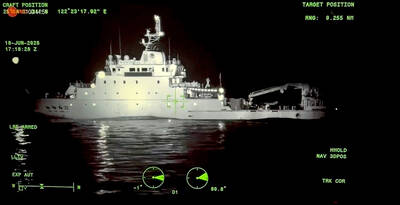
EXCUSES: Beijing is using government and research vessels as a pretext to harass the nation and enter its EEZ, and engage in ‘hegemonic expansion,’ the coast guard said The Coast Guard Administration yesterday said it drove away Chinese oceanographic research vessel Xiang Yang Hong 22 (向陽紅33) from restricted waters after warning it that it was in Taiwan’s exclusive economic zone (EEZ). The Chinese vessel entered restricted waters off the coast of Yilan County’s Suao (蘇澳) at 11:35pm on Thursday, the coast guard said, adding that it dispatched the Lanyu patrol vessel and the boat PP-10077 to shadow the Chinese ship and issue radio warnings ordering it to leave. China has no sovereignty over waters off Taiwan’s east coast, Lanyu’s crew told Xiang Yang Hong 22 over the radio, and demanded

BAIT AND SWITCH: Allowing KMT-run counties to sell to China while the threat of abrupt cancelations hangs overhead is another form of coercion, officials said Beijing is using agricultural purchase offers announced during the Straits Forum to deepen Taiwan’s dependence on the Chinese market, a Taiwanese official said yesterday as they criticized the Taitung County commissioner’s participation in the initiative. During the Straits Forum held in Xiamen on Saturday, Chinese officials announced a sales and purchase agreement for agricultural products from some counties led by the Chinese Nationalist Party (KMT). Taitung County Commissioner Yao Ching-ling (饒慶鈴), who was barred from attending the event in person by the Mainland Affairs Council, participated via video. Under the agreement, China would purchase atemoyas, pomeloes, tea and grouper harvested in Taitung,
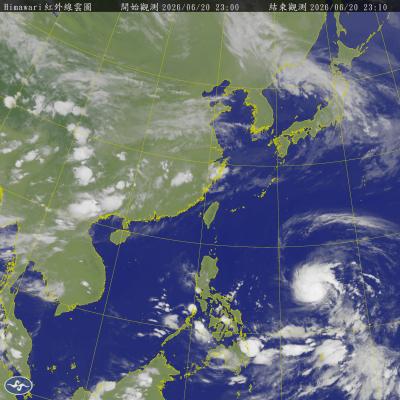
Tropical Storm Mekkhala is forecast to strengthen into a typhoon tomorrow and could come close enough to Taiwan later in the week to prompt a sea warning, the Central Weather Administration (CWA) said yesterday. As of 2 pm, the storm was located 1,870 kilometers southeast of Taiwan's southern tip and moving west- northwest at 23 km per hour. CWA forecaster Cheng Chieh-jen (鄭傑仁) said Mekkhala is expected to continue moving west-northwest through Tuesday under the influence of the Pacific high- pressure system before gradually turning north toward waters east of Taiwan or south of the Ryukyu Islands. The timing and angle of the
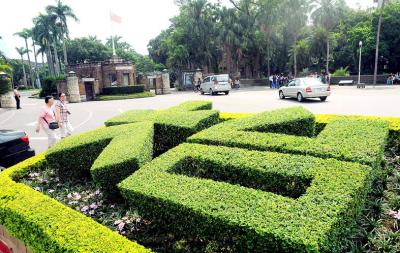
Four Taiwanese universities have been ranked among the world's top 200 institutions in the Quacquarelli Symonds (QS) World University Rankings for next year, the highest Taiwan has ever placed in the category, with National Taiwan University (NTU) achieving its best performance at 54th globally and 17th in Asia. The four Taiwanese institutions in the global top 200 are NTU (54th), National Tsing Hua University (142nd), National Yang Ming Chiao Tung University (177th) and National Cheng Kung University (191st), the rankings showed. All four universities achieved their highest-ever global rankings this year, QS data showed. National Cheng Kung University entered the top 200 for


 RSS
RSS