


Prosecutors have indicted four alleged members of a Taichung-based cyberfraud ring that used deepfake technology to scam at least 55 Chinese nationals out of NT$200 million (US$6.33 million), the Criminal Investigation Bureau said yesterday.
The Taichung District Prosecutors’ Office filed the indictment against the four in November last year on charges of contravening the Fraud Crime Hazard Prevention Act (詐欺犯罪危害防制條例), and Organized Crime Prevention Act (組織犯罪防制條例), and for Offenses of Impairment to Use of Computers (妨害電腦使用罪), the bureau said in a statement.
The Taichung ring worked with a fraud gang in China to acquire the personal information of Chinese nationals online, the bureau said.
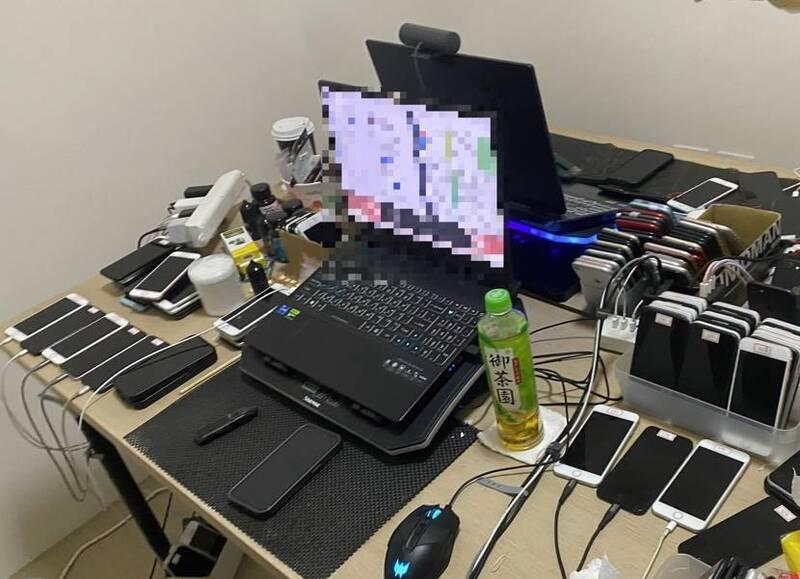
Photo copied by Chen Chien-chih, Taipei Times
Using the stolen identities, the Taichung ring was able to create videos with the likeness of Chinese victims using deepfake technology that were then used on China's digital yuan (e-CNY) mobile banking applications, it said.
The deepfake faces were used to gain access to the e-CNY banking accounts of users and transfer funds, the bureau said.
Authorities began an operation to dismantle the ring after receiving a tip-off in mid 2024, it said.
Police then focused on a man, surnamed Lu (盧), who rented a unit in Taichung's Beitun District (北屯) as a base for the scam operation with two other people, it said.
In November 2024, investigators discovered that the ring was financed by a 34-year-old man, surnamed Lin (林), who was in Thailand at the time, the bureau said.
The ring also created social media accounts to be sold to fraud factories operating outside Taiwan, it said.
Lin was arrested in Thailand in May last year and repatriated to Taiwan in June, police said, adding that his three accomplices in Taiwan were detained from November 2024 to June last year, with authorities seizing more than NT$120,000 in cash, 320 smartphones and six computers.
Citing the bureau’s fifth cybercrime division, United Daily News reported that the case marks the first time a fraud ring using Starlink and deepfake technology has been uncovered in Taiwan.
So far, no Taiwanese have been identified as victims, the report said, adding that the bureau has shared information from the case with the Financial Supervisory Commission to prevent fraudsters from using similar techniques to target Taiwanese.

FUKUOKA SITUATION: Japanese media reported that the pathogen is expected to be identified by the summer, while the CDC downplayed the idea that it was hMPV A “mysterious cold-like illness” reported in Japan’s Fukuoka Prefecture does not seem to be a new disease, but Japanese authorities have been asked about the situation, the Centers for Disease Control (CDC) said yesterday. The Fukuoka Prefectural Medical Association on Wednesday told a news conference that a “mystery cold” that has become a hot topic on social media is “highly likely to be caused by some kind of viral infection,” Japan’s KBC News reported. “Many people are experiencing symptoms starting with a sore throat, followed by a runny nose, phlegm and a severe cough,” KBC News reported, citing association officials. Health authorities are

Nvidia Corp CEO Jensen Huang (黃仁勳) arrived in Taiwan yesterday ahead of upcoming AI and technology events, saying he plans to meet with clients and Taiwan Semiconductor Manufacturing Co Chairman C.C. Wei (魏哲家) during his visit. After landing at Taipei Songshan Airport, Huang posed for photos with fans and handed out Yakult drinks to reporters and supporters waiting at the scene, saying he has “a lot to do” during the trip. Asked about reports that Nvidia’s planned headquarters site in Taipei’s Beitou Shilin Technology Park could break ground on May 27, Huang said that if the company holds an event, he would

The Ministry of Finance this afternoon announced the winning numbers for the March-April uniform invoice lottery. The winning number for the NT$10 million (US$318,060) special prize is 19531471, and the winning number for the NT$2 million grand prize is 85941329. Three numbers were drawn for the NT$200,000 first prize: 07225810, 20231230 and 83518781. Those with receipts matching the last seven digits of any of the first-prize numbers will win the NT$40,000 second prize, while those matching the last six digits will win the NT$10,000 third prize. Those whose receipts match the last five digits of the first-prize numbers can claim the NT$4,000 fourth prize,
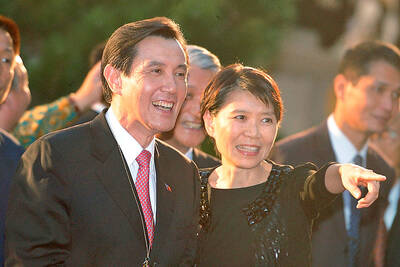
Former president Ma Ying-jeou (馬英九) yesterday expressed “shock and regret” over a statement issued by his wife without his consent, and rejected her assertion that his eldest sister, Ma Yi-nan (馬以南), would manage his medical care or act as his spokesperson amid an ongoing embezzlement probe into his foundation. Ma Ying-jeou in a statement said he was shocked by a statement by his wife, Chou Mei-ching (周美青), regarding his affairs. Ma Yi-nan “must not” be in charge of his healthcare and other personal affairs, nor can she be allowed to represent the Ma family, the former president said. He said he was also


 RSS
RSS