


A statue of late Taiwanese singer and actress Barbie Hsu (徐熙媛) was yesterday unveiled by her mother, nicknamed “S Mom,” and Hsu’s South Korean husband, Koo Jun-yup, at her resting place in New Taipei City, one year after her death.
S Mom, Koo and other family members, including Hsu’s younger sister, talk show hostess Dee Hsu (徐熙娣), stood around the statue in Chin Pao San, a private cemetery.
Designed by Koo, the statue is surrounded by nine cubes that he said represent nine planets.
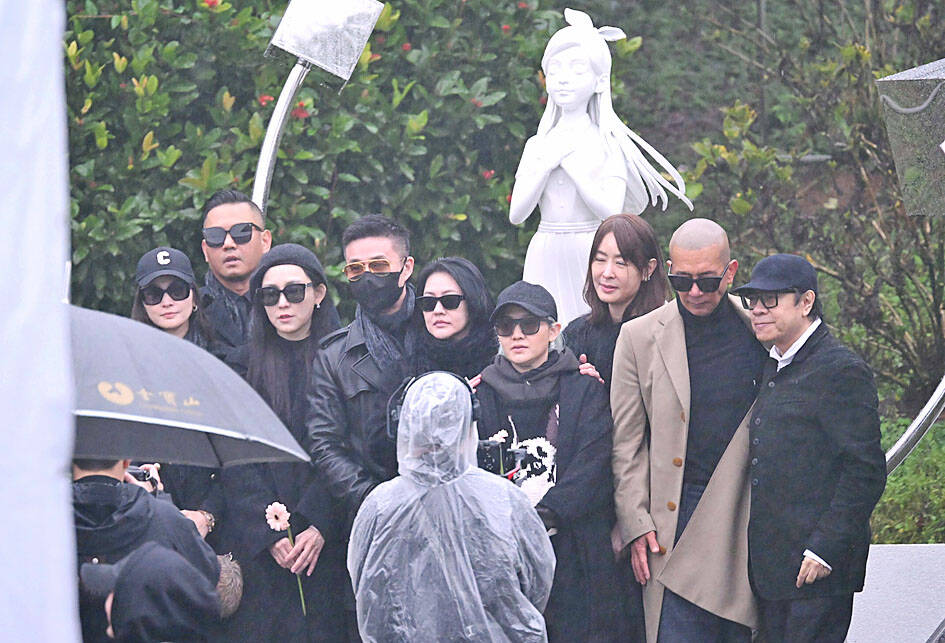
Photo: Pan Shao-tang, Taipei Times
The statue faces south toward Taipei, where her family lives, a design that symbolizes the family’s eternal love for his wife and their wish for it to endure forever, Koo said.
Among the celebrities who attended the event to memorialize Barbie Hsu were Super Junior’s Choi Si-won, Taiwanese television producer Wang Wei-chung (王偉忠) and his wife, TV hosts Kevin Tsai (蔡康永) and Matilda Tao (陶晶瑩), and singer Rainie Yang (楊丞琳).
Also in attendance were F4 members Jerry Yan (言承旭) and Vic Chou (周渝民), as well as Taipei Financial Center Corp chairwoman Janet Chia (賈永婕) and her husband, entertainment manager Chiu Li-kuan.
Barbie Hsu died of pneumonia at the age of 48 on Feb. 2 last year while on a trip to Japan, where she contracted influenza during the Lunar New Year holiday.
She made her debut as a singer alongside her sister Dee Hsu under the name SOS in 1994. They later adopted the name ASOS due to contractual issues.
Barbie Hsu began hosting television programs in 1995 and acting in TV series in 1998, cementing her stardom as an actress in 2001 with the lead role of Shan Cai in the Taiwanese drama Meteor Garden (流星花園), in which F4 became famous.
Off-screen, Barbie Hsu was a well-known celebrity across Asia. She married Chinese entrepreneur Wang Xiaofei (汪小菲) in 2010 and gave birth to a daughter and a son in 2014 and 2016, before the couple divorced in 2021.
In 2022, she announced her marriage to Koo, with whom she shared a brief romance in the late 1990s before his management advised them to part ways.
Koo, who has been deeply affected by his wife’s death, has been visiting her resting place almost every day, Chinese-language media reports have said.
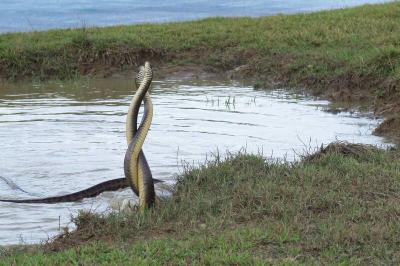
Kenting National Park service technician Yang Jien-fon (楊政峰) won a silver award in World Grand Prix Photography Awards Spring Season for his photograph of two male rat snakes intertwined in combat. Yang’s colleagues at Kenting National Park said he is a master of nature photography who has been held back by his job in civil service. The awards accept entries in all four seasons across six categories: architectural and urban photography, black-and-white and fine art photography, commercial and fashion photography, documentary and people photography, nature and experimental photography, and mobile photography. Awards are ranked according to scores and divided into platinum, gold and
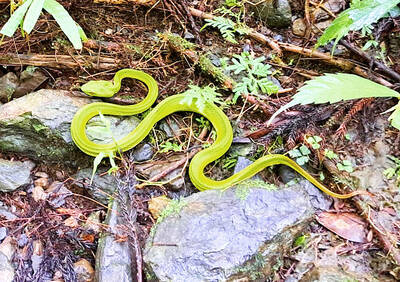
More than half of the bamboo vipers captured in Tainan in the past few years were found in the city’s Sinhua District (新化), while other districts had smaller catches or none at all. Every year, Tainan captures about 6,000 snakes which have made their way into people’s homes. Of the six major venomous snakes in Taiwan, the cobra, the many-banded krait, the brown-spotted pit viper and the bamboo viper are the most frequently captured. The high concentration of bamboo vipers captured in Sinhua District is puzzling. Tainan Agriculture Bureau Forestry and Nature Conservation Division head Chu Chien-ming (朱健明) earlier this week said that the
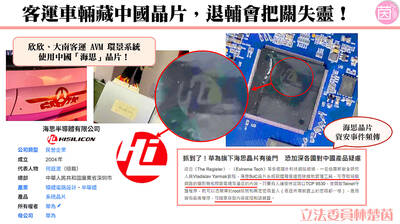
BREACH OF CONTRACT: The bus operators would seek compensation and have demanded that the manufacturer replace the chips with ones that meet regulations Two bus operators found to be using buses with China-made chips are to demand that the original manufacturers replace the systems and provide compensation for breach of contract, the Veterans Affairs Council said yesterday. Democratic Progressive Party Legislator Michelle Lin (林楚茵) yesterday said that Da Nan Bus Co and Shin-Shin Bus Co Ltd have fielded a total of 82 buses that are using Chinese chips. The bus models were made by Tron-E, while the systems provider was CYE Electronics, Lin said. Lin alleged that the buses were using chips manufactured by Huawei subsidiary HiSilicon Co, which presents a national security risk if the
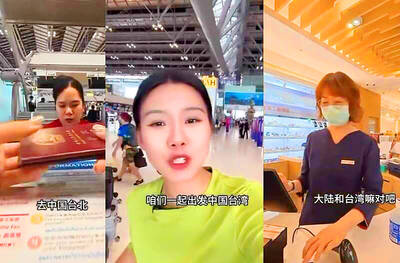
The National Immigration Agency has banned two Chinese from returning to Taiwan, after they published social media content it described as disrespectful to national sovereignty. The agency imposed a two-month ban on a Chinese man surnamed Liang (梁) and a permanent ban on a woman surnamed Yang (楊), an influencer with 23 million followers, in October last year and last week respectively. Minister of the Interior Liu Shyh-fang (劉世芳) yesterday said on the sidelines of a legislative meeting that Chinese visitors to Taiwan are required to comply with the rules and regulations governing their entry permits. The government has handled the ban and


 RSS
RSS