


Air quality across Taiwan is expected to worsen from a yellow “moderate” level to an orange “unhealthy for sensitive groups” level starting yesterday evening as pollutants float south from China, the Ministry of Environment (MOENV) said.
An orange alert means that sensitive groups could experience health effects but other people are unlikely be affected, according to the MOENV website.
People with heart, respiratory and cardiovascular problems, and children, teenagers and older adults are advised by the ministry to reduce physical exertion and outdoor activities.
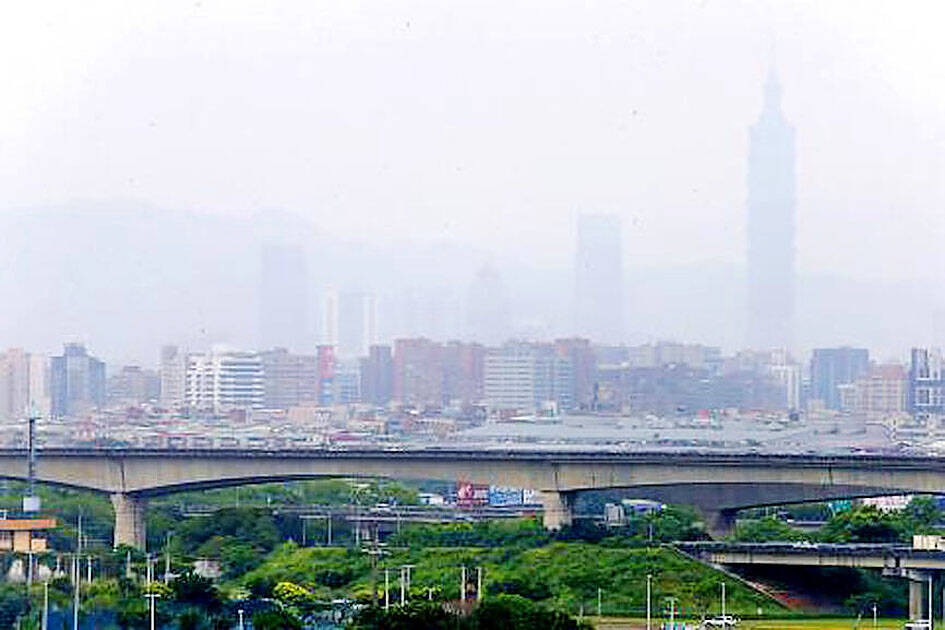
Photo: CNA
The MOENV said air quality in central and northern Taiwan is expected to gradually improve this afternoon as the impact of pollutants eases.
The ministry said southern Taiwan may remain under an orange alert level until Friday because the region is located in a downwind area with weaker wind speed.
In a press release, the MOENV said haze pollution was observed Sunday in parts of China from Shandong Province to Shanghai, where fine particulate matter (PM2.5) recorded hourly concentration levels of about 70 to 180 micrograms per cubic meter.
The ministry said PM2.5 hourly concentration in northern Taiwan could reach 30 to 50 micrograms per cubic meter as the polluted air moves in.
The MOENV said air quality could improve to a yellow “moderate” level on Saturday if the northeasterly monsoon strengthens and no additional pollutants arrive from overseas.

Nipah virus infection is to be officially listed as a category 5 notifiable infectious disease in Taiwan in March, while clinical treatment guidelines are being formulated, the Centers for Disease Control (CDC) said yesterday. With Nipah infections being reported in other countries and considering its relatively high fatality rate, the centers on Jan. 16 announced that it would be listed as a notifiable infectious disease to bolster the nation’s systematic early warning system and increase public awareness, the CDC said. Bangladesh reported four fatal cases last year in separate districts, with three linked to raw date palm sap consumption, CDC Epidemic Intelligence

Two Taiwanese prosecutors were questioned by Chinese security personnel at their hotel during a trip to China’s Henan Province this month, the Mainland Affairs Council (MAC) said yesterday. The officers had personal information on the prosecutors, including “when they were assigned to their posts, their work locations and job titles,” MAC Deputy Minister and spokesman Liang Wen-chieh (梁文傑) said. On top of asking about their agencies and positions, the officers also questioned the prosecutors about the Cross-Strait Joint Crime-Fighting and Judicial Mutual Assistance Agreement, a pact that serves as the framework for Taiwan-China cooperation on combating crime and providing judicial assistance, Liang
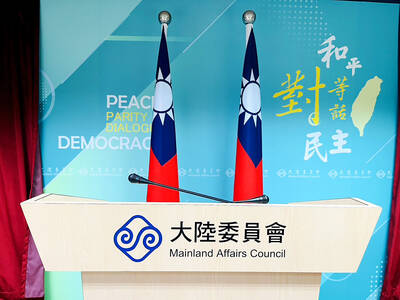
Reports of Taiwanese going missing, being detained or interrogated, or having their personal liberties restricted in China increased about fourfold annually last year, the Mainland Affairs Council (MAC) said yesterday. Last year, 221 Taiwanese who traveled to China were reported missing, were detained and interrogated, or otherwise had their personal freedom restricted, up from 55 the previous year, the council said. Reopening group tours to China would be risky, as it would leave travelers with no way to seek help through official channels after Beijing shut down dialogue between the associations tasked with handling cross-strait tourism, the MAC said. Taipei’s Taiwan Strait Tourism
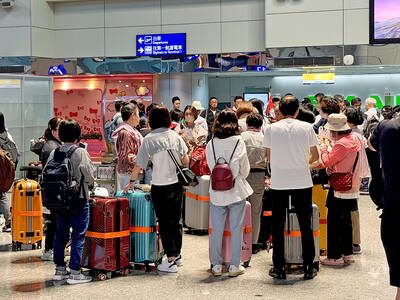
SHIFT: Taiwan is evolving from a transit stop into a tourist destination, with more international travelers willing to spend on tours, dining and cultural activities Taiwan rose three places in the World Tourism Barometer to 36th globally in 2024, with international tourism revenue of US$10.028 billion, the Tourism Administration said on Monday. The UN Tourism Organization publication said that its focus has switched from whether a country has returned to pre-COVID-19 levels of tourism to the amount spent by a tourist during an overseas trip. The nation last year welcomed 8.57 million international tourists, about 9 percent more than in 2024, with most tourists coming from Japan, South Korea, and Hong Kong and Macau, all of which accounted for at least 1 million tourists each. During the first


 RSS
RSS