


Transportation officials in Taipei and New Taipei City are testing whether artificial intelligence (AI) can be used to answer people’s questions about bus services.
The two cities in August last year launched a one-week trial using an AI chatbot, dubbed “Bus Station Master Ah-Ming (公車站長阿明),” at Taipei City Bus Hall Station, Banciao Bus Station, Taipei Railway Station and Tamsui MRT Station to answer frequently asked questions from bus passengers.
To access the service, passengers can use dedicated machines or scan a QR code. Transportation officials said they subsequently refined the service based on feedback from more than 300 users. Phase 2 of the trial began yesterday at 20 selected bus stops, where passengers can scan a QR code and ask their questions through voice or text input. Transportation officials said that they hope to receive more feedback from people who access the service using English.
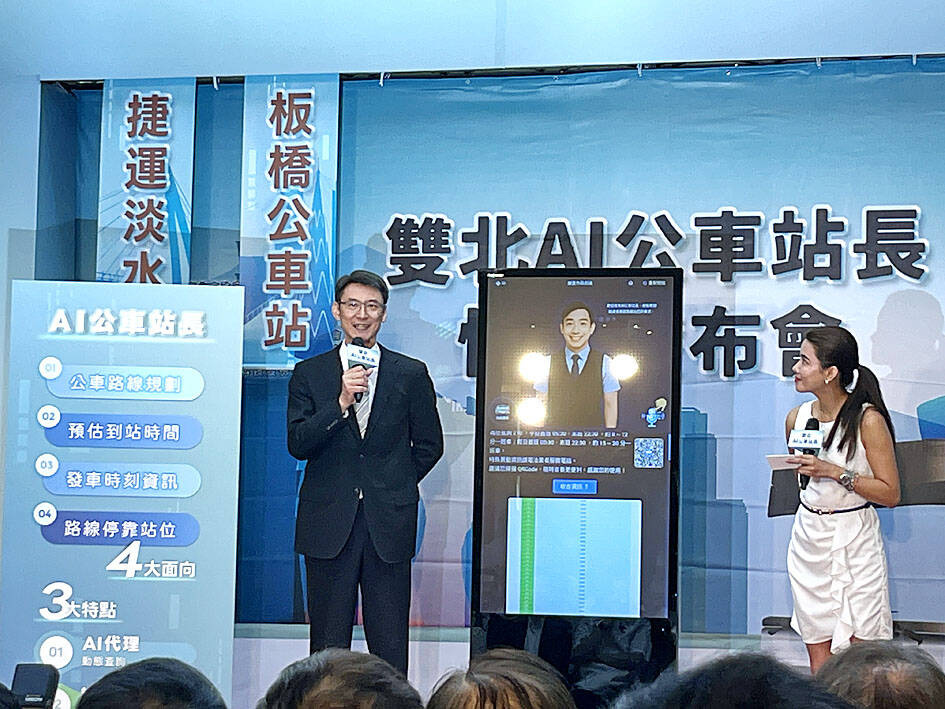
Photo: CNA
The system is not available in other languages.
Despite a low semantic recognition accuracy rate, transportation officials said they are expanding the database and would make other languages available depending on the demand.
Officials said they would look into making the service available in Hoklo, commonly known as Taiwanese, once a mature, domestically developed large language model exists.
Mandarin as spoken in Taiwan would be recorded and used for optimization, they said, adding that Phase 3 of the trial is scheduled for April.
Passengers accessing the service would not be asked to provide personal data, bank account numbers or passwords, join online groups or open a different Web page.
The 20 bus stops were chosen as they are locations where bus drivers are often asked questions. In Taipei, passengers can scan the QR code in the bus stops at Taipei City Hall (westbound), Daan MRT Station (westbound), Ximen MRT station (northbound and southbound), Nanjing Fuxing MRT station (westbound), Minquan W Road MRT station (eastbound), Minquan Road and Zhongshan Road intersection (eastbound), Taipei Arena (southbound), Taipower Building MRT Station (northbound) and National Taiwan University Hospital (northbound).
In New Taipei City, the locations include Tamsui MRT Station (southbound), Luzhou MRT Station (northbound), Fu Jen University MRT Station (westbound), Yongning MRT Station (northbound), Qizhang MRT Station (northbound), Banciao Bus Station (Platform 1, northbound), Linkou Transit Center (Platform 1, northbound), Civic Plaza (eastbound), En Chu Kong Hospital (westbound) and Xizhi (eastbound).
Asiatek Inc (華夏科技), which designs the chatbot, said that the system would interact with users in dialogues, instead of simply saying that users’ queries are invalid. Users can also request further information on the potential travel arrangements, it added.
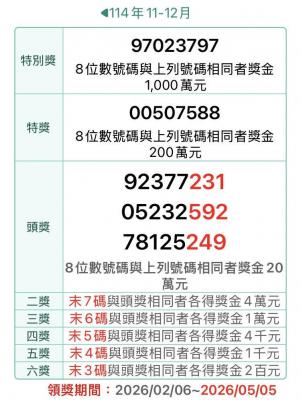
Seven of the 17 NT$10 million (US$311,604) winning receipts from the November-December uniform invoice lottery remain unclaimed as of today, the Ministry of Finance said, urging winners to redeem their prizes by May 5. The reminder comes ahead of the release of the winning numbers for the January-February lottery tomorrow. Among the unclaimed receipts was one for a NT$173 phone bill in Keelung, while others were for a NT$5,913 purchase at Costco in Taipei's Neihu District (內湖), a NT$49 purchase at a FamilyMart in New Taipei City's Tamsui District (淡水), and a NT$500 purchase at a tea shop in New Taipei City's
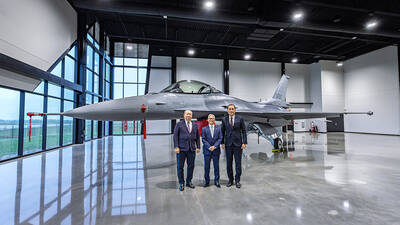
Taiwanese officials were shown the first of 66 F-16V fighter jets purchased by Taiwan from the United States, the Ministry of National Defense said yesterday, adding the aircraft has completed an initial flight test and is expected to be delivered later this year. A delegation led by Deputy Minister of National Defense Hsu Szu-chien (徐斯儉) visited Lockheed Martin’s F-16 C/D Block 70 (also known as F-16V) assembly line in South Carolina on March 16 to view the aircraft. The jet will undergo a final acceptance flight in the US before being delivered to Taiwan, the
Deliveries of delayed F-16V jets are expected to begin in September, Minister of National Defense Wellington Koo (顧立雄) said today, after senior defense officials visited the US last week. The US in 2019 approved a US$8 billion sale of Lockheed Martin F-16 jets to Taiwan, a deal that would take the nation’s F-16 fleet to more than 200 jets, but the project has been hit by issues including software problems. Koo appeared today before a meeting of the legislature’s Foreign Affairs and National Defense Committee, which is discussing different versions of the special defense budget this week. The committee is questioning officials today,
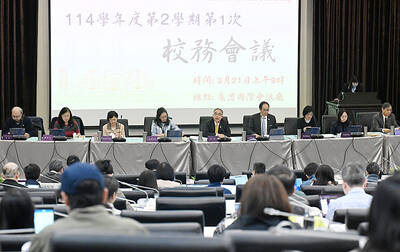
TALENT SCOUTING: The university is investing substantial funds in its future to bring in the kind of researchers that would keep the college internationally competitive National Taiwan University (NTU) plans to invest NT$2 billion (US$62.6 million) to launch two programs aimed at attracting and retaining top research talent, university president Chen Wen-chang (陳文章) said yesterday. The funding would support the “Palm Grove Scholars Project,” which targets academics aged 40 to 55. Up to 20 scholars would be selected, each receiving as much as NT$10 million annually, Chen said. The initiative is designed to attract leading researchers to Taiwan and strengthen NTU’s global competitiveness by fostering a more research-friendly environment and expanding international collaboration, he said. NTU is also introducing a “Hong Hu” chair grant, which would provide Palm


 RSS
RSS