


The Manila Economic and Cultural Office (MECO) on Tuesday said it “warmly welcomes” Taiwan’s plan to set up its first cross-border recruitment center in the Philippines to enable Taiwanese employers to directly hire Philippine migrant workers.
“This initiative reflects the growing partnership between the Philippines and Taiwan and marks an important step toward more ethical, transparent and worker-centered recruitment,” office Chairwoman and Resident Representative Corazon Avecilla-Padiernos said in a statement.
MECO serves as the Philippines’ de facto embassy in Taiwan in the absence of official diplomatic ties.
Photo: Taipei Times
The Ministry of Labor on Friday last week said that the new center is to open in the first quarter of this year and circumvent the labor brokerage system that has been used to date.
NEW SYSTEM
Under the new system, expenses for flight tickets, health checkups and visas for migrant workers would in principle be paid by Taiwanese employers rather than workers, Workforce Development Agency Director-General Lydia Huang (黃齡玉) said.
Padiernos highlighted the direct hiring mechanism and the shift of key costs to Taiwanese employers, saying that the measures could “significantly reduce the financial burden on Filipino workers and help address abusive brokerage practices.”
Most migrant workers in Taiwan are recruited through brokers, and many workers pay pre-employment expenses to brokers in their home countries.
Brokers in Taiwan are then permitted to charge them monthly service fees capped at NT$1,800 in the first year after arrival, NT$1,700 in the second year and NT$1,500 from the third year onward.
WORKERS’ RIGHTS
The office would work closely with the Philippine Overseas Workers Welfare Administration and Department of Migrant Workers, as well as agencies in Taiwan, “to help ensure that the new system genuinely protects the rights and welfare of Filipino workers, while also responding to Taiwan’s legitimate labor needs,” Padiernos said.
Although the recruitment center has yet to open, Minister of Labor Hung Sun-han (洪申翰) on Friday last week said that the ministry has a special task force in place to take applications for workers from Taiwanese employers starting today.

Kenting National Park service technician Yang Jien-fon (楊政峰) won a silver award in World Grand Prix Photography Awards Spring Season for his photograph of two male rat snakes intertwined in combat. Yang’s colleagues at Kenting National Park said he is a master of nature photography who has been held back by his job in civil service. The awards accept entries in all four seasons across six categories: architectural and urban photography, black-and-white and fine art photography, commercial and fashion photography, documentary and people photography, nature and experimental photography, and mobile photography. Awards are ranked according to scores and divided into platinum, gold and

More than half of the bamboo vipers captured in Tainan in the past few years were found in the city’s Sinhua District (新化), while other districts had smaller catches or none at all. Every year, Tainan captures about 6,000 snakes which have made their way into people’s homes. Of the six major venomous snakes in Taiwan, the cobra, the many-banded krait, the brown-spotted pit viper and the bamboo viper are the most frequently captured. The high concentration of bamboo vipers captured in Sinhua District is puzzling. Tainan Agriculture Bureau Forestry and Nature Conservation Division head Chu Chien-ming (朱健明) earlier this week said that the
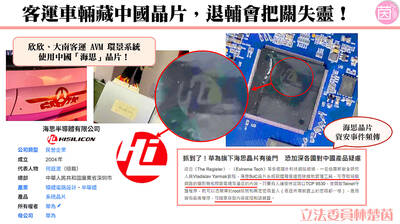
BREACH OF CONTRACT: The bus operators would seek compensation and have demanded that the manufacturer replace the chips with ones that meet regulations Two bus operators found to be using buses with China-made chips are to demand that the original manufacturers replace the systems and provide compensation for breach of contract, the Veterans Affairs Council said yesterday. Democratic Progressive Party Legislator Michelle Lin (林楚茵) yesterday said that Da Nan Bus Co and Shin-Shin Bus Co Ltd have fielded a total of 82 buses that are using Chinese chips. The bus models were made by Tron-E, while the systems provider was CYE Electronics, Lin said. Lin alleged that the buses were using chips manufactured by Huawei subsidiary HiSilicon Co, which presents a national security risk if the

The National Immigration Agency has banned two Chinese from returning to Taiwan, after they published social media content it described as disrespectful to national sovereignty. The agency imposed a two-month ban on a Chinese man surnamed Liang (梁) and a permanent ban on a woman surnamed Yang (楊), an influencer with 23 million followers, in October last year and last week respectively. Minister of the Interior Liu Shyh-fang (劉世芳) yesterday said on the sidelines of a legislative meeting that Chinese visitors to Taiwan are required to comply with the rules and regulations governing their entry permits. The government has handled the ban and


 RSS
RSS