


A digital reward program used to track personal carbon reduction for taking public transportation would lower its threshold next year to attract more users, local officials in northern Taiwan said yesterday.
The Keelung, Taipei, New Taipei City and Taoyuan governments last year jointly launched the “My Carbon Reduction Passbook” program, which has since recorded more than 440,000 users with a total carbon reduction of about 55,000 tonnes.
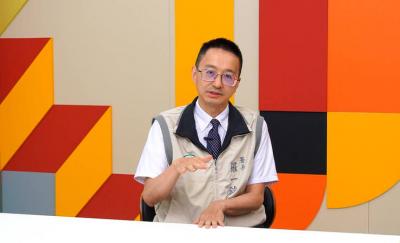
At a joint news conference in Taipei, the city’s Deputy Mayor Chang Wen-te (張溫德) said the program effortlessly incorporates carbon reduction into daily life.
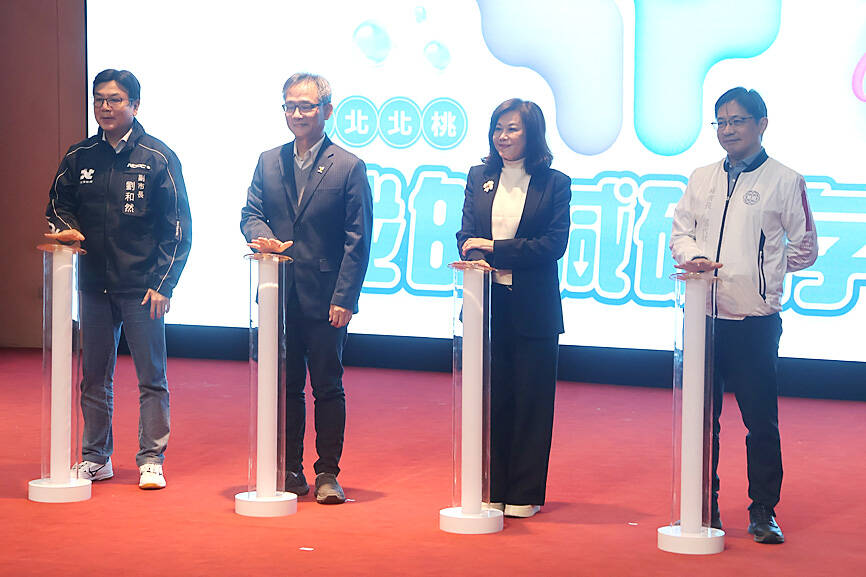
Photo: Tung Kuan-yi, Taipei Times
The platform calculates personal carbon reduction amounts from using public transportation, he said.
While a tree absorbs about 12kg to 13kg of carbon per year on average, the program’s redemption threshold for rewards would be lowered to 5kg from 20kg in carbon reduction, equivalent to one-third of a tree’s annual carbon absorption, Chang said.
That is expected to make the program more engaging to users, he said.
Users across the four cities have amounted to more than 449,000 people as of yesterday, Chang said, adding that local authorities are working on technical challenges to expand the program from public transportation to other areas.
Keelung Deputy Mayor Chiu Pei-lin (邱佩琳) said the number of users has increased by 160,000 this year thanks to public-private cooperation.
Keelung has the second-highest commuter rate and the highest electric scooter rate among the nation’s administrative regions, and the city is dedicated to environmental protection, she said.
The city government would collaborate with universities and local companies to promote energy saving and carbon reduction in the city, with the goal of boosting the number of users to 600,000 next year, she said.
New Taipei City Deputy Mayor Liu Ho-jan (劉和然) said the commercial, industrial and transportation sectors were the top three carbon emission sources in the city.
It is important to promote carbon reduction via public transportation, including the high-speed rail, traditional railways, metro systems, light rail systems and buses, he said.
New Taipei City’s Sanying Line would come into operation next year and be included in the program, he said.
As Taiwanese are committed to environmental protection, incentives could further increase participation, he said.
Taoyuan City Government Secretary-General Wen Tai-hsin (溫代欣) said he enrolled in the program on Sunday and rode a YouBike yesterday.
He pledged to step up his personal carbon reduction via the passbook.
Fifty more routes would be added to the “Taoyuan Small Bus” service — which uses nine-seater vehicles — with the goal of setting up 200 such routes in the city over the next three years, Wen said.
Several new bus routes would also be established in connection with the city’s transportation hubs, he said, adding that Taoyuan Mayor Simon Chang (張善政) would unveil further details.
Given that the Sanying Line would be operational next year, the New Taipei City Government would assist in extending the line to Taoyuan’s Bade District (八德), he said, adding that a “silver line” linking New Taipei City’s Linkou District (林口) to Taoyuan’s Gueishan District (龜山) would be added to the intercity metro system.
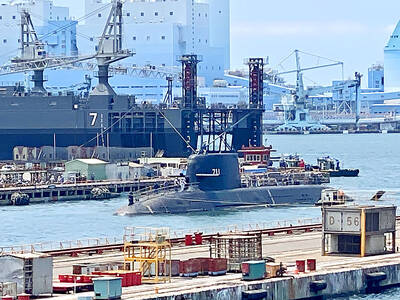
AGING: While Japan has 22 submarines, Taiwan only operates four, two of which were commissioned by the US in 1945 and 1946, and transferred to Taiwan in 1973 Taiwan would need at least 12 submarines to reach modern fleet capabilities, CSBC Corp, Taiwan chairman Chen Cheng-hung (陳政宏) said in an interview broadcast on Friday, citing a US assessment. CSBC is testing the nation’s first indigenous defense submarine, the Hai Kun (海鯤, Narwhal), which is scheduled to be delivered to the navy next month or in July. The Hai Kun has completed torpedo-firing tests and is scheduled to undergo overnight sea trials, Chen said on an SET TV military affairs program. Taiwan would require at least 12 submarines to establish a modern submarine force after assessing the nation’s operational environment and defense
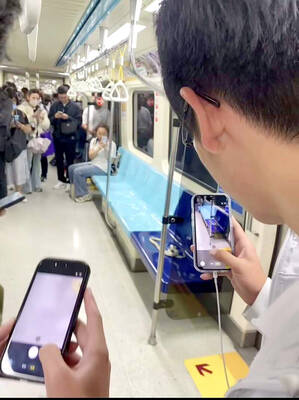
A white king snake that frightened passengers and caused a stir on a Taipei MRT train on Friday evening has been claimed by its owner, who would be fined, Taipei Rapid Transit Corp (TRTC) said yesterday. A person on Threads posted that he thought he was lucky to find an empty row of seats on Friday after boarding a train on the Bannan (Blue) Line, only to spot a white snake with black stripes after sitting down. Startled, he jumped up, he wrote, describing the encounter as “terrifying.” “Taipei’s rat control plan: Release snakes on the metro,” one person wrote in reply, referring
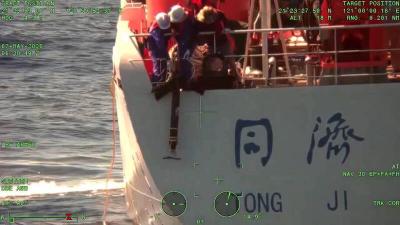
The coast guard today said that it had disrupted "illegal" operations by a Chinese research ship in waters close to the nation and driven it away, part of what Taipei sees a provocative pattern of China's stepped up maritime activities. The coast guard said that it on Thursday last week detected the Chinese ship Tongji (同濟號), which was commissioned only last year, 29 nautical miles (54km) southeast of the southern tip of Taiwan, although just outside restricted waters. The ship was observed lowering ropes into the water, suspected to be the deployment of scientific instruments for "illegal" survey operations, and the coast
Taiwan’s two cases of hantavirus so far this year are on par with previous years’ case numbers, and the government is coordinating rat extermination work, so there should not be any outbreaks, Centers for Disease Control (CDC) Director-General Philip Lo (羅一鈞) said today in an interview with the Liberty Times (the Taipei Times’ sister newspaper). An increase in rat sightings in Taipei and New Taipei City has raised concerns about the spread of hantavirus, as rats can carry the disease. In January, a man in his 70s who lived in Taipei’s Daan District (大安) tested positive posthumously for hantavirus, Taiwan’s


 RSS
RSS