


Taiwanese doctor-turned-illustrator Emma Cheng (鄭光婷) has described the "unreal" feeling of seeing her artwork depicting DNA being woven on a loom grace the cover of the Lancet Rheumatology journal.
"Seeing it on the homepage feels so exciting and unreal — in the best way," Cheng wrote on Saturday on Instagram.

Photo courtesy of Emma Cheng via CNA
Cheng's cover for the January 2026 issue shows two scientists keeping a watchful eye over a loom weaving DNA, as immune cells and proteins gradually pile up in a metaphor for chronic inflammation progressing into organ scarring.
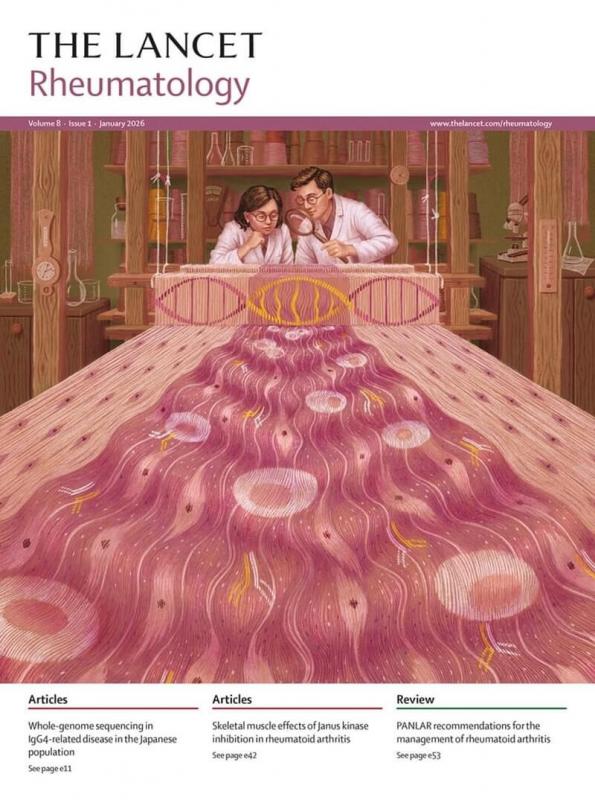
Image courtesy of Emma Cheng via CNA
Born in Taiwan and now based in San Francisco, Cheng is known for turning organs, senses and emotions into gentle, slightly quirky characters, such as anthropomorphic eyeballs or a brain relaxing in bed with a book.
The former aesthetic physician and Taipei Medical University graduate studied design and completed a Stanford fellowship before turning to illustration.

Image courtesy of Emma Cheng via CNA
Cheng blends her medical training into her art, using illustrations not just to decorate, but to explain how the body works, making complex research more human and a touch playful.
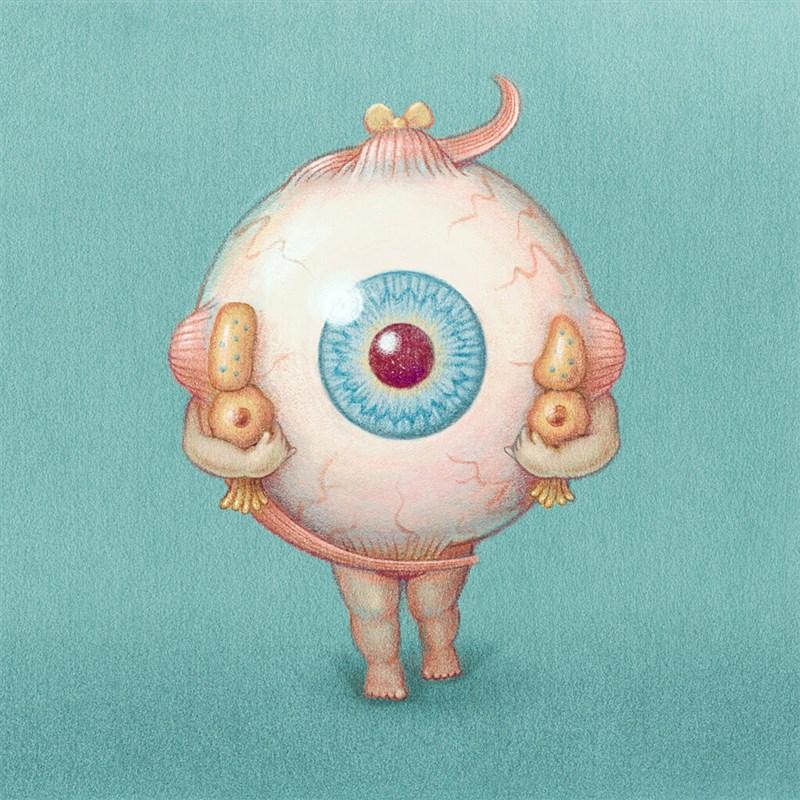
Image courtesy of Emma Cheng via CNA
The former doctor said she never imagined being associated with the Lancet while practicing medicine.
"I was never the academia type, so I figured it wasn't something for me," she said.
It was not until she became an illustrator that she learned the journal commissions artists for covers, and thought: "Wow, it would be so cool to collaborate as an illustrator," she said.
Reflecting on international illustration work, Cheng said that "in Taiwan, illustration is mostly associated with characters or picture books."
However, abroad, illustrators have more opportunities and often work directly with art directors instead of through an agent, she said.
She recalled collaborating with the New York Times, where the art director worked directly with her, "like colleagues talking shop," making discussions smoother.
On the challenges of switching careers, Cheng spoke candidly about the persistent self-doubt she faces.
"How could you not doubt yourself?" she said.
However, Cheng said that over time, she realized the journey was not as intimidating as she had imagined.
"Self-doubt might be a lifelong companion, and learning to coexist with it has become part of the creative process," she said.

AGING: While Japan has 22 submarines, Taiwan only operates four, two of which were commissioned by the US in 1945 and 1946, and transferred to Taiwan in 1973 Taiwan would need at least 12 submarines to reach modern fleet capabilities, CSBC Corp, Taiwan chairman Chen Cheng-hung (陳政宏) said in an interview broadcast on Friday, citing a US assessment. CSBC is testing the nation’s first indigenous defense submarine, the Hai Kun (海鯤, Narwhal), which is scheduled to be delivered to the navy next month or in July. The Hai Kun has completed torpedo-firing tests and is scheduled to undergo overnight sea trials, Chen said on an SET TV military affairs program. Taiwan would require at least 12 submarines to establish a modern submarine force after assessing the nation’s operational environment and defense

A white king snake that frightened passengers and caused a stir on a Taipei MRT train on Friday evening has been claimed by its owner, who would be fined, Taipei Rapid Transit Corp (TRTC) said yesterday. A person on Threads posted that he thought he was lucky to find an empty row of seats on Friday after boarding a train on the Bannan (Blue) Line, only to spot a white snake with black stripes after sitting down. Startled, he jumped up, he wrote, describing the encounter as “terrifying.” “Taipei’s rat control plan: Release snakes on the metro,” one person wrote in reply, referring
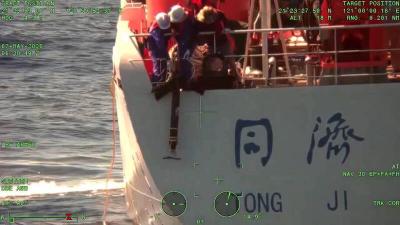
The coast guard today said that it had disrupted "illegal" operations by a Chinese research ship in waters close to the nation and driven it away, part of what Taipei sees a provocative pattern of China's stepped up maritime activities. The coast guard said that it on Thursday last week detected the Chinese ship Tongji (同濟號), which was commissioned only last year, 29 nautical miles (54km) southeast of the southern tip of Taiwan, although just outside restricted waters. The ship was observed lowering ropes into the water, suspected to be the deployment of scientific instruments for "illegal" survey operations, and the coast
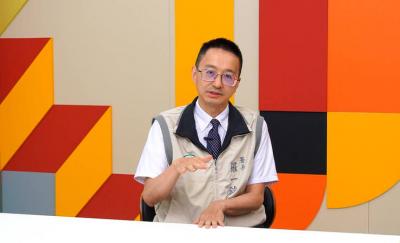
Taiwan’s two cases of hantavirus so far this year are on par with previous years’ case numbers, and the government is coordinating rat extermination work, so there should not be any outbreaks, Centers for Disease Control (CDC) Director-General Philip Lo (羅一鈞) said today in an interview with the Liberty Times (the Taipei Times’ sister newspaper). An increase in rat sightings in Taipei and New Taipei City has raised concerns about the spread of hantavirus, as rats can carry the disease. In January, a man in his 70s who lived in Taipei’s Daan District (大安) tested positive posthumously for hantavirus, Taiwan’s


 RSS
RSS