


On the front lines of the Indo-Pacific, a region rife with conflict as China and Russia challenge global security and order, Taiwan must deepen collaboration and dialogue with like-minded countries and establish a robust, pan-democratic defense network, Institute for National Defense and Security Research chairman Huo Shou-ye (霍守業) told a forum in Taipei on Tuesday.
The institute hosted the “The Challenges Facing the Democracies in the Indo-China Region: Hybrid Warfare, Deterrence and Systemic Resilience” forum, attended by defense and legal experts.
Among them was former minister of national defense Tsai Ming-hsien (蔡明憲), who said that Taiwan increasing its defense spending, development of drones and submarine capabilities, and reinforcing infrastructure protection capabilities would help make the nation more resilient and deter China from a military invasion.
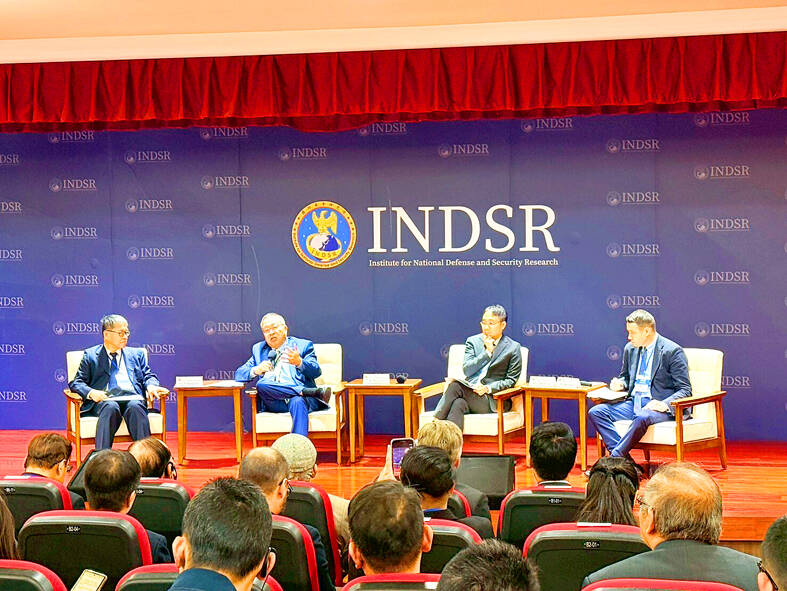
Photo: CNA
Tsai said he hoped the US, Japan, Australia, the Philippines and other friendly nations would continue to deepen defense collaborations with Taiwan.
Miles Yu (余茂春), director of the China Center at the Washington-based Hudson Institute, told the forum that Taiwan was not the sole target of Chinese expansion and threat, adding that Japan, South Korea, India and the Philippines were also at risk.
China is leveraging the same tactics that made the Chinese Communist Party (CCP) successful — “united front” tactics, armed struggle and party building, Yu said.
China places great weight behind its “united front” work toward the US, and is actively seeking to influence Washington and its policies through its agents, he said.
Institute assistant researcher Lee Chun-yi (李俊毅) said China’s “gray zone” tactics aim to portray Taiwan as part of China, and to suggest that the differences in governance between Taiwan and China do not matter.
China is seeking to influence Taiwan into thinking that the US and its allies would find it difficult to intervene, Lee said, adding that Taiwan must become more resilient, capitalize on the structural frailty of China’s polity and step up strategic collaborations with like-minded nations.
Former Philippine Army vice commander and retired major general Leodevic Guinid said the Philippines has designated Chinese maritime activities as illegal, coercive, aggressive and deceptive, and it has been combating Chinese “gray zone” tactics by deepening the Philippine-US alliance, and building multilateral security collaboration frameworks with Japan, Canada, Australia and New Zealand.
Yurii Poita, head of the Asia-Pacific section of the Center for Army, Conversion and Disarmament Studies in Ukraine, who is currently visiting Academia Sinica, said that Russia sought to divide the Ukrainian public and discredit its democratic government to reduce resistance to an invasion.
Peter Mattis, president of the Jamestown Foundation, said that national security laws and national intelligence were critical to deter espionage and combat disinformation, adding that such laws should be drafted with input from the judiciary.
Mattis said that the government should foster the independence of civil society to ensure the democratic system can react to Chinese disinformation campaigns.
Taiwanese judge Hsu Kai-hsieh (許凱傑) of the Taipei District Court’s National Security Division said China is infiltrating democratic systems through intelligence gathering, forming underground organizations, intervening in elections, launching cognitive campaigns to divide the public, technological espionage and “gray zone” actions.
Such acts are not isolated incidents and, over time, would result in institutional fatigue and delayed legal responses, he said, adding that countries must strengthen their legal systems and integrate cross-border information sharing, as traditional responses based on criminal charges would not be sufficient to root out Chinese infiltration.
Additional reporting by CNA
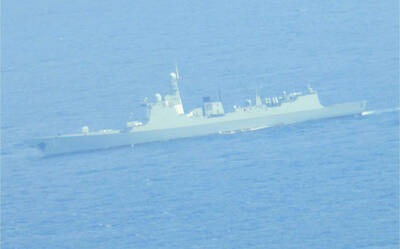
The military has spotted two Chinese warships operating in waters near Penghu County in the Taiwan Strait and sent its own naval and air forces to monitor the vessels, the Ministry of National Defense (MND) said. Beijing sends warships and warplanes into the waters and skies around Taiwan on an almost daily basis, drawing condemnation from Taipei. While the ministry offers daily updates on the locations of Chinese military aircraft, it only rarely gives details of where Chinese warships are operating, generally only when it detects aircraft carriers, as happened last week. A Chinese destroyer and a frigate entered waters to the southwest
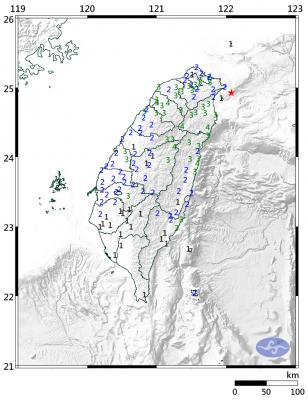
A magnitude 6.1 earthquake struck off the coast of Yilan County at 8:39pm tonight, the Central Weather Administration (CWA) said, with no immediate reports of damage or injuries. The epicenter was 38.7km east-northeast of Yilan County Hall at a focal depth of 98.3km, the CWA’s Seismological Center said. The quake’s maximum intensity, which gauges the actual physical effect of a seismic event, was a level 4 on Taiwan’s 7-tier intensity scale, the center said. That intensity level was recorded in Yilan County’s Nanao Township (南澳), Hsinchu County’s Guansi Township (關西), Nantou County’s Hehuanshan (合歡山) and Hualien County’s Yanliao (鹽寮). An intensity of 3 was
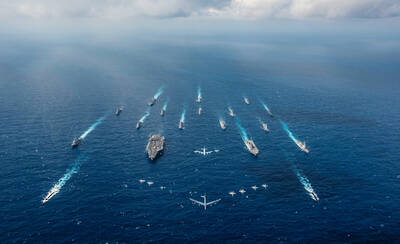
Japanese Prime Minister Sanae Takaichi’s comment last year on Tokyo’s potential reaction to a Taiwan-China conflict has forced Beijing to rewrite its invasion plans, a retired Japanese general said. Takaichi told the Diet on Nov. 7 last year that a Chinese naval blockade or military attack on Taiwan could constitute a “survival-threatening situation” for Japan, potentially allowing Tokyo to exercise its right to collective self-defense. Former Japan Ground Self-Defense Force general Kiyofumi Ogawa said in a recent speech that the remark has been interpreted as meaning Japan could intervene in the early stages of a Taiwan Strait conflict, undermining China’s previous assumptions
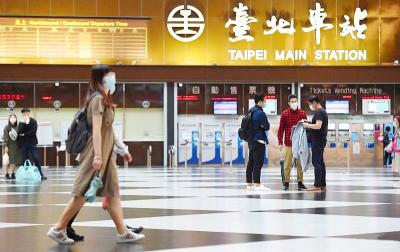
Taiwan Railways Corp (TRC) today announced that Shin Kong Mitsukoshi has been selected as the preferred bidder to operate the Taipei Railway Station shopping mall, replacing the current operator, Breeze Development Co Ltd. Among eight qualified firms that delivered presentations and were evaluated by a review committee, Shin Kong Mitsukoshi was ranked first, while Breeze was named the runner-up, the rail company said in a statement. Contract negotiations are to proceed in accordance with regulations, it said, adding that if negotiations with the top bidder fail, it could invite the second-ranked applicant to enter talks. Breeze in a statement today expressed doubts over


 RSS
RSS