


The Legislative Yuan today passed the remaining four of seven laws put forward by the Executive Yuan to protect critical undersea infrastructure, including one that criminalizes tampering with meteorological equipment.
Other provisions include permitting the immediate confiscation of equipment used to illegally damage undersea cables and forfeiture of vessels that refuse to leave port after being ordered to do so by the port authority without legitimate cause.
The Legislative Yuan passed amendments to the Water Supply Act (自來水法), Electricity Act (電業法) and Natural Gas Enterprise Act (天然氣事業法) on Tuesday last week, and today passed amendments to the Meteorological Act (氣象法), Telecommunications Management Act (電信管理法), Commercial Port Law (商港法) and Law of Ships (船舶法).

Photo: Aaron Tu, Taipei Times
These seven laws were put forward by the Executive Yuan on Sept. 18 to protect cables, pipes and other undersea infrastructure.
Amendments to the Meteorological Act stipulate that those who negligently damage or otherwise illegally harm the normal functioning of meteorological facilities or equipment are subject to up to six months in prison or detention, or fines up to NT$2 million (US$63,501).
Any tools, vessels or other equipment used by offenders would be confiscated regardless of whether they are owned by the offender or others.
When confiscation has been finalized by a judicial ruling, the property may — depending on the circumstances of the case — be auctioned or sold, transferred for free public use, destroyed or disposed of by other means.
Previously there was no stipulated punishments for those who negligently damage or otherwise harm meteorological equipment.
These provisions are meant to prevent damage to undersea infrastructure and communication cables, as there have been multiple cases of such damage in recent years both domestically and internationally.
Other amendments passed today obligate vessels to use the shipborne automatic identification system to disclose accurate information.
It also authorizes authorities to relocate or confiscate vessels that linger in port or use false identities.

LOUD AND PROUD Taiwan might have taken a drubbing against Australia and Japan, but you might not know it from the enthusiasm and numbers of the fans Taiwan might not be expected to win the World Baseball Classic (WBC) but their fans are making their presence felt in Tokyo, with tens of thousands decked out in the team’s blue, blowing horns and singing songs. Taiwanese fans have packed out the Tokyo Dome for all three of their games so far and even threatened to drown out home team supporters when their team played Japan on Friday. They blew trumpets, chanted for their favorite players and had their own cheerleading squad who dance on a stage during the game. The team struggled to match that exuberance on the field, with
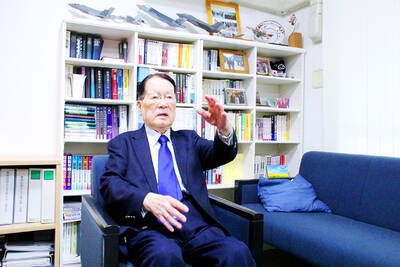
Whether Japan would help defend Taiwan in case of a cross-strait conflict would depend on the US and the extent to which Japan would be allowed to act under the US-Japan Security Treaty, former Japanese minister of defense Satoshi Morimoto said. As China has not given up on the idea of invading Taiwan by force, to what extent Japan could support US military action would hinge on Washington’s intention and its negotiation with Tokyo, Morimoto said in an interview with the Liberty Times (sister paper of the Taipei Times) yesterday. There has to be sufficient mutual recognition of how Japan could provide
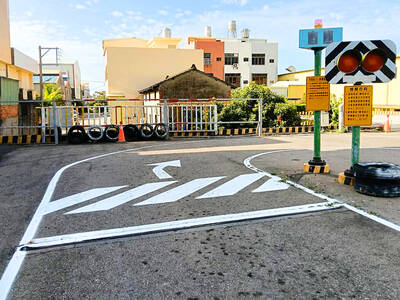
UPDATED TEST: The new rules aim to assess drivers’ awareness of risky behaviors and how they respond under certain circumstances, the Highway Bureau said Driver’s license applicants who fail to yield to pedestrians at intersections or to check blind spots, or omit pointing-and-calling procedures would fail the driving test, the Highway Bureau said yesterday. The change is set to be implemented at the end of the month, and is part of the bureau’s reform of the driving portion of the test, which has been criticized for failing to assess whether drivers can operate vehicles safely. Sedan drivers would be tested regarding yielding to pedestrians and turning their heads to check blind spots, while drivers of large vehicles would be tested on their familiarity with pointing-and-calling

A Taiwanese man apologized on Friday after saying in a social media post that he worked with Australia to provide scouting reports on Taiwan’s team, enabling Australia’s victory in this year’s World Baseball Classic (WBC), saying it was a joke and that he did not hold any position with foreign teams or Taiwan’s sports training center. Chen Po-hao (陳柏豪) drew the rage of many Taiwan baseball fans when he posted online on Thursday night, claiming credit for Australia’s 3-0 win over Taiwan in the opening game for Pool C, saying he worked as a physical therapist with the national team and


 RSS
RSS