


The Indonesian Legal Aid and Human Rights Association (PBHI) today was awarded this year’s 20th Asia Democracy and Human Rights Award by the Taiwan Foundation for Democracy.
Founded in 1996, the association aims to promote human rights protections and access to justice in Indonesia through legal aid, advocacy actions and policy reform.
The ceremony, held this morning to mark International Human Rights Day, was presided over by President William Lai (賴清德) and attended by various foreign diplomats and members of the association.
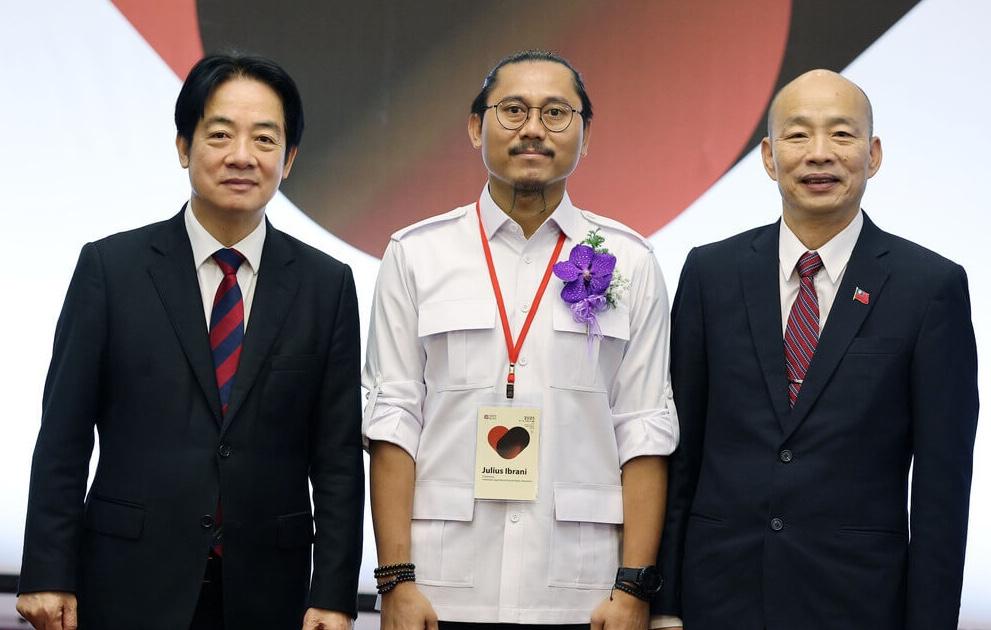
Photo: CNA
Lai presented the award and a US$100,000 grant to PBHI chairperson Julius Ibrani.
Ibrani facilitated discussions on gross human rights violations in East Timor, leading to the establishment of the Indonesia-East Timor Commission of Truth and Friendship.
The PHBI helped East Timor gain independence in 1999.
Lai said the PBHI is a defender of human rights that has built a “cross-border human rights network that deserves our deepest respect.”
He noted Taiwan’s own journey to democracy, referencing former authoritarian rule and martial law.
Taiwan has taken steps in recent years to ensure human rights protections, including the 2022 release of the National Human Rights Action Plan and this year’s drafting of human rights indicators under UN standards, he said.
The need to defend freedom and democracy has “never been more urgent” in the face of global democratic retreat and China’s multifaceted threats, he said.
Ibrani dedicated the award to the victims of human rights violations and “those who were willing and courageous enough to stand with us, even when it put their safety, their freedom and even their lives at risk.”
Those victims included women who suffer sexual violence and discrimination, indigenous people whose nature and heritage were destroyed and students who protest for a clean government, he said.
The award “puts a spotlight on all the human rights defenders who may never stand on a stage,” he added.
Today, the civic space is “literally dead,” as Indonesians face a democratic setback under a newly elected military-authoritarian regime, Ibrani said.
“The human desire for dignity and freedom will never fade away. It adapts, persists and rises, stronger and stronger,” he said.
Legislative Speaker and foundation chair Han Kuo-yu (韓國瑜) in his remarks said that the PHBI symbolizes “the resilience and moral force of civil society across Asia.”
A Freedom House report this year found that last year marked the 19th consecutive year in which global freedom declined, he said, adding that today’s ceremony was a message to the world that “the defense of democracy and human rights is always worthy of support, remembrance and continuation.”
Lai also thanked the foundation for its efforts to demonstrate Taiwan’s commitment to democratic values.
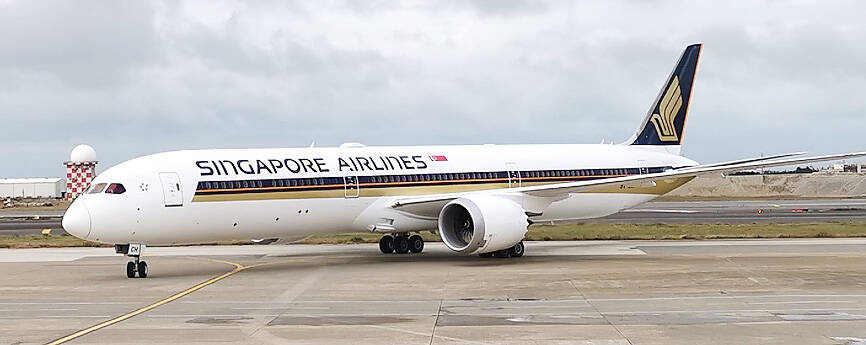
INCREASED CAPACITY: The flights on Mondays, Wednesdays, Fridays and Sundays would leave Singapore in the morning and Taipei in the afternoon Singapore Airlines is adding four supplementary flights to Taipei per week until May to meet increased tourist and business travel demand, the carrier said on Friday. The addition would raise the number of weekly flights it operates to Taipei to 18, Singapore Airlines Taiwan general manager Timothy Ouyang (歐陽漢源) said. The airline has recorded a steady rise in tourist and business travel to and from Taipei, and aims to provide more flexible travel arrangements for passengers, said Ouyang, who assumed the post in July last year. From now until Saturday next week, four additional flights would depart from Singapore on Monday, Wednesday, Friday
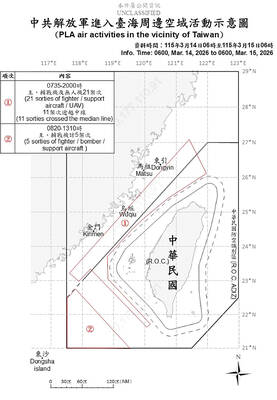
The Ministry of National Defense yesterday reported the return of large-scale Chinese air force activities after their unexplained absence for more than two weeks, which had prompted speculation regarding Beijing’s motives. China usually sends fighter jets, drones and other military aircraft around the nation on a daily basis. Interruptions to such routine are generally caused by bad weather. The Ministry of National Defense said it had detected 26 Chinese military aircraft in the Taiwan Strait over the previous 24 hours. It last reported that many aircraft on Feb. 25, when it spotted 30 aircraft, saying Beijing was carrying out another “joint combat

Taiwan successfully defended its women’s 540 kilogram title and won its first-ever men’s 640 kg title at the 2026 World Indoor Tug of War Championships in Taipei yesterday. In the women’s event, Taiwan’s eight-person squad reached the final following a round-robin preliminary round and semifinals featuring teams from Ukraine, Japan, Thailand, Vietnam, the Basque Country and South Korea. In the finals, they swept the Basque team 2-0, giving the team composed mainly of National Taiwan Normal University students and graduates its second championship in a row, and its fourth in five years. Team captain
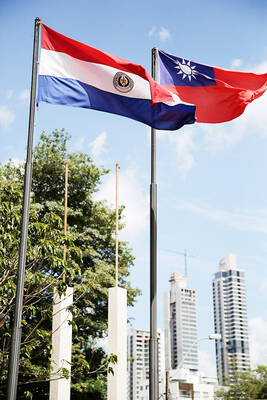
When Paraguayan opposition lawmaker Leidy Galeano returned from an all-expenses-paid tour of six Chinese cities late last year, she was convinced Paraguay risked missing out on major economic gains by sticking with longtime ally Taipei over Beijing — a message that participants on the trip heard repeatedly from Chinese officials. “Everything I saw there, I wanted for my country,” said Galeano, a member of the newly-formed Yo Creo party whose senior figures have spoken favorably about China. This trip and others like it — which people familiar with the visits said were at the invitation of the Chinese consulate in Sao Paulo


 RSS
RSS