


The act of a Chinese fighter jet locking up a Japanese military aircraft with its targeting radar was a show of hostility meant to test Tokyo’s limits, a Taiwanese academic said yesterday.
Japan-China relations are strained after Japanese Prime Minister Sanae Takaichi implicated last month that a Chinese attack on Taiwan threatening Japan’s survival could trigger a Japanese military response.
On Saturday, in two separate incidents, a Chinese J-15 multirole fighter directed fire-control radar at Japanese aircraft over international waters near Okinawa. Japan protested to China over the radar lock-up, calling it “a dangerous act that exceeded the scope necessary for safe aircraft operations.”
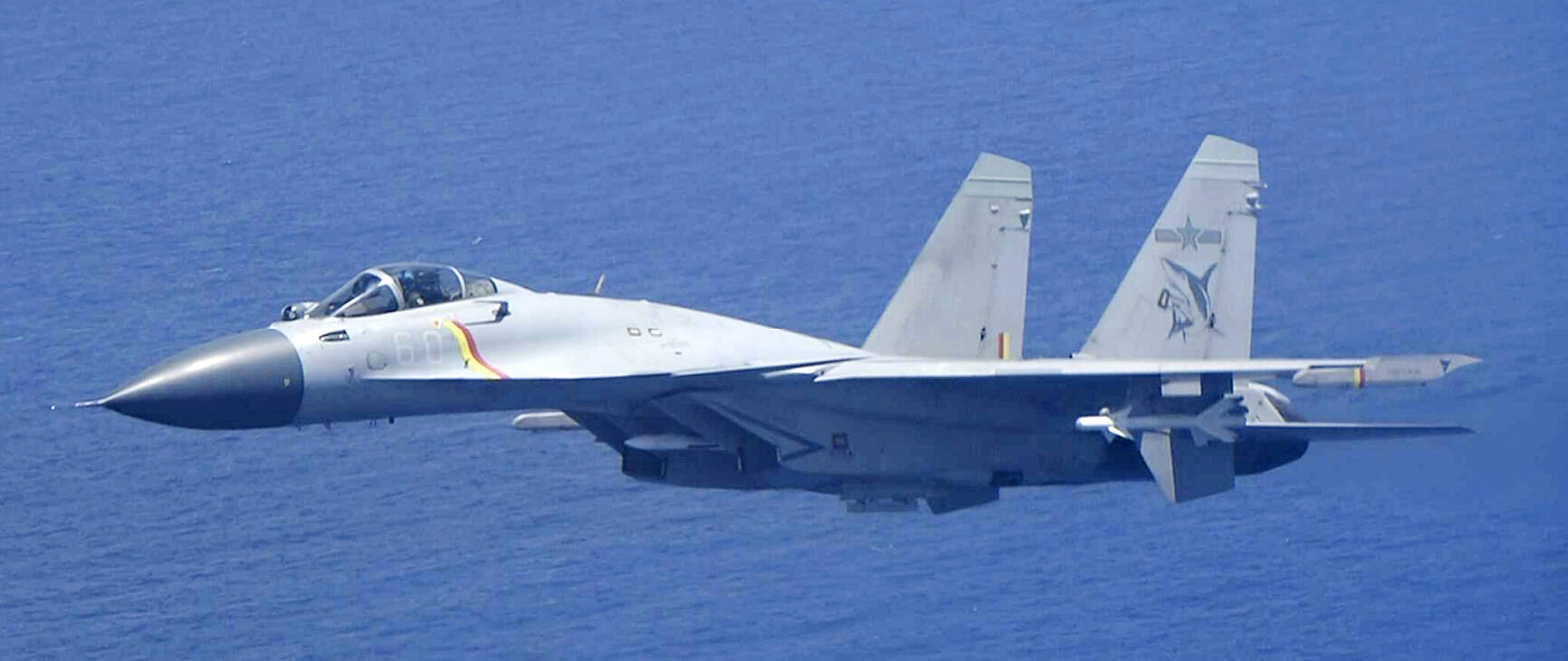
Photo: AP
Commenting on the incident, National Defense University professor Holmes Liao (廖宏祥) said in Taipei yesterday that fighter jets mainly use wide-area radar to search for other aircraft, or highly focused radar to track one target.
Once an aircraft’s radar warning receiver detects a highly focused, locked-on signal tracking it, it immediately classifies it as a top-level threat and sends out an alert, Liao said.
The aircraft being tracked would evade and even counterattack to defend itself, he said.
China locking onto a specific Japanese aircraft is not routine, but an open display of hostility meant to test Japan’s limits, he said.
This is not an isolated case, but a “gray zone” tactic Beijing has long employed in the Indo-Pacific region, Liao said.
China deployed similar tactics against a Japanese military vessel and helicopter in 2013, he added.
Liao cited other similar incidents, noting two acts of aggression by the Chinese military towards Australian aircraft over international waters in 2022.
By repeatedly carrying out high risk actions that fall below the threshold of war, Beijing seeks to change the status quo and push neighboring countries to see such provocations as the new normal, eventually giving up on countermeasures, Liao said.
It tests the response of the US, Japan and other regional allies, to see how much the US intervenes and supports threatened allies, he said.
It is a psychological warfare tactic meant to put pressure on servicemembers on the front lines, he added.
Taiwan cannot be indifferent to these “gray zone” threats and can learn from the way Japan quickly released information about China’s actions, Liao said.
The Ministry of National
Defense should release information about China tracking Taiwanese aircraft or making dangerous approaches to control the narrative, he said.
Liao said that Taiwan and Japan are both facing an increasingly aggressive China.
Taiwan should strengthen
intelligence-sharing with the US, Japan, Australia and the Philippines, so that when one ally is threatened, the whole alliance is on alert, Liao said.
Taiwan must maintain strong counterintelligence to prevent Chinese espionage from undermining cooperation, he said.
The government should educate people about “gray zone” tactics, as modern warfare often involves psychological and information warfare in addition to missiles and bombs, Liao said.
If people understand that using radar in this way is a probe rather than a precursor to war, there would be less panic and more willingness to resist, he said.
Regional peace requires transparency, restraint and genuine dialogue, not political, economic and military pressure, Democratic Progressive Party Legislator Chen Kuan-ting (陳冠廷) said yesterday, urging China not to escalate the situation.
Chinese aircraft locking up Japanese aircraft with radar is an aggressive, dangerous act, likely to cause misunderstandings and accidental clashes, he said.
Japan is being targeted today, but tomorrow it could be any country traveling through the Indo-Pacific, Chen said.
China’s actions towards Japan, including restricting travel and imports, have disrupted regional trade and stability and escalated tensions, making neighboring countries more wary and eroding China’s international credibility, he added.
China must be made to understand the consequences of its actions to prevent the situation from escalating further, Chen said, adding that Taiwan would cooperate with Japan and other countries to defend regional security.
Additional reporting by Lin Che-yuan and AP

LOUD AND PROUD Taiwan might have taken a drubbing against Australia and Japan, but you might not know it from the enthusiasm and numbers of the fans Taiwan might not be expected to win the World Baseball Classic (WBC) but their fans are making their presence felt in Tokyo, with tens of thousands decked out in the team’s blue, blowing horns and singing songs. Taiwanese fans have packed out the Tokyo Dome for all three of their games so far and even threatened to drown out home team supporters when their team played Japan on Friday. They blew trumpets, chanted for their favorite players and had their own cheerleading squad who dance on a stage during the game. The team struggled to match that exuberance on the field, with
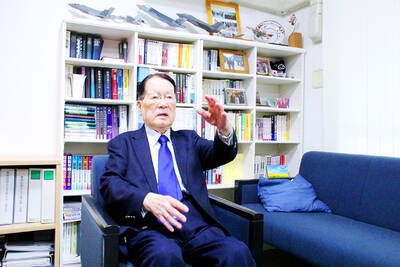
Whether Japan would help defend Taiwan in case of a cross-strait conflict would depend on the US and the extent to which Japan would be allowed to act under the US-Japan Security Treaty, former Japanese minister of defense Satoshi Morimoto said. As China has not given up on the idea of invading Taiwan by force, to what extent Japan could support US military action would hinge on Washington’s intention and its negotiation with Tokyo, Morimoto said in an interview with the Liberty Times (sister paper of the Taipei Times) yesterday. There has to be sufficient mutual recognition of how Japan could provide
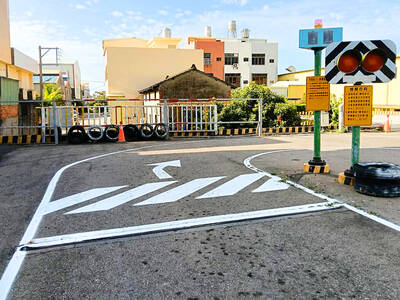
UPDATED TEST: The new rules aim to assess drivers’ awareness of risky behaviors and how they respond under certain circumstances, the Highway Bureau said Driver’s license applicants who fail to yield to pedestrians at intersections or to check blind spots, or omit pointing-and-calling procedures would fail the driving test, the Highway Bureau said yesterday. The change is set to be implemented at the end of the month, and is part of the bureau’s reform of the driving portion of the test, which has been criticized for failing to assess whether drivers can operate vehicles safely. Sedan drivers would be tested regarding yielding to pedestrians and turning their heads to check blind spots, while drivers of large vehicles would be tested on their familiarity with pointing-and-calling

A Taiwanese man apologized on Friday after saying in a social media post that he worked with Australia to provide scouting reports on Taiwan’s team, enabling Australia’s victory in this year’s World Baseball Classic (WBC), saying it was a joke and that he did not hold any position with foreign teams or Taiwan’s sports training center. Chen Po-hao (陳柏豪) drew the rage of many Taiwan baseball fans when he posted online on Thursday night, claiming credit for Australia’s 3-0 win over Taiwan in the opening game for Pool C, saying he worked as a physical therapist with the national team and


 RSS
RSS