

Starting on Jan. 1, household leftovers may not be fed to pigs in line with the policy of “raising pigs without kitchen waste” by 2027, the Ministry of Environment (MOENV) said yesterday, while black pig farmers launched a campaign to stop collecting kitchen waste until the end of this year.
The Cabinet on Thursday approved the policy to ban feeding pigs kitchen waste by the end of next year to reduce the threat of African swine fever following a controlled outbreak in October.
Minister of Agriculture Chen Junne-jih (陳駿季) on Thursday said that only 8 percent of pigs nationwide are raised on feed.

Photo: Chang Tsung-chiu, Taipei Times
Pig farms would have to replace kitchen waste with feed to raise pigs within the next year, while local governments could roll out a local ban within the period if they consider it feasible in their respective administrative area, he said.
Regarding the increase in costs due to shifting to feed, Chen said that black pigs require about a year to reach maturity, while white pigs need only 180 days.
Black pigs are known to have better texture and are priced higher than white pigs, accounting for 12.7 percent of all pigs nationwide in 2019, Ministry of Agriculture data showed.
Most black pig farmers are unwilling to replace kitchen waste with feed given the higher costs, but newly developed high-protein feed could increase production efficiency by reducing the rearing period, Chen said, adding that his ministry would help market black pig brands to raise their prices and help hog raisers cope with increased costs.
To align with the policy, the MOENV yesterday said it would first ban feeding pigs leftovers from households or food stands from Jan. 1, while kitchen waste from other places, such as restaurants, schools, supermarkets or food processing plants, would still be allowed next year.
About 1,100 tonnes of the 1,384 tonnes per day of kitchen waste banned from being fed to pigs would be processed into fertilizer or biomass fuel from next year, while the other 284 tonnes would be incinerated or buried, it said.
The total capacity of kitchen waste recycling and repurposing facilities is expected to be raised to 2,119 tonnes per day by the end of 2027, which would be sufficient to process all leftovers from households or food stands, the MOENV added.
All pig farmers would be required to install a system using artificial intelligence to monitor farm temperatures and situations in real-time, while their kitchen waste vehicles must all be equipped with GPS, it said, adding that legislation on the issue would be completed by the end of this year.
Meanwhile, about 200 black pig farmers yesterday attended a meeting of the New Taipei City Swine Association to discuss the new policy.
They decided to immediately stop collecting kitchen waste until the end of this year and let the government handle the extra leftovers.
Association president Huang Ching-wen (黃靖文) said that raising black pigs on feed instead of kitchen waste would not only results in a more than 10-fold increase in costs, but would also change the flavor of black pork.
Many black pig farmers have invested millions in kitchen waste steaming equipment, and are willing to install real-time monitoring equipment as required by the government, he said.
The government should not implement the ban simply because of the African swine fever case identified at a white pig farm, Huang said.
The permanent ban on feeding pigs kitchen waste is unacceptable and unfair to law-abiding black pig farmers, who account for 8 percent of all pig farmers nationwide and would be seriously affected by the policy, he said.

Ocean Affairs Council (OAC) Minister Kuan Bi-ling (管碧玲) on Wednesday said decommissioned coast guard vessels were given to the Philippines to enhance regional rescue capacity and would not affect Taiwanese fishers’ rights and benefits. Kuan made the remarks after confirmation on Tuesday that a 500-tonne Coast Guard Administration (CGA) patrol and rescue vessel would be given to the Philippine Coast Guard. The donation ceremony was reportedly done in Manila, but whether the vessel — previously numbered “CG123” and named Kinmen (金門) — has been handed over has yet to be confirmed. China’s Taiwan Affairs Office (TAO) on Wednesday criticized the donation for “taking

UPDATE: The submarine would need to undergo combined systems testing and crew training for navy personnel before it is ready for mission, an expert said Taiwan’s first domestically built submarine, the Hai Kun (Narwhal, 海鯤), could be delivered to the navy as early as next month, military expert and Taiwan Association for Security and Development chairman Chi Tung-yun (紀東昀) said yesterday. The submarine was yesterday morning observed departing for its 21st sea trial and its 15th submerged test. The vessel missed the initial delivery deadline of November last year due to “testing delays,” its primary contractor, shipbuilder CSBC Corp, Taiwan, said in June. The contractor also cited “political pressure from China” in procuring critical equipment. All testing operations are in the final stages, with the
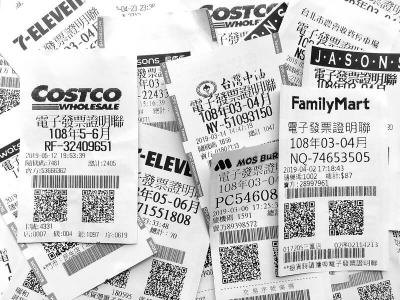
Six NT$10 million (US$315,527) special prizes and seven NT$2 million grand prizes in Taiwan's May-June uniform invoice lottery remained unclaimed as of today, including one NT$10 million winner who spent only NT$10 on an Uber Eats delivery order, the Ministry of Finance said. The ministry said the 13 winners need to claim their prizes by Nov. 5. The eight-digit serial number that won the NT$10 million special prize for May-June was 38548029, with 18 winning receipts in total. The NT$2 million grand prize number was 10138845, of which there were 22 winning receipts, the ministry said. In addition to the receipt issued for an
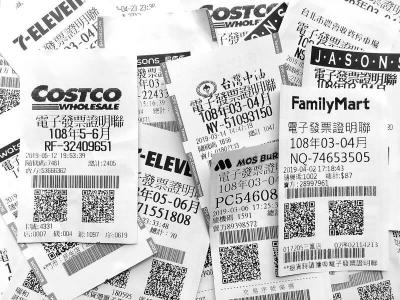
The Ministry of Finance today announced the winning numbers for the July-August uniform invoice lottery. The winning number for the NT$10 million (US$314,663) special prize is 89996565, while the winning number for the NT$2 million grand prize is 91098182. Three numbers were drawn for the NT$200,000 first prize: 54348835, 44991397 and 06595111. Those with receipts matching the last seven digits of any of the first-prize numbers can claim the NT$40,000 second prize, while those matching the last six digits qualify for the NT$10,000 third prize. Those whose receipts match the last five digits of the first-prize numbers are eligible for the NT$4,000 fourth prize,


 RSS
RSS