


Taiwan does not need to rush if Honduras wishes to restore formal diplomatic relations, an expert said today, as the Central American nation looked poised to elect a candidate who promised to restore ties that were severed two years ago.
Nasry Asfura, the conservative National Party candidate, and his Liberal Party rival, Salvador Nasralla, were practically tied in the latest vote count yesterday, with both holding just under 40 percent of the nearly 1.9 million votes counted.
Asfura was leading by just 515 votes.
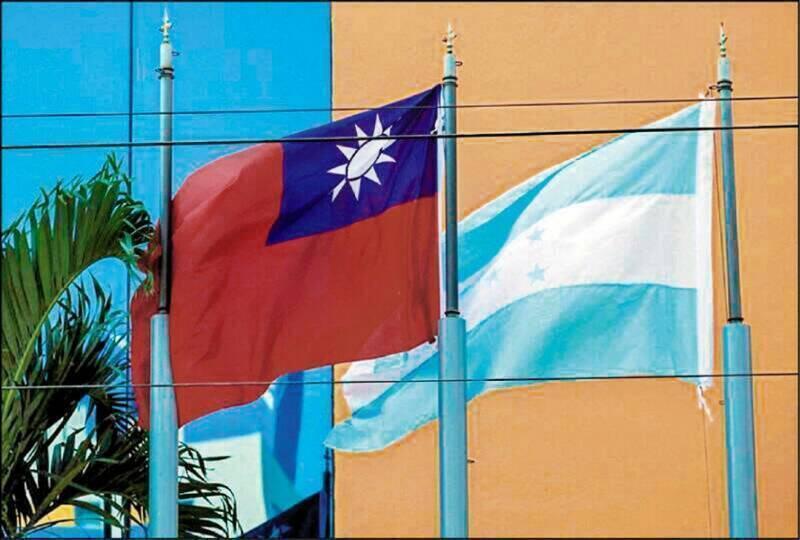
Photo: Reuters
They both have said they may resume diplomatic relations with Taiwan, which were severed in 2023.
Honduran President Xiomara Castro established diplomatic relations with Beijing in 2023, saying that the change would bring trade and financial opportunities to the Central American nation of 11 million.
Castro’s ally, Rixi Moncada of the ruling LIBRE party, was well behind in third with 19 percent of the vote.
Even if the incoming Honduran administration expresses willingness to restore ties, “Taiwan does not need to rush, and it will not rush,” Tunghai University Cross-Strait Research Center deputy executive director Hung Pu-chao (洪浦釗) said.
International politics hinges on reciprocity and stability, he said, adding that Taiwan does not have to acquiesce simply because a country wants to resume ties.
Taiwan has to consider the feelings of other diplomatic allies and the nation’s international image, he said.
The government should not create an impression that “diplomatic relations with Taiwan can be flipped on and off at will,” he said, adding that it has to show confidence and the strength of its values as a middle power.
Taiwan has long moved beyond its obsession with its number of allies, Hung said.
The nation’s international presence today rests on its economic strength, democratic resilience, technological prowess and strategic value in the Indo-Pacific region, not on its count of formal diplomatic partners, he said.
If Honduras seeks to re-establish ties in the future, Hung suggested that Taipei evaluate the request based on three key criteria.
First, it should assess Honduras’ policy direction and institutional commitments, rather than pre-election rhetoric, he said.
Second, the government should ensure the move would not undermine the trust of existing allies, he said.
Third, it should consider whether restoring relations would genuinely serve Taiwan’s interests, rather than being merely a symbolic show, he said.
Meanwhile, asked today if Taiwan would consider restoring ties, Ministry of Foreign Affairs spokesman Hsiao Kuang-wei (蕭光偉) said that the ministry maintained "an open attitude" and would "set no preconditions" to engaging in friendly exchanges with Honduras.
"We take every opportunity for exchanges seriously as long as doing so can expand Taiwan's international status and could help Taiwan better contribute to the international community," Hsiao told a regular ministry briefing.
Castro's recognition of the People’s Republic of China came after Beijing promised large-scale investment to Honduras, but the false promises were never realized, he said.
Since then, the country has seen a sharp decline in its whiteleg shrimp farming industry, which led to a serious unemployment problem, he said.
The case of Honduras shows once again that allies should think twice about establishing ties with China given Beijing's repeated broken promises, he added.
Additional reporting by agencies
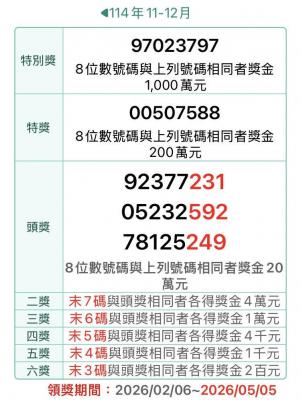
Seven of the 17 NT$10 million (US$311,604) winning receipts from the November-December uniform invoice lottery remain unclaimed as of today, the Ministry of Finance said, urging winners to redeem their prizes by May 5. The reminder comes ahead of the release of the winning numbers for the January-February lottery tomorrow. Among the unclaimed receipts was one for a NT$173 phone bill in Keelung, while others were for a NT$5,913 purchase at Costco in Taipei's Neihu District (內湖), a NT$49 purchase at a FamilyMart in New Taipei City's Tamsui District (淡水), and a NT$500 purchase at a tea shop in New Taipei City's

Taiwanese officials were shown the first of 66 F-16V fighter jets purchased by Taiwan from the United States, the Ministry of National Defense said yesterday, adding the aircraft has completed an initial flight test and is expected to be delivered later this year. A delegation led by Deputy Minister of National Defense Hsu Szu-chien (徐斯儉) visited Lockheed Martin’s F-16 C/D Block 70 (also known as F-16V) assembly line in South Carolina on March 16 to view the aircraft. The jet will undergo a final acceptance flight in the US before being delivered to Taiwan, the
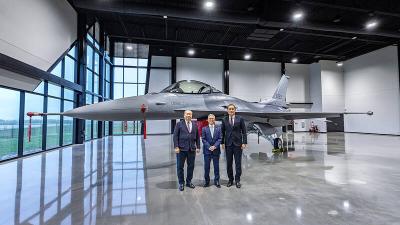
Deliveries of delayed F-16V jets are expected to begin in September, Minister of National Defense Wellington Koo (顧立雄) said today, after senior defense officials visited the US last week. The US in 2019 approved a US$8 billion sale of Lockheed Martin F-16 jets to Taiwan, a deal that would take the nation’s F-16 fleet to more than 200 jets, but the project has been hit by issues including software problems. Koo appeared today before a meeting of the legislature’s Foreign Affairs and National Defense Committee, which is discussing different versions of the special defense budget this week. The committee is questioning officials today,
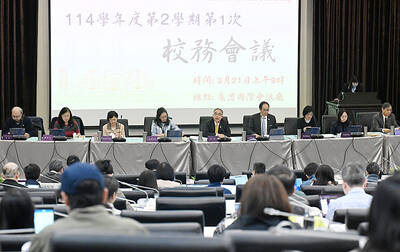
TALENT SCOUTING: The university is investing substantial funds in its future to bring in the kind of researchers that would keep the college internationally competitive National Taiwan University (NTU) plans to invest NT$2 billion (US$62.6 million) to launch two programs aimed at attracting and retaining top research talent, university president Chen Wen-chang (陳文章) said yesterday. The funding would support the “Palm Grove Scholars Project,” which targets academics aged 40 to 55. Up to 20 scholars would be selected, each receiving as much as NT$10 million annually, Chen said. The initiative is designed to attract leading researchers to Taiwan and strengthen NTU’s global competitiveness by fostering a more research-friendly environment and expanding international collaboration, he said. NTU is also introducing a “Hong Hu” chair grant, which would provide Palm


 RSS
RSS