


The US$40 billion supplementary defense budget announced by President William Lai (賴清德) would target three major areas of investment: asymmetric warfare capabilities, emerging technologies and the “T-Dome” air defense system, National Security Council Deputy Secretary-General Lin Fei-fan (林飛帆) said today.
Lai spoke of the new supplementary budget in a Washington Post op-ed published yesterday, which would work toward the goal of defense spending reaching 5 percent of GDP by 2030.
For next year, the government is proposing that defense spending would reach NT$949.5 billion (US$30.27 billion), or 3.32 percent of GDP.
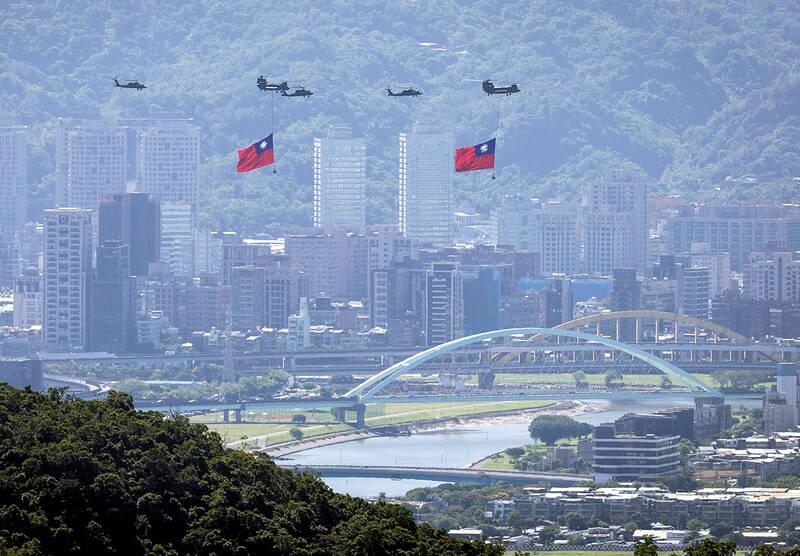
Photo: CNA
A core component of the funding would be to build a full, multi-layered air-defense system called the “Taiwan Shield” or “T-Dome,” using “sensors” and “shooters,” Lin said.
The T-Dome was outlined by Lai in his Double Ten National Day address as a “rigorous air defense system in Taiwan with multi-layered defense, high-level detection and effective interception,” the Presidential Office said in a statement.
Taiwan’s current missile defense coverage is already comparable to that of many other countries, but the challenge lies in integrating different systems and allocating resources more effectively, Lin said.
Taiwan must be able to respond to low-cost weapons such as drones or long-range rockets with equally cost-effective defenses, he added.
It must also accelerate investment in emerging and innovative technologies, including artificial intelligence applications, uncrewed systems and integration of software and hardware interfaces, Lin said.
With the ruling Democratic Progressive Party holding the legislative minority, the government has been working to secure cross-party support for the budget, he said.
International think tanks and US experts have repeatedly warned that Taiwan has “limited time” and must strengthen defense capabilities as quickly as possible, he added.
The nature of modern warfare has changed entirely, as seen in Russia’s invasion of Ukraine, making investment in uncrewed platforms and asymmetric capabilities essential, he said.
Taiwan is a defensive nation and does not seek expansion or aggression, so its weapons systems must be planned with flexibility and asymmetry in mind, he added.
The upcoming budget discussions would also include further investment in mobile weapons platforms, such as High Mobility Artillery Rocket Systems, he said.

The military has spotted two Chinese warships operating in waters near Penghu County in the Taiwan Strait and sent its own naval and air forces to monitor the vessels, the Ministry of National Defense (MND) said. Beijing sends warships and warplanes into the waters and skies around Taiwan on an almost daily basis, drawing condemnation from Taipei. While the ministry offers daily updates on the locations of Chinese military aircraft, it only rarely gives details of where Chinese warships are operating, generally only when it detects aircraft carriers, as happened last week. A Chinese destroyer and a frigate entered waters to the southwest
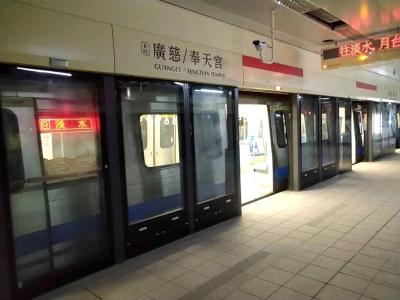
The eastern extension of the Taipei MRT Red Line could begin operations as early as late June, the Taipei Department of Rapid Transit Systems said yesterday. Taipei Rapid Transit Corp said it is considering offering one month of free rides on the new section to mark its opening. Construction progress on the 1.4km extension, which is to run from the current terminal Xiangshan Station to a new eastern terminal, Guangci/Fengtian Temple Station, was 90.6 percent complete by the end of last month, the department said in a report to the Taipei City Council's Transportation Committee. While construction began in October 2016 with an
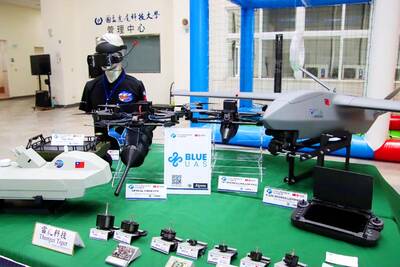
NON-RED SUPPLY: Boosting the nation’s drone industry is becoming increasingly urgent as China’s UAV dominance could become an issue in a crisis, an analyst said Taiwan’s drone exports to Europe grew 41.7-fold from 2024 to last year, with demand from Ukraine’s fight against Russian aggression the most likely driver of growth, a study showed. The Institute for Democracy, Society and Emerging Technology (DSET) in a statement on Wednesday said it found that many of Taiwan’s uncrewed aerial vehicle (UAV) sales were from Poland and the Czech Republic. These countries likely transferred the drones to Ukraine to aid it in its fight against the Russian invasion that started in 2022, it said. Despite the gains, Taiwan is not the dominant drone exporter to these markets, ranking second and fourth

Japanese Prime Minister Sanae Takaichi’s comment last year on Tokyo’s potential reaction to a Taiwan-China conflict has forced Beijing to rewrite its invasion plans, a retired Japanese general said. Takaichi told the Diet on Nov. 7 last year that a Chinese naval blockade or military attack on Taiwan could constitute a “survival-threatening situation” for Japan, potentially allowing Tokyo to exercise its right to collective self-defense. Former Japan Ground Self-Defense Force general Kiyofumi Ogawa said in a recent speech that the remark has been interpreted as meaning Japan could intervene in the early stages of a Taiwan Strait conflict, undermining China’s previous assumptions


 RSS
RSS