


Chinese researchers studying how to disrupt Starlink satellite Internet in Taiwan during a potential cross-strait conflict found that it would take an extensive 1,000 to 2,000 airborne devices to effectively jam the system.
The study was published on Nov. 5 in the peer-reviewed journal Systems Engineering and Electronics and reported on by the South China Morning Post yesterday.
When Russia invaded Ukraine in February 2022, Kyiv quickly requested satellite Internet from founder Elon Musk, and thousands of Starlink terminals arrived within days, restoring command across the battlefield, despite Russia’s attempts to block communications, the paper reported.

Photo: AFP
Updates to SpaceX satellite configurations and software thwarted repeated jamming attempts by Russia, and the battlefield advantage shifted to Ukraine, the report said.
The success of Starlink in Ukraine prompted China to assess how to conduct electronic warfare should a conflict break out in the Taiwan Strait and Taiwan acquire Starlink’s assistance, it said.
In their peer-reviewed study, the team from Zhejiang University and the Beijing Institute of Technology found that disrupting Starlink across an area comparable to Taiwan is achievable only with a massive electronic warfare force.
As Starlink uses thousands of low-orbit satellites, which can shift connections in seconds if one satellite is jammed, traditional ground-based jamming methods would not be sufficient to suppress the system, the study said.
The team found that China would need to deploy at least 935 small, synchronized airborne jammers carried by drones, balloons or aircraft that could form a wide electromagnetic barrier over the combat zone.
This would be able to suppress Starlink over an area of about 36,000km², about the size of Taiwan, the research said.
If lower-powered airborne jammers were used instead, it would require about 2,000 devices, it said.
These figures do not consider backups for failures, terrain interference or future Starlink upgrades, so the actual number of jammers required may be even greater, it added.
The team also said that the results remain preliminary, as many of Starlink’s core technologies remain classified.

The military has spotted two Chinese warships operating in waters near Penghu County in the Taiwan Strait and sent its own naval and air forces to monitor the vessels, the Ministry of National Defense (MND) said. Beijing sends warships and warplanes into the waters and skies around Taiwan on an almost daily basis, drawing condemnation from Taipei. While the ministry offers daily updates on the locations of Chinese military aircraft, it only rarely gives details of where Chinese warships are operating, generally only when it detects aircraft carriers, as happened last week. A Chinese destroyer and a frigate entered waters to the southwest

A magnitude 6.1 earthquake struck off the coast of Yilan County at 8:39pm tonight, the Central Weather Administration (CWA) said, with no immediate reports of damage or injuries. The epicenter was 38.7km east-northeast of Yilan County Hall at a focal depth of 98.3km, the CWA’s Seismological Center said. The quake’s maximum intensity, which gauges the actual physical effect of a seismic event, was a level 4 on Taiwan’s 7-tier intensity scale, the center said. That intensity level was recorded in Yilan County’s Nanao Township (南澳), Hsinchu County’s Guansi Township (關西), Nantou County’s Hehuanshan (合歡山) and Hualien County’s Yanliao (鹽寮). An intensity of 3 was

Japanese Prime Minister Sanae Takaichi’s comment last year on Tokyo’s potential reaction to a Taiwan-China conflict has forced Beijing to rewrite its invasion plans, a retired Japanese general said. Takaichi told the Diet on Nov. 7 last year that a Chinese naval blockade or military attack on Taiwan could constitute a “survival-threatening situation” for Japan, potentially allowing Tokyo to exercise its right to collective self-defense. Former Japan Ground Self-Defense Force general Kiyofumi Ogawa said in a recent speech that the remark has been interpreted as meaning Japan could intervene in the early stages of a Taiwan Strait conflict, undermining China’s previous assumptions
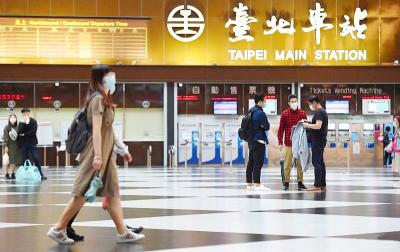
Taiwan Railways Corp (TRC) today announced that Shin Kong Mitsukoshi has been selected as the preferred bidder to operate the Taipei Railway Station shopping mall, replacing the current operator, Breeze Development Co Ltd. Among eight qualified firms that delivered presentations and were evaluated by a review committee, Shin Kong Mitsukoshi was ranked first, while Breeze was named the runner-up, the rail company said in a statement. Contract negotiations are to proceed in accordance with regulations, it said, adding that if negotiations with the top bidder fail, it could invite the second-ranked applicant to enter talks. Breeze in a statement today expressed doubts over


 RSS
RSS