


The Civil Aviation Administration (CAA) said it is closely monitoring Apex Aviation (安捷航空) flight and maintenance operations after one of its aircraft reported damage, possibly caused by a heavy landing during a medevac last year.
The general aviation service operator dispatched Tecnam P2012 Traveller — a twin-engine utility aircraft — for emergency medical service in Kinmen on Nov. 4 last year. The aircraft flew to Kinmen to stand by, but the left tire on the landing gear blew out upon landing. No one was injured.
However, maintenance personnel removed the fairing of the left landing gear box beam the following day and discovered deformation on the exterior fuselage skin, with seven attachment rivets broken. After removing the interior fuselage panels two days later, they discovered deformation in the fuselage frames front and back of the left landing gear box beam.
Photo: Screen grab from the Civil Aviation Administration’s Web site
An investigation report by the Taiwan Transportation Safety Board showed that, when landing the aircraft, the pilot might have inadvertently applied the left brake pedal during rudder operation, causing brake pressure on the left main wheel caliper upon touchdown. This prevented the left main wheel from rotating, resulting in the tire tread and reinforcement layers wearing through during runway roll, ultimately leading to a tire blowout, the report showed.
The board also showed the aircraft’s airframe structure might have been subjected to impact forces exceeding its load capacity upon touchdown. Prior to the incident, however, the operator had not inspected the damaged area, and there was no data to verify the time of damage or whether it resulted from previous flights, it said.
“Apex Aviation relied on its personnel to report any possible heavy landing incident, making it impossible to inspect the aircraft as well as discover fuselage damage immediately after the incident. This has endangered flight safety,” the board said.
Apex should improve its procedure for monitoring and reporting heavy landing incidents, allowing it spot fuselage damage faster, said the CAA, adding that the operator should also increase flight crew training approaches and landings. The CAA said it has required Apex to revise its aircraft maintenance plan, shorten inspection intervals for landing gear and fuselage assemblies and put in place new hard landing inspection standards. The flight operator must submit analyses of total flight data to CAA every month, it added.
Apex said it has revised the hard landing warning limit to 1.6G, adding it has not exceeded the limit since it began tracking every flight at the end of November last year.
“We have reinforced pilot training for landing flights at night and reduced the fuselage inspection interval to every 250 flight hours from every 550 hours,” Apex said.
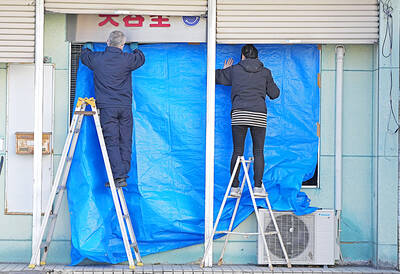
Taiwanese were praised for their composure after a video filmed by Taiwanese tourists capturing the moment a magnitude 7.5 earthquake struck Japan’s Aomori Prefecture went viral on social media. The video shows a hotel room shaking violently amid Monday’s quake, with objects falling to the ground. Two Taiwanese began filming with their mobile phones, while two others held the sides of a TV to prevent it from falling. When the shaking stopped, the pair calmly took down the TV and laid it flat on a tatami mat, the video shows. The video also captured the group talking about the safety of their companions bathing
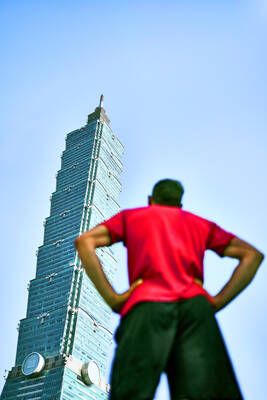
US climber Alex Honnold is to attempt to scale Taipei 101 without a rope and harness in a live Netflix special on Jan. 24, the streaming platform announced on Wednesday. Accounting for the time difference, the two-hour broadcast of Honnold’s climb, called Skyscraper Live, is to air on Jan. 23 in the US, Netflix said in a statement. Honnold, 40, was the first person ever to free solo climb the 900m El Capitan rock formation in Yosemite National Park — a feat that was recorded and later made into the 2018 documentary film Free Solo. Netflix previewed Skyscraper Live in October, after videos

Starting on Jan. 1, YouBike riders must have insurance to use the service, and a six-month trial of NT$5 coupons under certain conditions would be implemented to balance bike shortages, a joint statement from transportation departments across Taipei, New Taipei City and Taoyuan announced yesterday. The rental bike system operator said that coupons would be offered to riders to rent bikes from full stations, for riders who take out an electric-assisted bike from a full station, and for riders who return a bike to an empty station. All riders with YouBike accounts are automatically eligible for the program, and each membership account

A classified Pentagon-produced, multiyear assessment — the Overmatch brief — highlighted unreported Chinese capabilities to destroy US military assets and identified US supply chain choke points, painting a disturbing picture of waning US military might, a New York Times editorial published on Monday said. US Secretary of Defense Pete Hegseth’s comments in November last year that “we lose every time” in Pentagon-conducted war games pitting the US against China further highlighted the uncertainty about the US’ capability to intervene in the event of a Chinese invasion of Taiwan. “It shows the Pentagon’s overreliance on expensive, vulnerable weapons as adversaries field cheap, technologically


 RSS
RSS