


The Ministry of Education (MOE) would address the negative impacts of social media by boosting media literacy education and supporting teachers, as banning students from using Chinese platforms such as TikTok and Xiaohongshu (小紅書, or RedNote) is impractical, Deputy Minister of Education Liu Kuo-wei (劉國偉) said yesterday.
Last month, Minister of Education Cheng Ying-yao (鄭英耀) said that the Taiwan Academic Network — the Internet system set up by the ministry for academic institutions across the country — has blocked access to Xiaohongshu, TikTok and Douyin (抖音, the Chinese version of TikTok), citing concerns that short videos were detrimental to children’s and teenagers’ development.
However, the ministry is only able to control academic network access, not students’ personal Internet connections, Liu told the legislature yesterday.
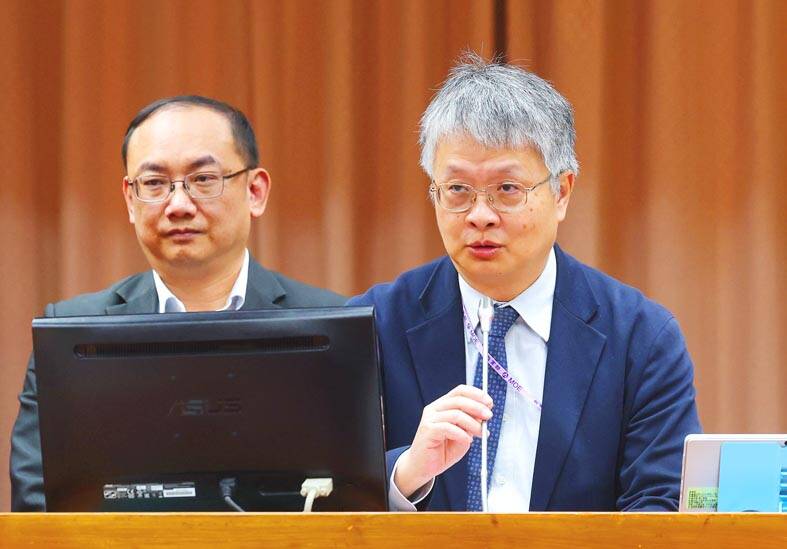
Photo: CNA
Instead, the ministry would help students identify misinformation and enhance their online personal data security, while strengthening teachers’ competence and resources through seminars and professional communities, Liu said.
He said numerous studies in Taiwan and abroad have found that many TikTok search results contain misinformation, and that the platform’s algorithm often promotes content related to self-harm, including material about eating disorders and negative messaging about body image.
Such content has been proven to lower teenagers’ body satisfaction and increase negative emotions, he added.
Chinese Nationalist Party (KMT) Legislator Ko Chih-en (柯志恩) said she hoped the ministry would step up its awareness efforts, adding that many of its media literacy publications have only about 1,000 views.
Taiwan People’s Party Legislator Liu Shu-pin (劉書彬) warned the ministry about “overregulation” that might affect creative development, saying that “education should not be replaced by prohibition.”
KMT Legislator Yeh Yuan-chih (葉元之) also questioned the ministry’s dedicated Web site for fraud prevention on Xiaohongshu, saying there are more scams on Threads and that many other media spread false information.
Liu Kuo-wei said that the ministry welcomes suggestions, and that it would conduct anti-fraud work on all platforms.
Meanwhile, Deputy Minister of Digital Affairs Isabel Hou (侯宜秀) told lawmakers that the use of China-developed artificial intelligence (AI) applications has been prohibited in all government agencies, after the National Security Bureau conducted an investigation that showed the models feature cybersecurity risks.
Five AI tools, namely DeepSeek, Doubao (豆包), Yiyan (文心一言), Tongyi (通義千問) and Yuanbao (騰訊元寶), generate content with propaganda in favor of the Chinese Communist Party, historical bias and disinformation, the bureau’s report showed.
The Ministry of Digital Affairs has formulated testing protocols and frameworks for information security and AI evaluation, which it supplies to administrative units for verification purposes, Hou said.
The bureau conducted the investigation under the ministry’s framework, while the Artificial Intelligence Evaluation Center has also conducted related tests, she added.
Asked whether Taiwan would ban the use of Chinese-made generative AI models, as some countries have banned or advised against them, Hou said that “this is an option to be considered within the scope of legal authority.”
Additional reporting by Fion Khan
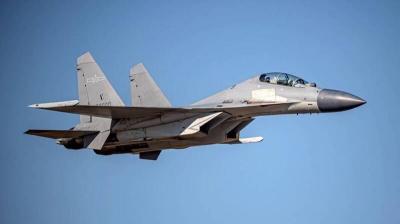
Eight Chinese naval vessels and 24 military aircraft were detected crossing the median line of the Taiwan Strait between 6am yesterday and 6am today, the Ministry of National Defense said this morning. The aircraft entered Taiwan’s northern, central, southwestern and eastern air defense identification zones, the ministry said. The armed forces responded with mission aircraft, naval vessels and shore-based missile systems to closely monitor the situation, it added. Eight naval vessels, one official ship and 36 aircraft sorties were spotted in total, the ministry said.
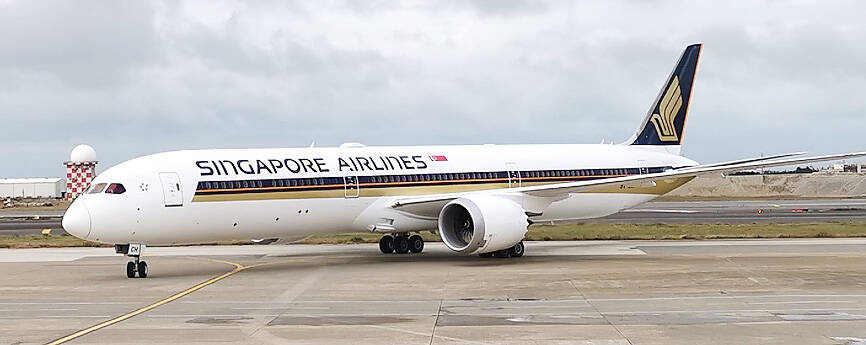
INCREASED CAPACITY: The flights on Mondays, Wednesdays, Fridays and Sundays would leave Singapore in the morning and Taipei in the afternoon Singapore Airlines is adding four supplementary flights to Taipei per week until May to meet increased tourist and business travel demand, the carrier said on Friday. The addition would raise the number of weekly flights it operates to Taipei to 18, Singapore Airlines Taiwan general manager Timothy Ouyang (歐陽漢源) said. The airline has recorded a steady rise in tourist and business travel to and from Taipei, and aims to provide more flexible travel arrangements for passengers, said Ouyang, who assumed the post in July last year. From now until Saturday next week, four additional flights would depart from Singapore on Monday, Wednesday, Friday
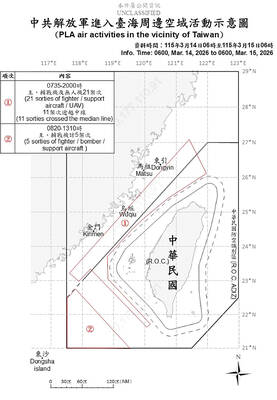
The Ministry of National Defense yesterday reported the return of large-scale Chinese air force activities after their unexplained absence for more than two weeks, which had prompted speculation regarding Beijing’s motives. China usually sends fighter jets, drones and other military aircraft around the nation on a daily basis. Interruptions to such routine are generally caused by bad weather. The Ministry of National Defense said it had detected 26 Chinese military aircraft in the Taiwan Strait over the previous 24 hours. It last reported that many aircraft on Feb. 25, when it spotted 30 aircraft, saying Beijing was carrying out another “joint combat
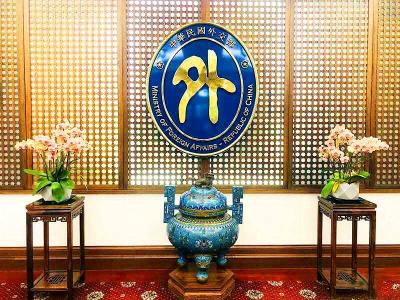
The Ministry of Foreign Affairs (MOFA) today said that if South Korea does not reply appropriately to its request to correct Taiwan’s name on its e-Arrival card system before March 31, it would take corresponding measures to alter how South Korea is labeled on the online Taiwan Arrival Card system. South Korea’s e-Arrival card system lists Taiwan as “China (Taiwan)” in the “point of departure” and “next destination” fields. The ministry said that it changed the nationality for South Koreans on Taiwan’s Alien Resident Certificates from “Korea” to “South Korea” on March 1, in a gesture of goodwill and based on the


 RSS
RSS