


The Chinese Communist Party’s (CCP) infiltration efforts against Taiwan have intensified, with targets varying from the military to the general public, the Mainland Affairs Council (MAC) said in a news release yesterday.
The council cited judicial data and information from judge Hsu Kai-hsieh (許凱傑) of the Taipei District Court’s National Security Division.
The CPP uses six known methods to infiltrate Taiwan: intelligence leaks, organizational infiltration, social division, technology-related leaks, election interference and “gray zone” operations, the release said.
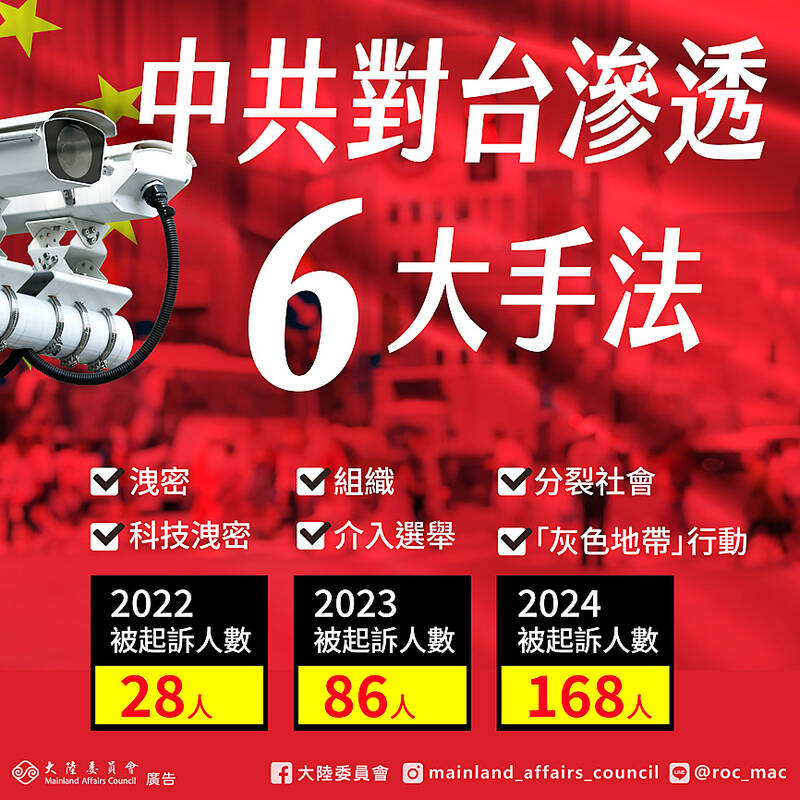
Photo: Screen grab from the MAC’s Facebook page
Some members of the military were coerced into handing over classified information after mistakenly signing a “surrender agreement,” the MAC said.
The main methods of organizational infiltration involve using hometown and alumni associations, and using borough leaders’ tour groups to penetrate local communities, the council said.
China has also sent spies to infiltrate political parties in Taiwan to divide Taiwanese society, it added.
The council said that the CCP aims to infiltrate Taiwan’s tech industry through China-funded enterprises or by sending spies to steal core technologies.
As for election interference methods, the council said they occur mostly during election periods, but are difficult to prove.
“Gray zone” operations such as the destruction of Taiwan’s undersea cables have been increasing, MAC said.
How the international community coordinates and divides responsibilities — including reporting and pursuing suspicious vessels — is crucial for safeguarding communication infrastructure, Hsu said in the release.
In 2022, 28 people in Taiwan were charged with activities connected to Chinese infiltration, while the number was 86 in 2023 and last year it nearly doubled to 168, the council said.
The figures showed the CCP’s infiltration of Taiwan has intensified, with targets including high-level officials, military commanders, as well as lower-ranking officers and servicemembers, the release said.
Last month, Hsu briefed the US Congressional-Executive Commission on China (CECC) in the US about China’s legal warfare and its efforts to infiltrate Taiwan.
The CECC is an independent commission established in October 2000, responsible for monitoring China’s human rights conditions and the development of the rule of law. The commission is required to submit an annual report to the US president and US Congress.
In response to media queries at the time, Hsu said that the US Foreign Agents Registration Act is a good model for Taiwan, and that Taipei and Washington can also cooperate in counterintelligence training to eliminate espionage cases in Taiwan.
The concept of defensive democracy is very important, he said, adding that “too little regulation allows authoritarian infiltration, while too much turns into another form of dictatorship.”
Taiwan can provide case studies and work with other democratic countries to improve national security and the rule of law for democracies in the new era.
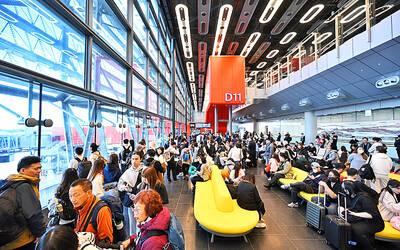
Travel agencies in Taiwan are working to secure alternative flights for travelers bound for New Zealand for the Lunar New Year holiday, as Air New Zealand workers are set to strike next week. The airline said that it has confirmed that the planned industrial action by its international wide-body cabin crew would go ahead on Thursday and Friday next week. While the Auckland-based carrier pledged to take reasonable measures to mitigate the impact of the workers’ strike, an Air New Zealand flight arriving at Taipei from Auckland on Thursday and another flight departing from Taipei for Auckland on Saturday would have to
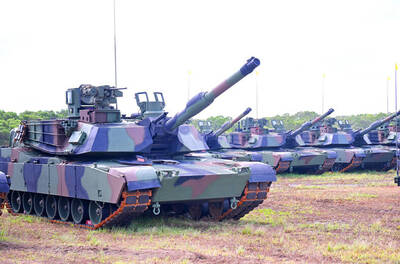
The manufacture of the remaining 28 M1A2T Abrams tanks Taiwan purchased from the US has recently been completed, and they are expected to be delivered within the next one to two months, a source said yesterday. The Ministry of National Defense is arranging cargo ships to transport the tanks to Taiwan as soon as possible, said the source, who is familiar with the matter. The estimated arrival time ranges from late this month to early next month, the source said. The 28 Abrams tanks make up the third and final batch of a total of 108 tanks, valued at about NT$40.5 billion

A group from the Taiwanese Designers in Australia association yesterday represented Taiwan at the Midsumma Pride March in Melbourne. The march, held in the St. Kilda suburb, is the city’s largest LGBTQIA+ parade and the flagship event of the annual Midsumma Festival. It attracted more than 45,000 spectators who supported the 400 groups and 10,000 marchers that participated this year, the association said. Taiwanese Designers said they organized a team to march for Taiwan this year, joining politicians, government agencies, professionals and community organizations in showing support for LGBTQIA+ people and diverse communities. As the first country in Asia to legalize same-sex
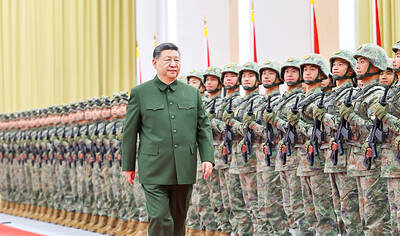
MOTIVES QUESTIONED The PLA considers Xi’s policies toward Taiwan to be driven by personal considerations rather than military assessment, the Epoch Times reports Chinese President Xi Jinping’s (習近平) latest purge of the Chinese People’s Liberation Army (PLA) leadership might have been prompted by the military’s opposition to plans of invading Taiwan, the Epoch Times said. The Chinese military opposes waging war against Taiwan by a large consensus, putting it at odds with Xi’s vision, the Falun Gong-affiliated daily said in a report on Thursday, citing anonymous sources with insight into the PLA’s inner workings. The opposition is not the opinion of a few generals, but a widely shared view among the PLA cadre, the Epoch Times cited them as saying. “Chinese forces know full well that


 RSS
RSS