


Starting on Jan. 1, people enrolled in the National Pension Program would have to pay an additional NT$43 to NT84 (US$1.38 to US$2.70) in monthly premiums according to a government plan to raise the monthly insured amount from NT$19,761 to NT$21,103, a Ministry of Health and Welfare official said yesterday.
The adjustments would result in an additional NT$3.75 billion in annual pension deposits, Family Affairs Administration Acting Director-General Chen Chen-hui (陳真慧) said.
According to the National Pension Act (國民年金法), when the consumer price index (CPI) grows more than 5 percent, the government should adjust the program’s monthly premiums and payouts, Chen said.
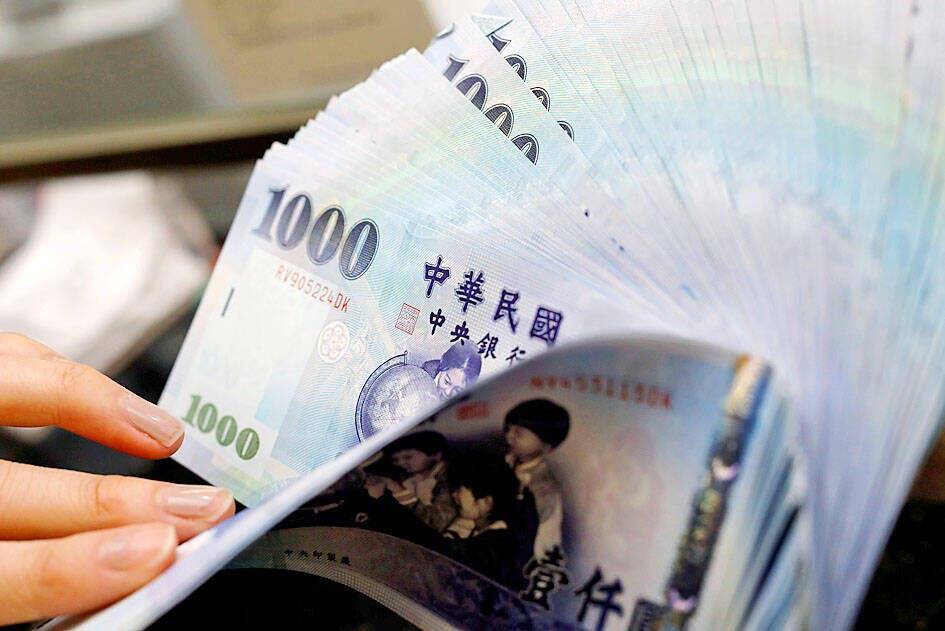
Photo: Reuters
Cumulative CPI growth over the past year has risen by 6.79 percent, she said.
The government would provide subsidies ranging from 40 percent to full coverage of the insurance premium, depending on the pensioner’s identity, she said.
Starting on New Year’s Day, government payouts for various welfare programs would also increase, Chen said.
Payouts to encourage people to have children would increase to NT$42,206 from the current NT$39,522, Chen said.
Funeral subsidies would also be hiked up to NT$105,515 from NT$98,805, Chen said.
Citizens aged 65 and older who have been enrolled in the pension program for 15 years or more, and who are on the type A elderly pension plan under the Labor Insurance, would now receive a monthly pension of NT$6,107.
The ministry said that pension premium bills would be mailed out before the end of March next year, and that those enrolled in the program should pay the sum before the end of April.
The government would continue subsidizing the premiums for low-income families, or those that are severely physically or mentally challenged, the ministry said.
Those who are unable to pay the sum should go to their local household registration offices to apply for recognition as a low or mid-to-low-income family, or a person whose income falls below the standard to receive a higher insurance subsidy rate, it said.
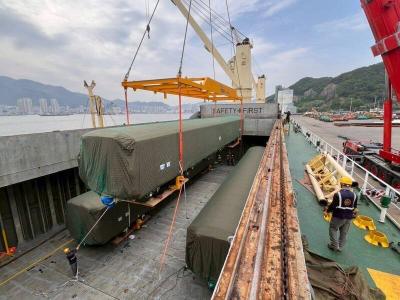
The first of 10 new high-capacity trains purchased from South Korea’s Hyundai Rotem arrived at the Port of Taipei yesterday to meet the demands of an expanding metro network, Taipei Rapid Transit Corp (TRTC) said yesterday. The train completed a three-day, 1,200km voyage from the Port of Masan in South Korea, the company said. Costing NT$590 million (US$18.79 million) each, the new six-carriage trains feature a redesigned interior based on "human-centric" transportation concepts, TRTC said. The design utilizes continuous longitudinal seating to widen the aisles and optimize passenger flow, while also upgrading passenger information displays and driving control systems for a more comfortable
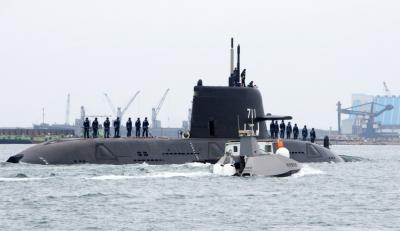
Taiwan's first indigenous defense submarine, the SS-711 Hai Kun (海鯤, or Narwhal), departed for its 13th sea trial at 7am today, marking its seventh submerged test, with delivery to the navy scheduled for July. The outing also marked its first sea deployment since President William Lai (賴清德) boarded the submarine for an inspection on March 19, drawing a crowd of military enthusiasts who gathered to show support. The submarine this morning departed port accompanied by CSBC Corp’s Endeavor Manta (奮進魔鬼魚號) uncrewed surface vessel and a navy M109 assault boat. Amid public interest in key milestones such as torpedo-launching operations and overnight submerged trials,
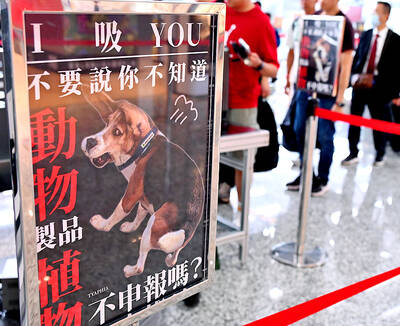
Quarantine awareness posters at Taiwan Taoyuan International Airport have gone viral for their use of wordplay. Issued by the airport branch of the Animal and Plant Health Inspection Agency, the posters feature sniffer dogs making a range of facial expressions, paired with advisory messages built around homophones. “We update the messages for holidays and campaign needs, periodically refreshing materials to attract people’s attention,” quarantine officials said. “The aim is to use the dogs’ appeal to draw focus to quarantine regulations.” A Japanese traveler visiting Taiwan has posted a photo on X of a poster showing a quarantine dog with a

Taiwan’s coffee community has launched a “one-person-one-e-mail” campaign, calling for people to send a protest-e-mail to the World Coffee Championships (WCC) urging it to redesignate Taiwanese competitors as from “Taiwan,” rather than “Chinese Taipei.” The call followed sudden action last week after the WCC changed all references to Taiwanese competitors from “Taiwan” to “Chinese Taipei,” including recent World Latte Art champion Bala (林紹興), who won the World Latte Art Championship in San Diego earlier this month. When Bala received the trophy, he was referred to as representing Taiwan, as well as in the announcement on the WCC’s Web site, until it


 RSS
RSS