


Taiwanese literature is gaining readers abroad, particularly in South Korea, but still struggles to sustain long-term momentum, translators said yesterday, citing challenges such as limited funding, shrinking translator networks and uneven exposure in foreign markets.
At this year's International Forum on Taiwan Literature Translation and Publishing in Tainan, South Korean translator Kim Tae-sung said Taiwanese literature has made “remarkable progress” in South Korea in recent years, as far fewer works from China have been translated and published, prompting readers to turn to Taiwan’s diverse, mature storytelling.
“In less than two years, the South Korean edition of Ghost Town (鬼地方) sold more than 30,000 copies,” Kim said.
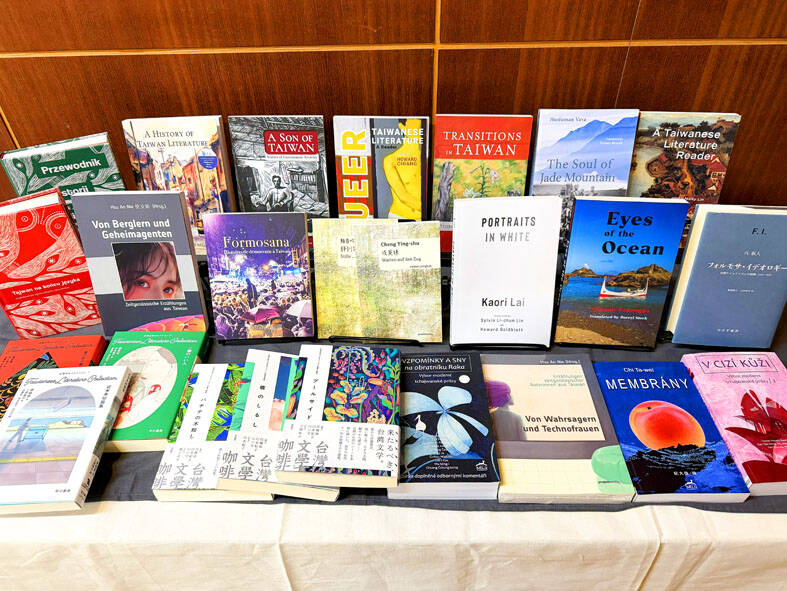
Photo courtesy of the National Museum of Taiwan Literature
“Taiwanese literature has become more sophisticated in theme and style, and its quality is what draws South Korean readers,” he said.
“In Japan, Wu Ming-yi (吳明益) is the most popular Taiwanese author, and several of his works have even been reissued in pocket-sized editions,” said veteran translator Etsuko Uozumi, who has long been dedicated to promoting Taiwan’s indigenous writing.
“It is rare for Taiwanese literature to be published in that format, which shows a growing readership despite the small scale of the market,” she said.
However, Uozumi also highlighted the hurdles facing literature in Japan, particularly limited funding and a decline in translators, which she said have made it increasingly difficult to sustain the momentum of translated works in the country.
Polish translator Maciej Artur Gaca said promoting Taiwanese literature overseas remains challenging if readers are not exposed to an author’s name, adding that “continuity” is a benchmark of success in a small market.
“If the book is discussed in literary magazines, cited in universities or translated from Polish into other languages, that’s a real impact,” added Gaca, a former Polish representative to Taiwan.
The forum gathered translators, editors, publishers and academics from seven countries, including the US, the UK and the Czech Republic.
It coincided with a literary translation workshop led by Singaporean translator Jeremy Tiang (程異) and Anna Goode, managing director of the British Centre for Literary Translation, held for the first time in Taiwan after four editions in the UK.
Both events are part of the inaugural Taiwan Writers Festival, which runs through Nov. 30.
Chen Ying-fang (陳瑩芳), head of the National Museum of Taiwan Literature, the events’ main organizer, said the festival was inspired by the strong reception of Taiwanese writers at international literary events.
“It is about time for Taiwan to have a writers’ festival for our own authors,” she said.

FUKUOKA SITUATION: Japanese media reported that the pathogen is expected to be identified by the summer, while the CDC downplayed the idea that it was hMPV A “mysterious cold-like illness” reported in Japan’s Fukuoka Prefecture does not seem to be a new disease, but Japanese authorities have been asked about the situation, the Centers for Disease Control (CDC) said yesterday. The Fukuoka Prefectural Medical Association on Wednesday told a news conference that a “mystery cold” that has become a hot topic on social media is “highly likely to be caused by some kind of viral infection,” Japan’s KBC News reported. “Many people are experiencing symptoms starting with a sore throat, followed by a runny nose, phlegm and a severe cough,” KBC News reported, citing association officials. Health authorities are

Nvidia Corp CEO Jensen Huang (黃仁勳) arrived in Taiwan yesterday ahead of upcoming AI and technology events, saying he plans to meet with clients and Taiwan Semiconductor Manufacturing Co Chairman C.C. Wei (魏哲家) during his visit. After landing at Taipei Songshan Airport, Huang posed for photos with fans and handed out Yakult drinks to reporters and supporters waiting at the scene, saying he has “a lot to do” during the trip. Asked about reports that Nvidia’s planned headquarters site in Taipei’s Beitou Shilin Technology Park could break ground on May 27, Huang said that if the company holds an event, he would

The Ministry of Finance this afternoon announced the winning numbers for the March-April uniform invoice lottery. The winning number for the NT$10 million (US$318,060) special prize is 19531471, and the winning number for the NT$2 million grand prize is 85941329. Three numbers were drawn for the NT$200,000 first prize: 07225810, 20231230 and 83518781. Those with receipts matching the last seven digits of any of the first-prize numbers will win the NT$40,000 second prize, while those matching the last six digits will win the NT$10,000 third prize. Those whose receipts match the last five digits of the first-prize numbers can claim the NT$4,000 fourth prize,
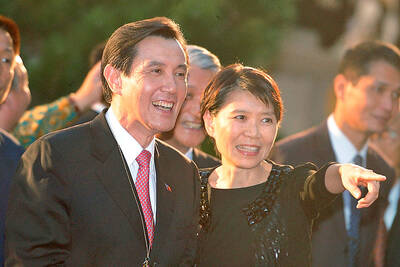
Former president Ma Ying-jeou (馬英九) yesterday expressed “shock and regret” over a statement issued by his wife without his consent, and rejected her assertion that his eldest sister, Ma Yi-nan (馬以南), would manage his medical care or act as his spokesperson amid an ongoing embezzlement probe into his foundation. Ma Ying-jeou in a statement said he was shocked by a statement by his wife, Chou Mei-ching (周美青), regarding his affairs. Ma Yi-nan “must not” be in charge of his healthcare and other personal affairs, nor can she be allowed to represent the Ma family, the former president said. He said he was also


 RSS
RSS